

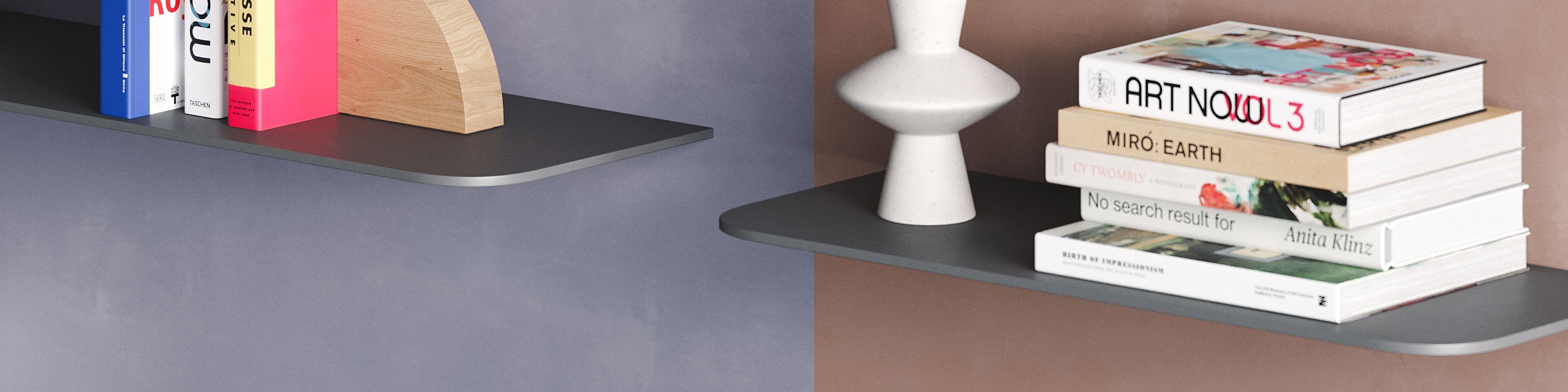
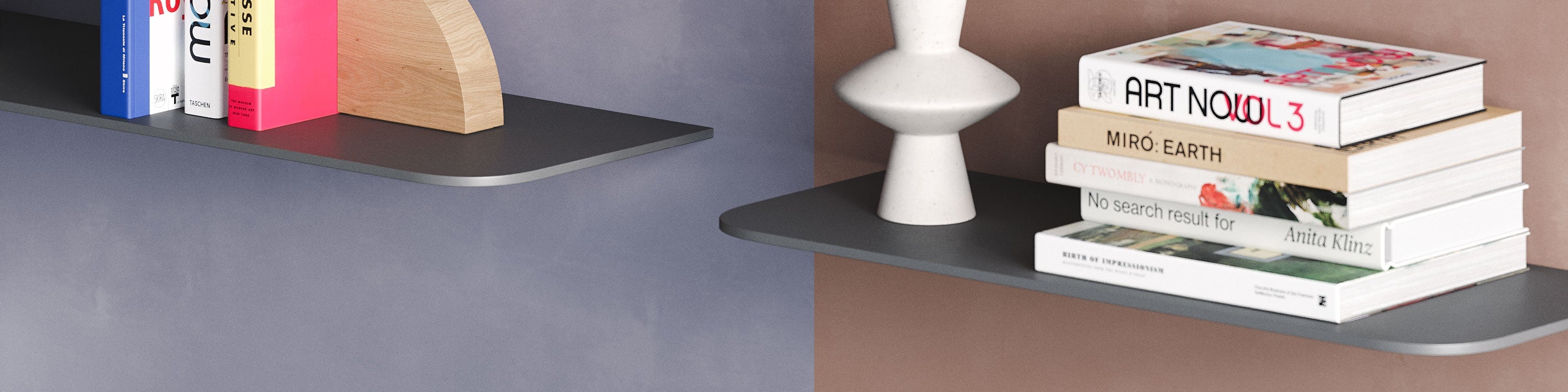
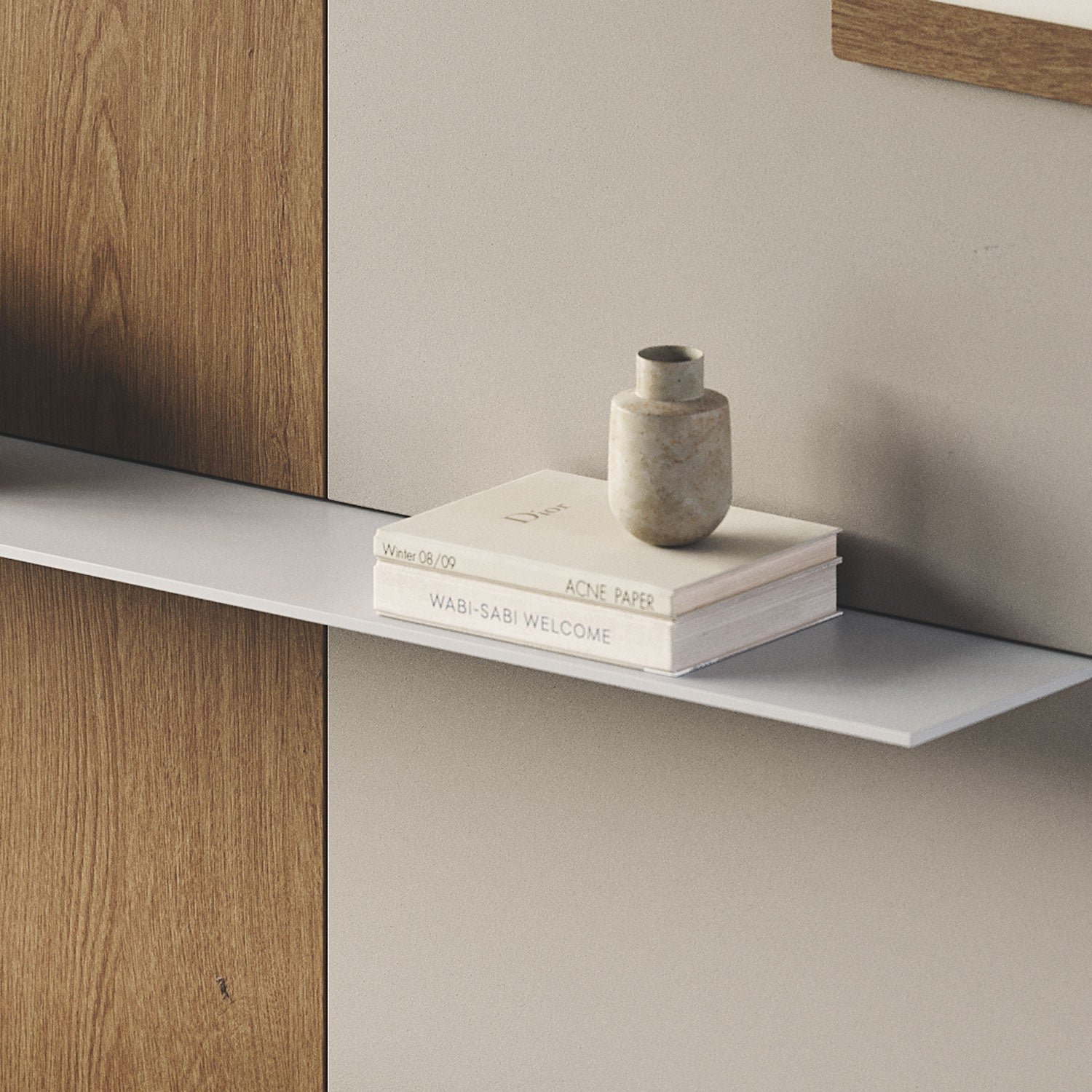
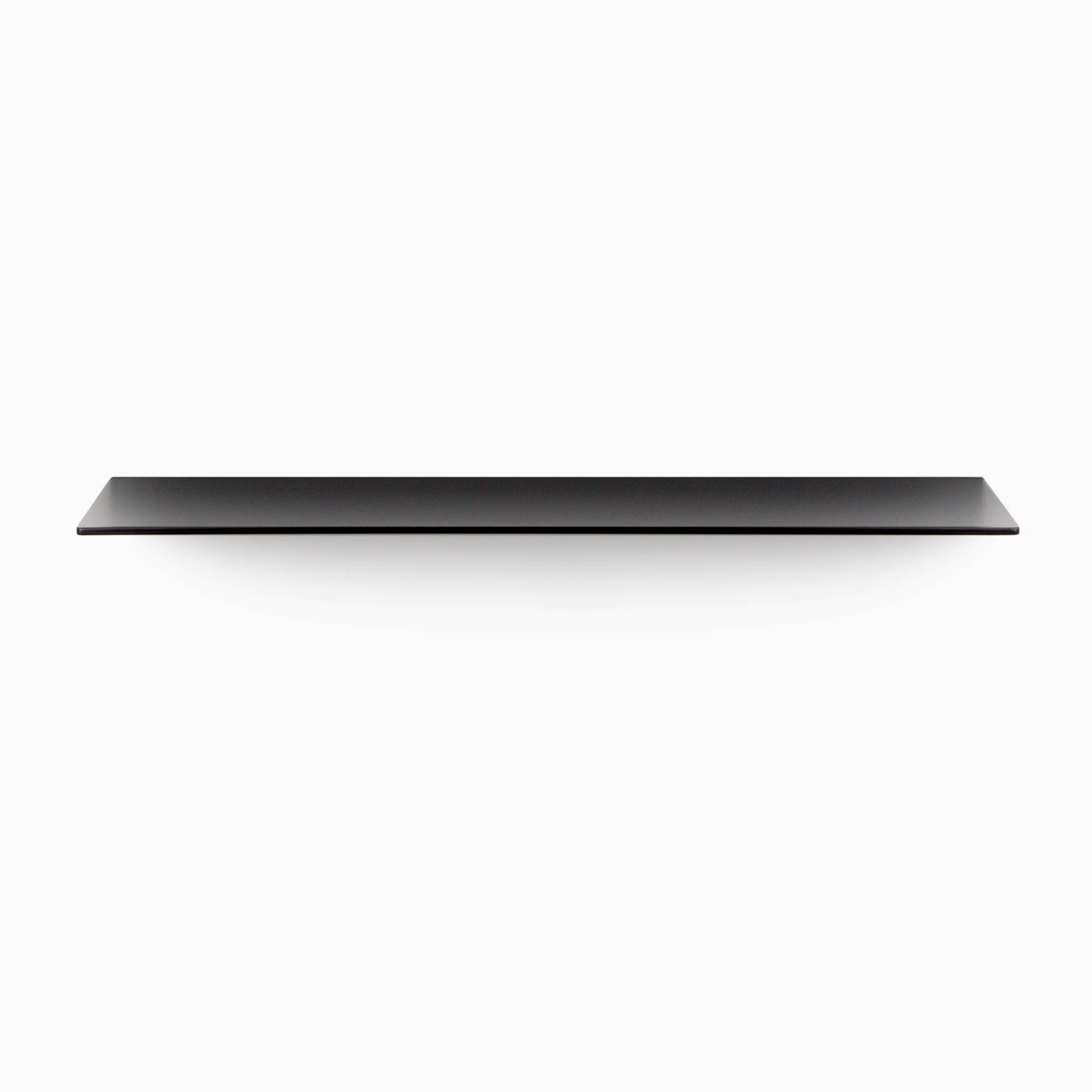
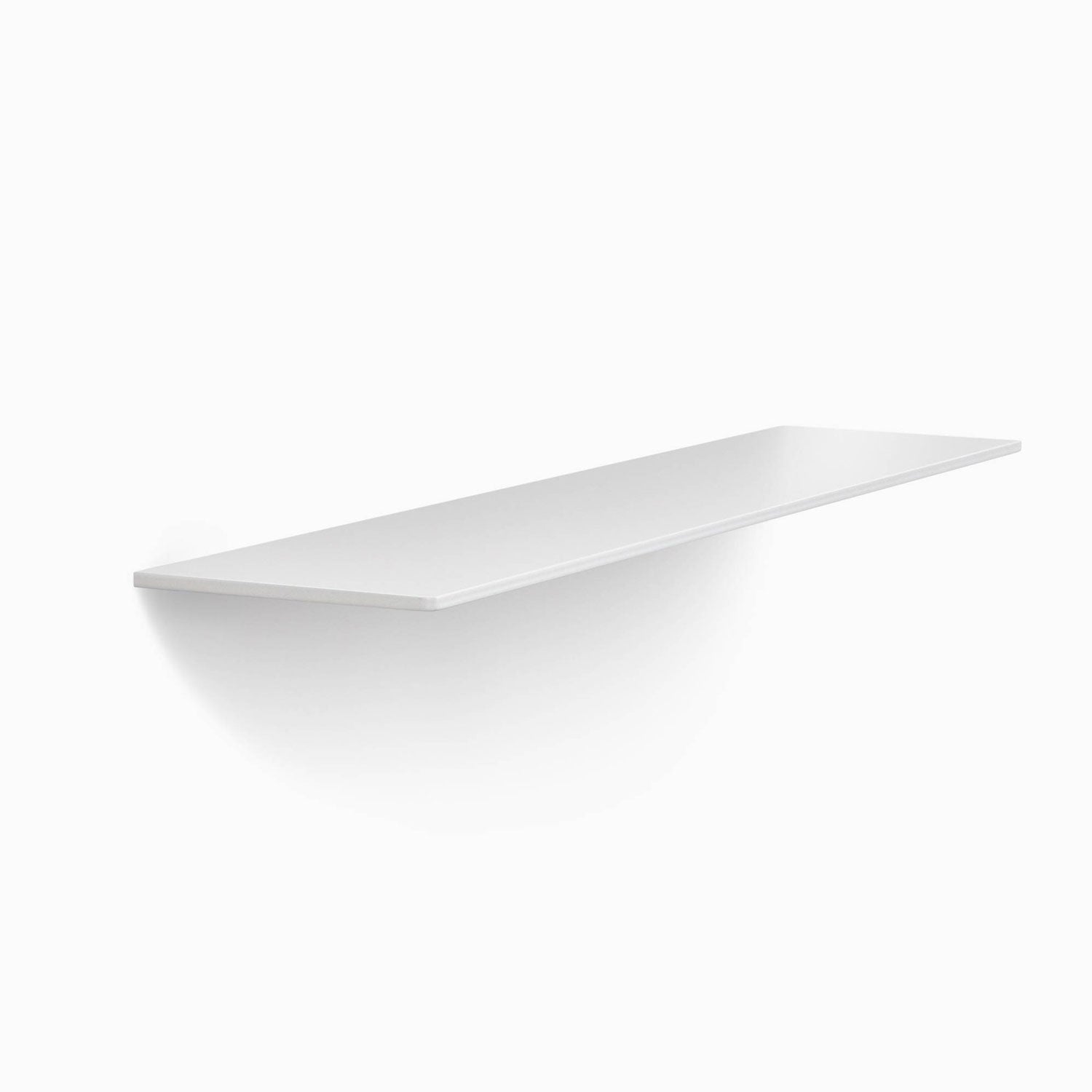

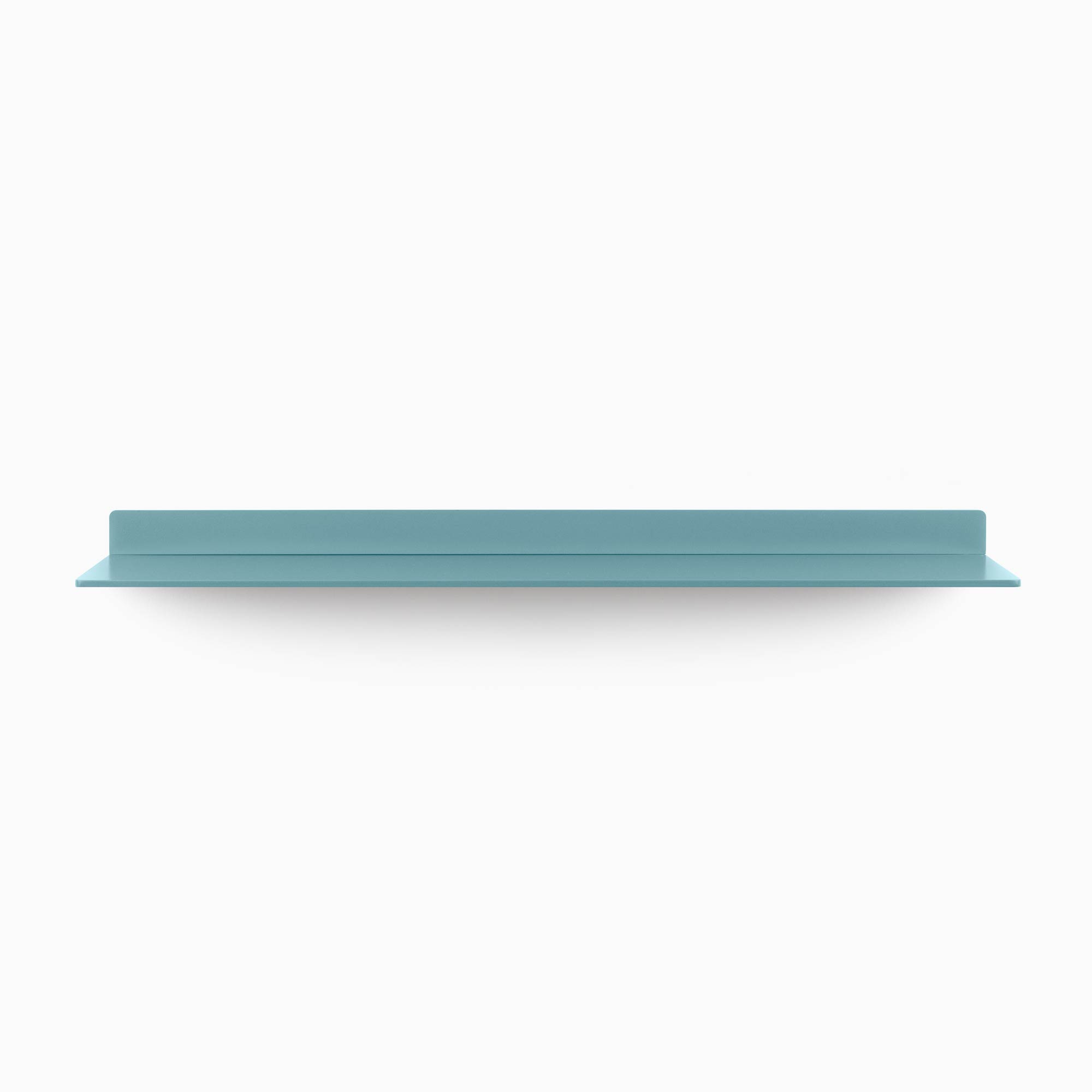

Tromso FM1 Steel Floating Shelf
Tromso FM3 Steel Floating Shelf
Tromso FM5 Steel Floating Shelf
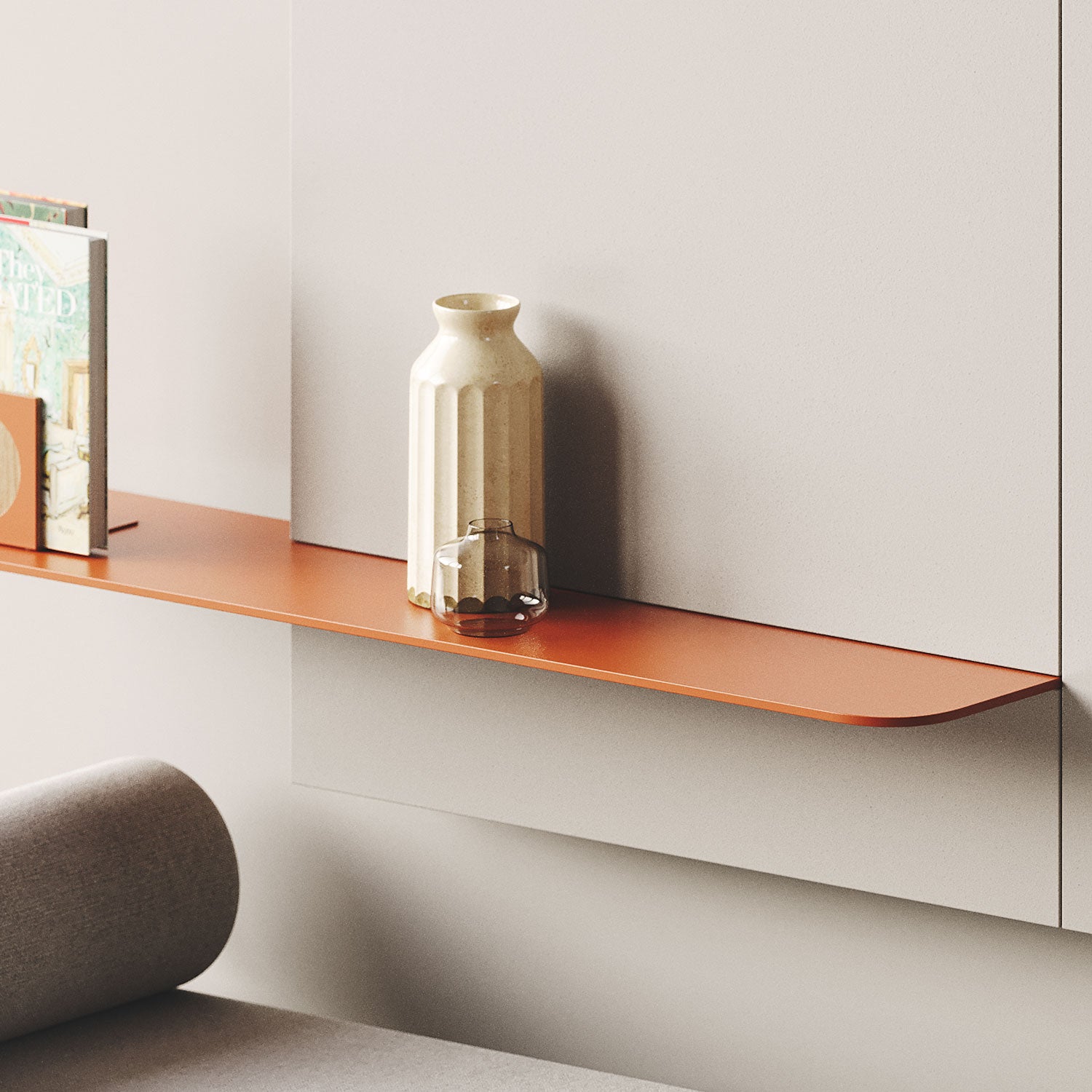
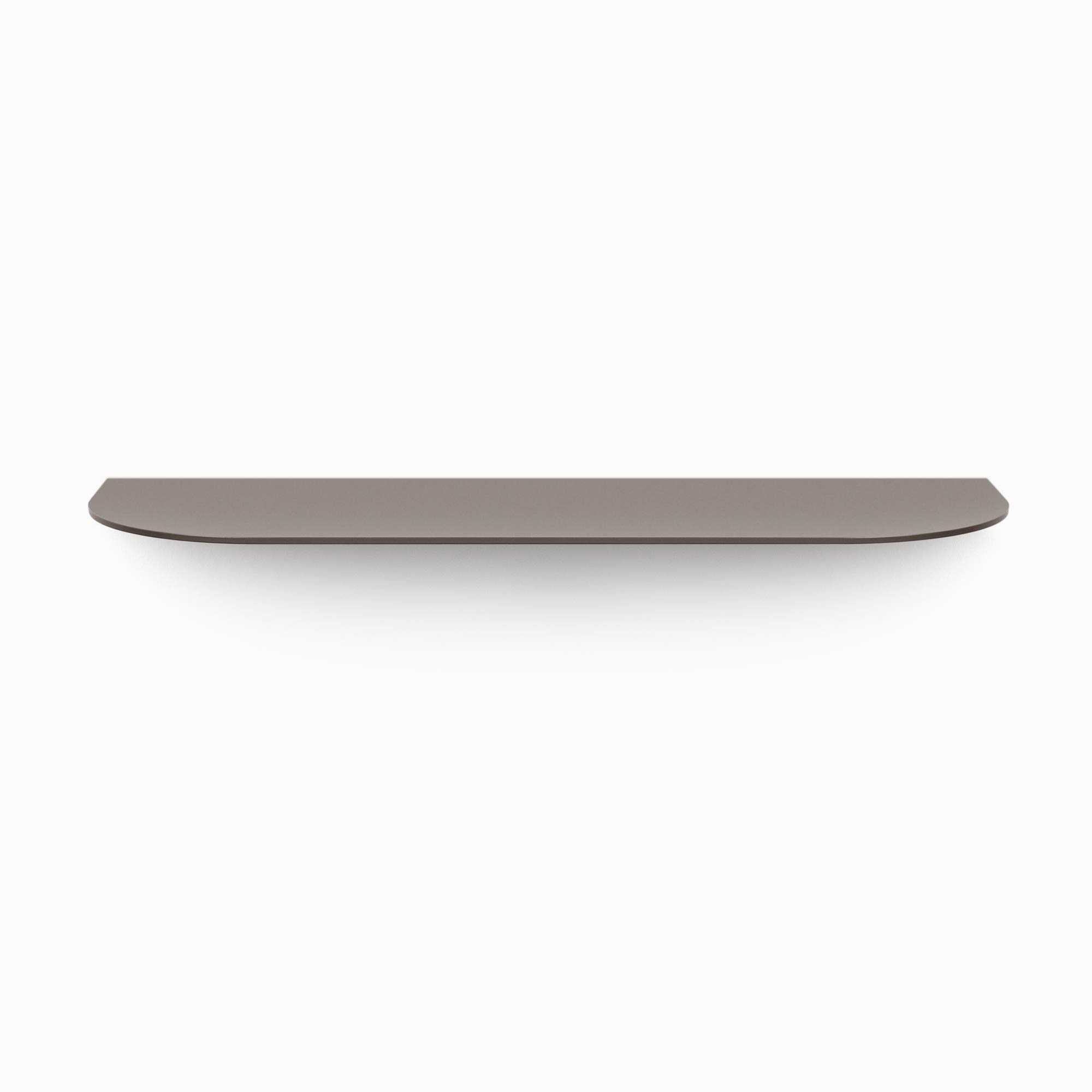
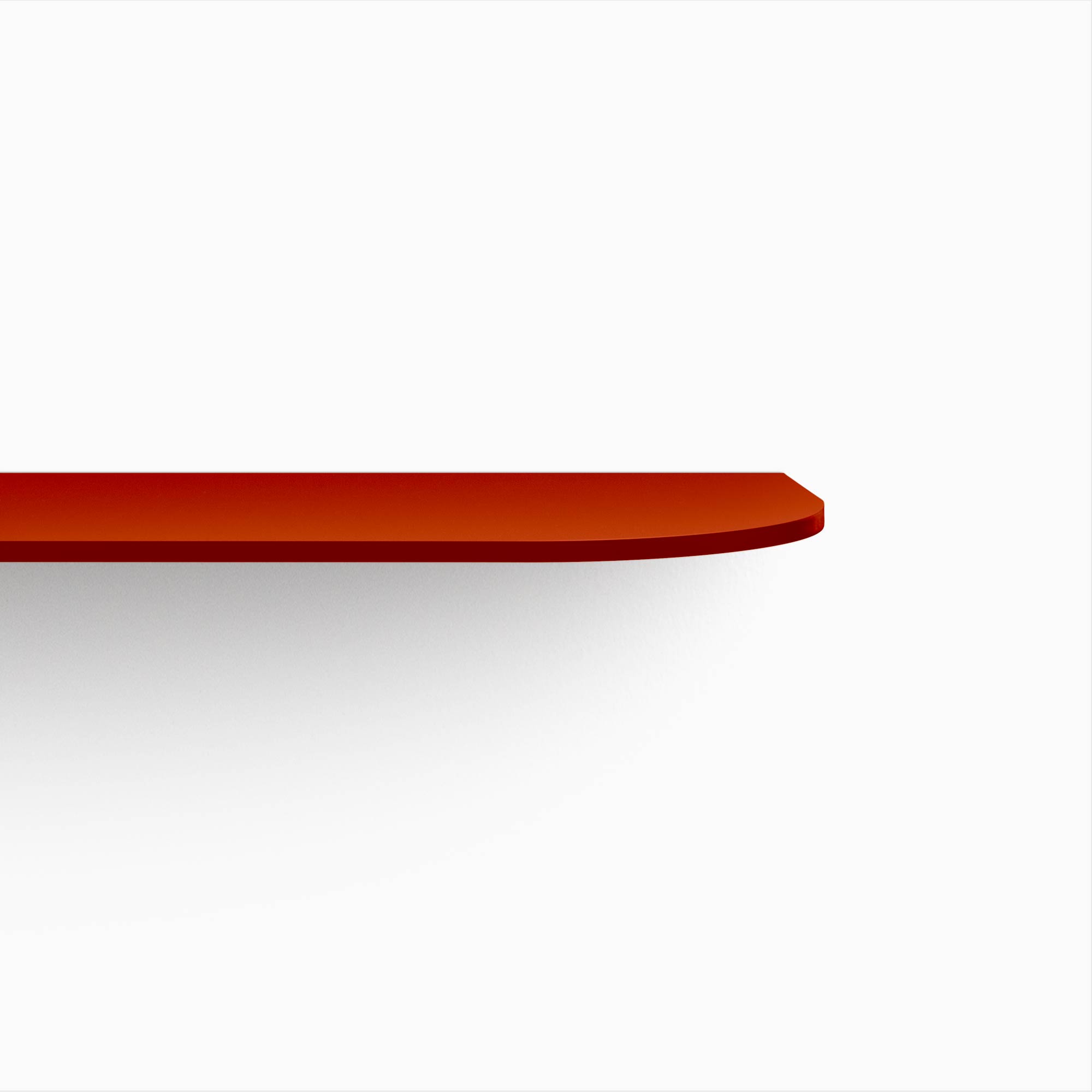
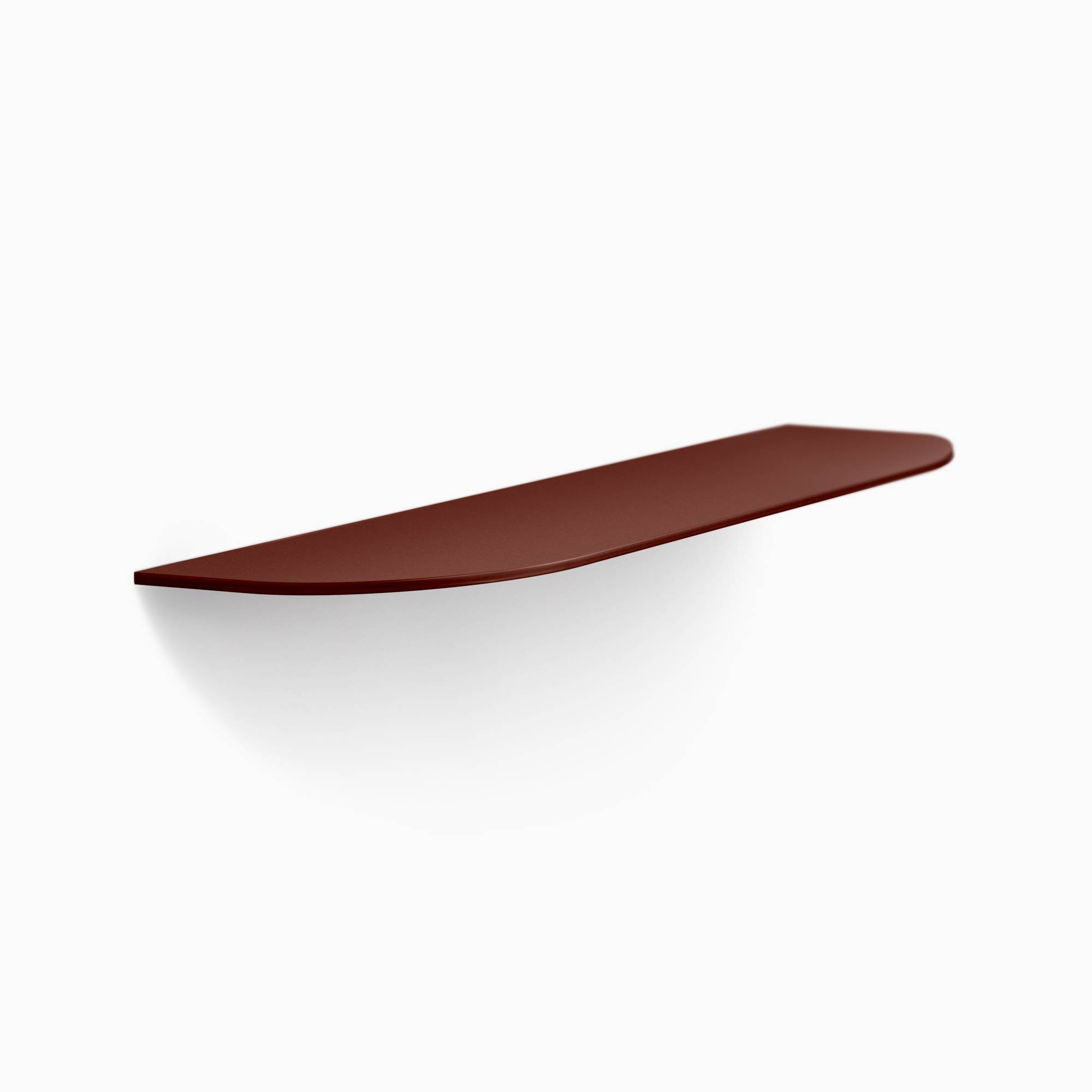
Tromso RADius Steel Floating Shelf
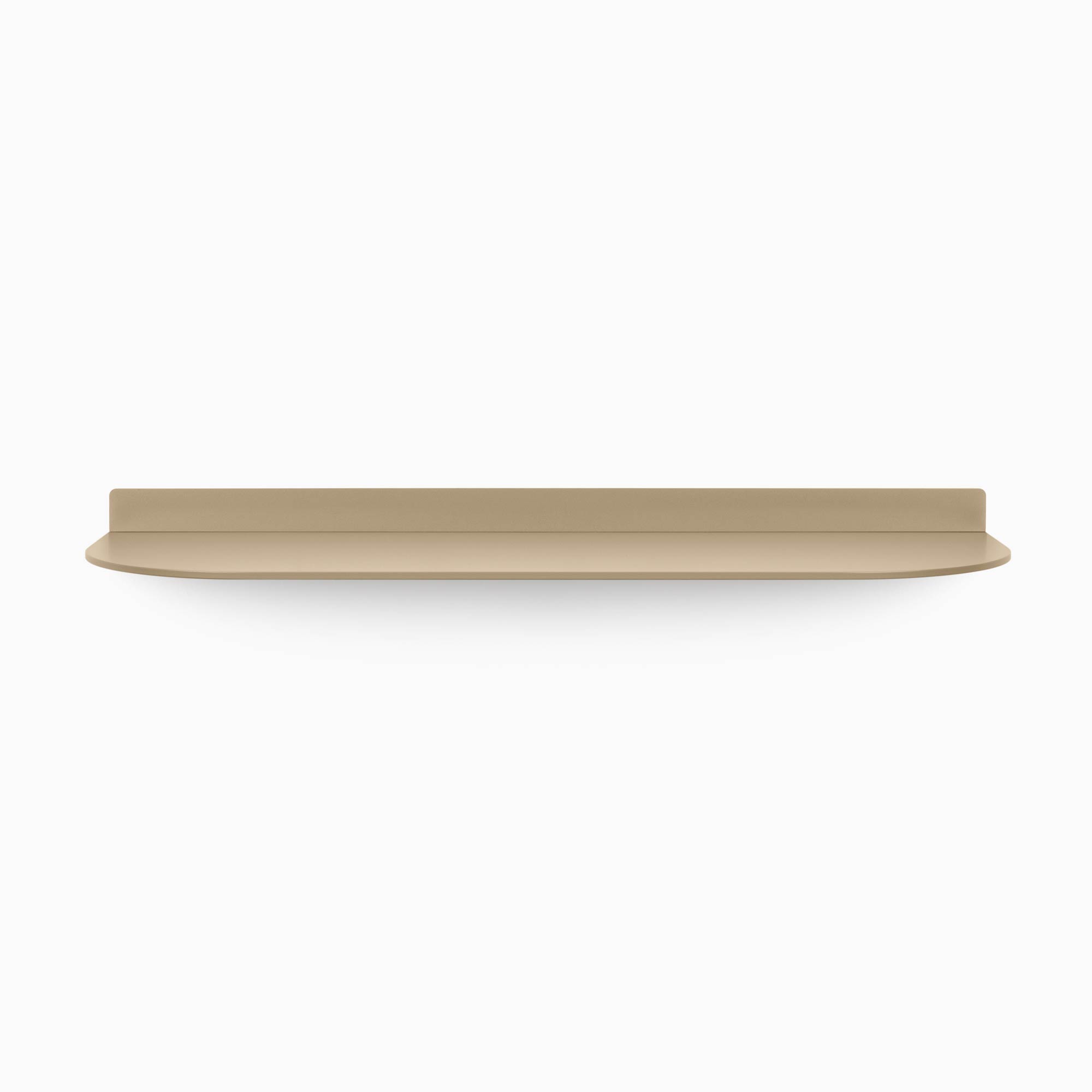
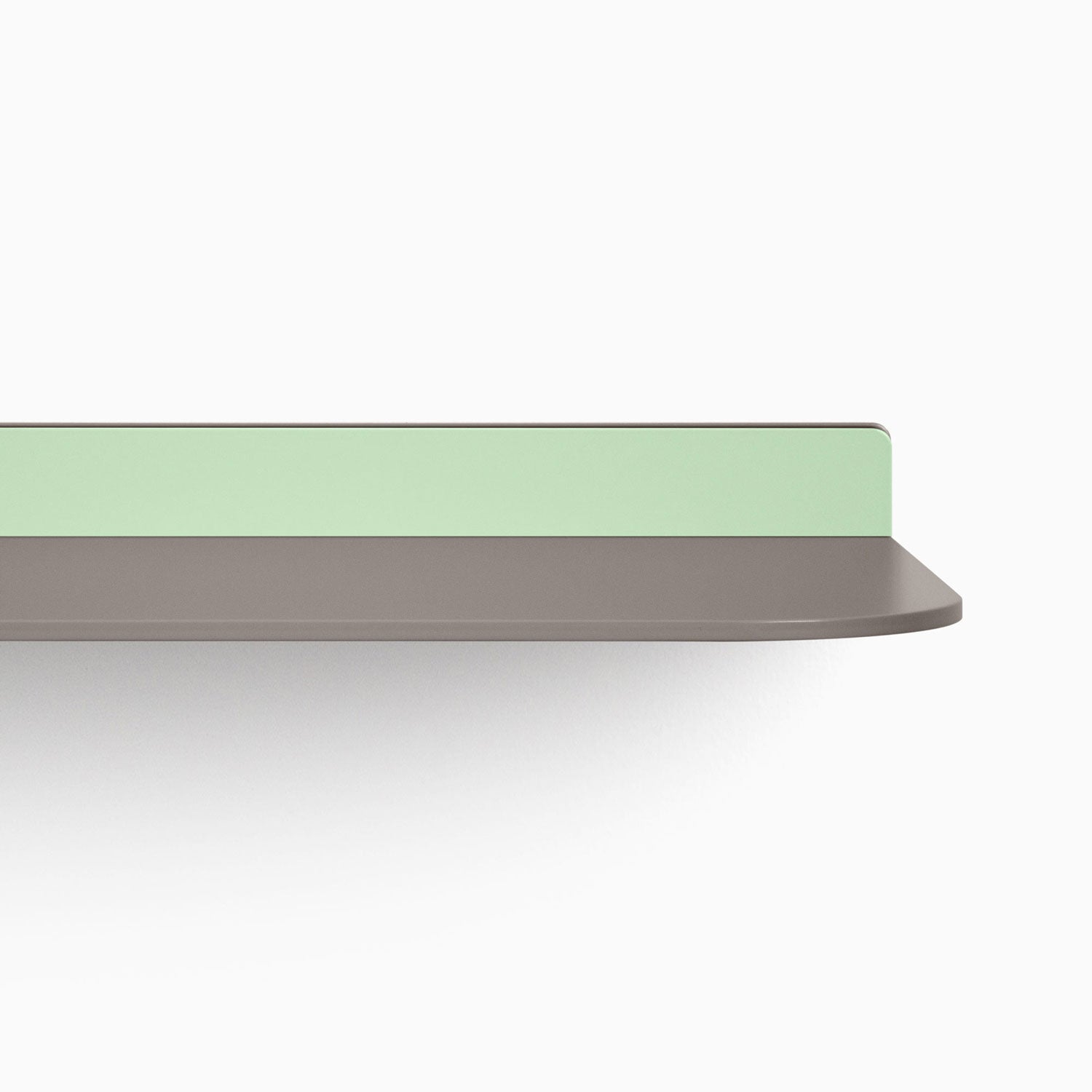
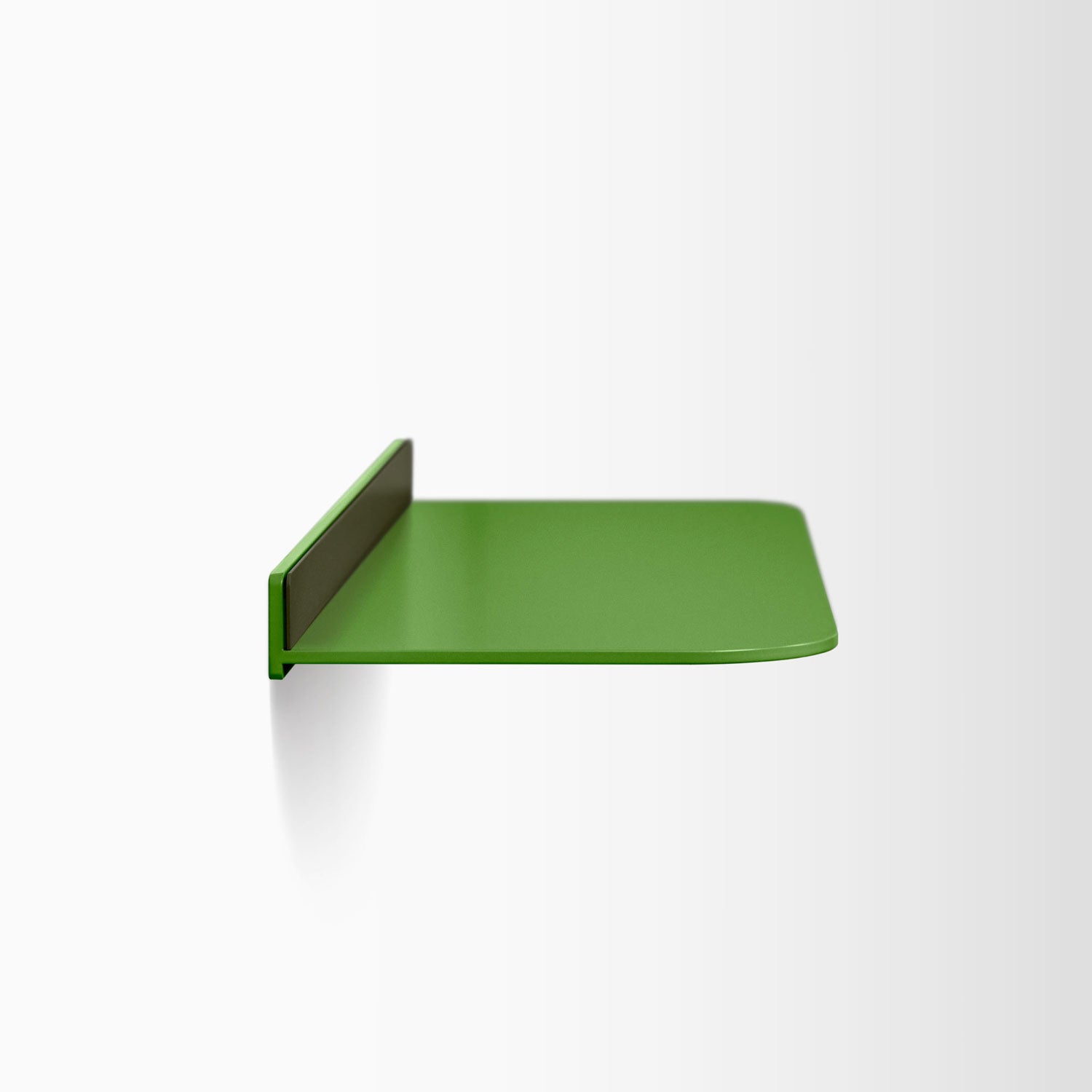
Tromso RADius FM1 Steel Floating Shelf
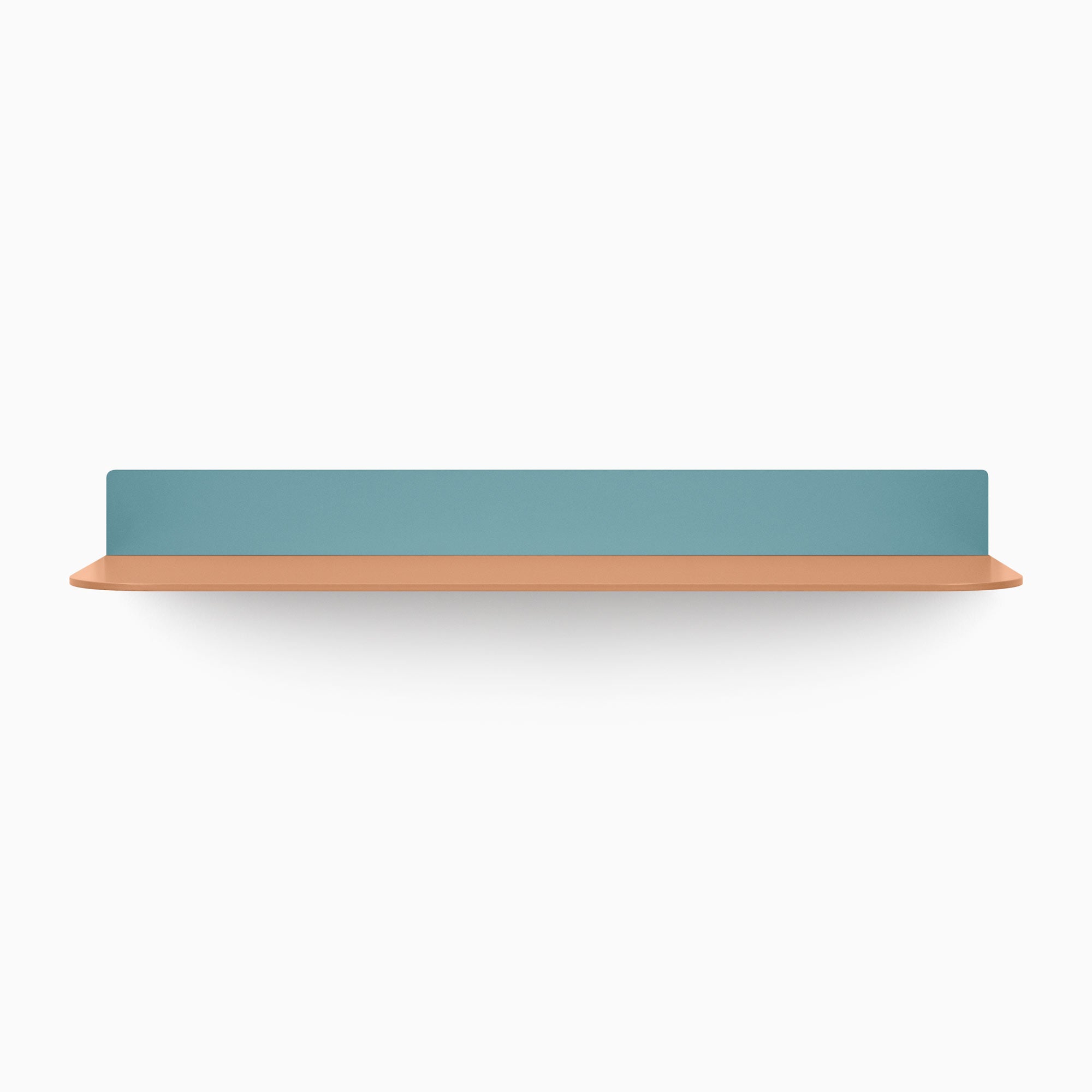
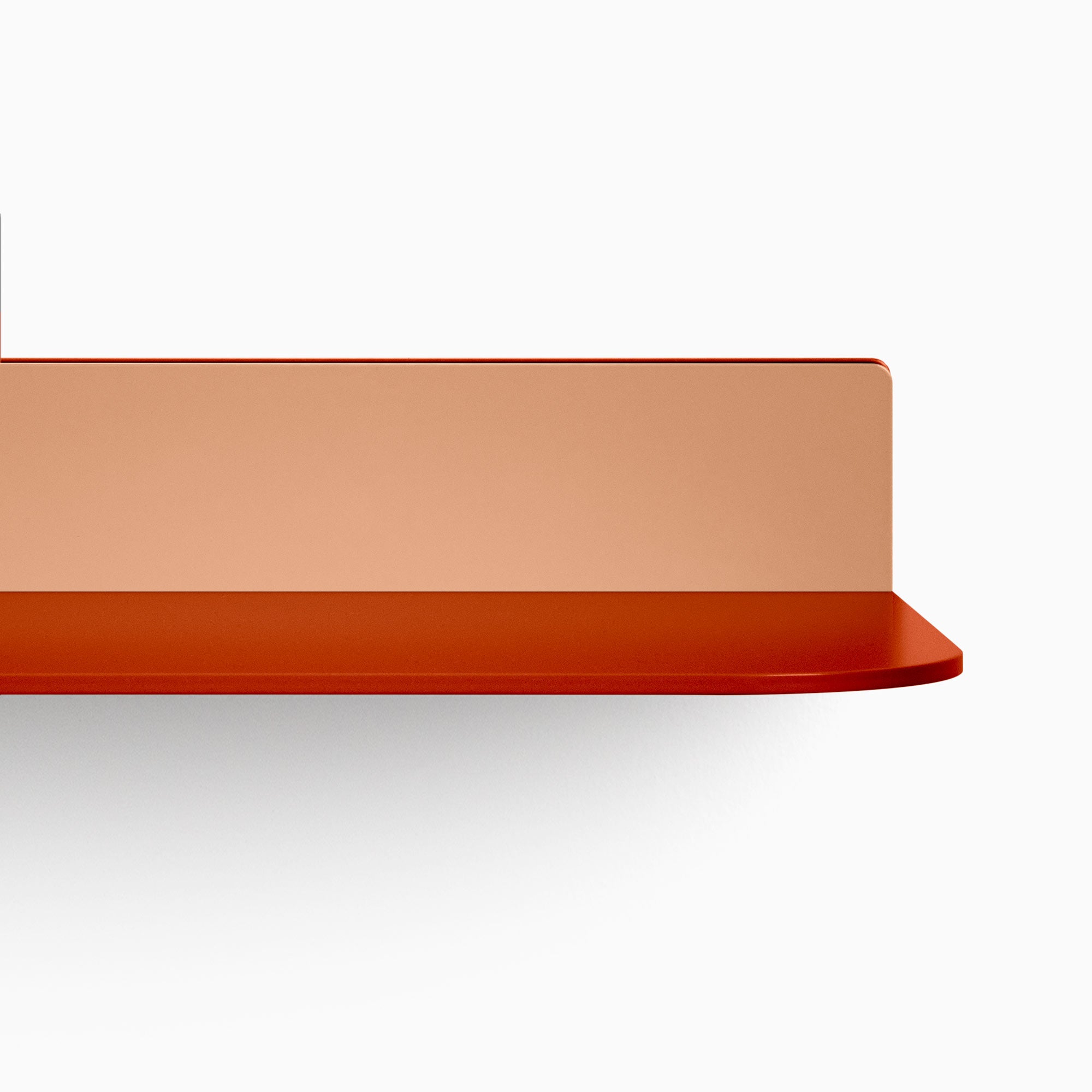
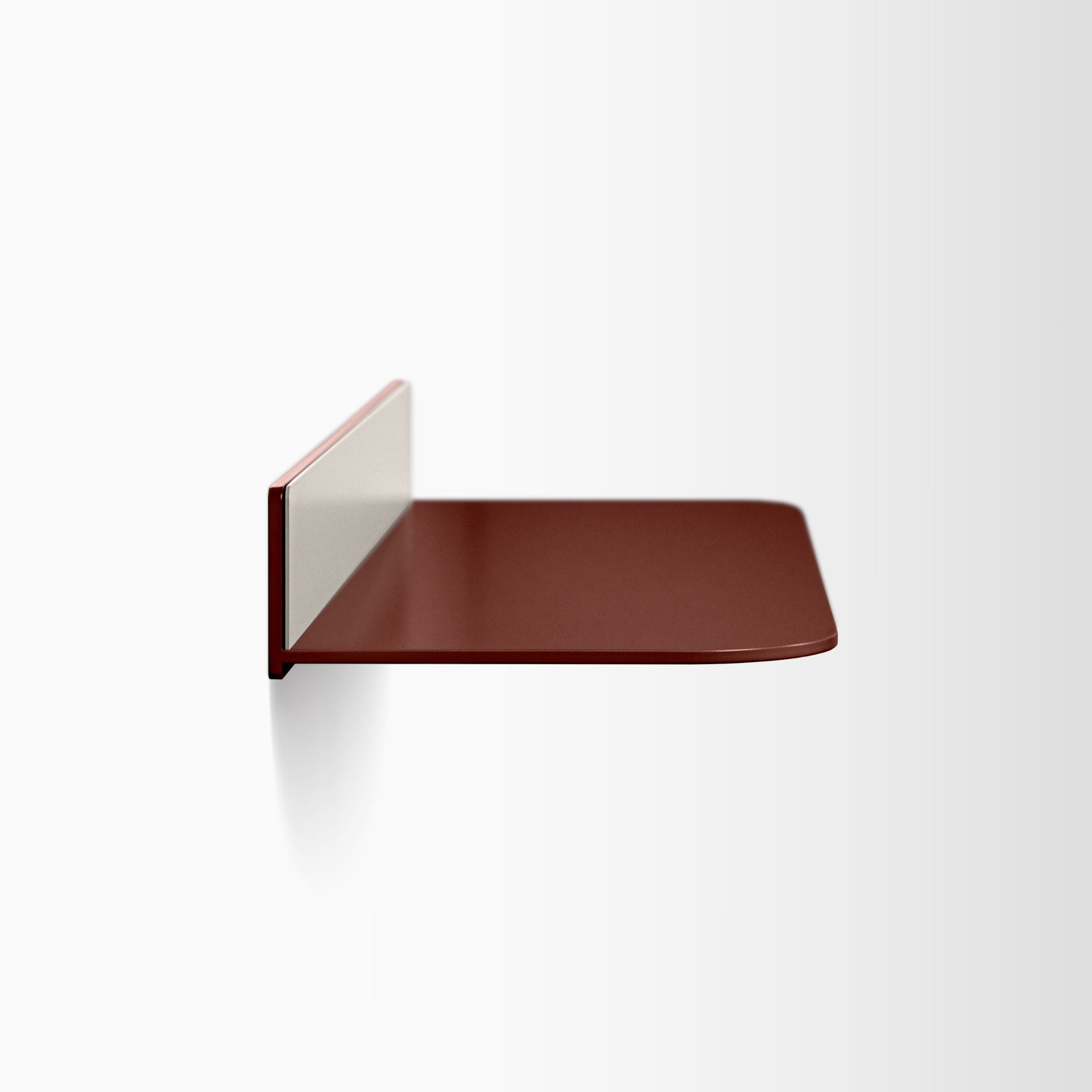
Tromso RADius FM3 Steel Floating Shelf
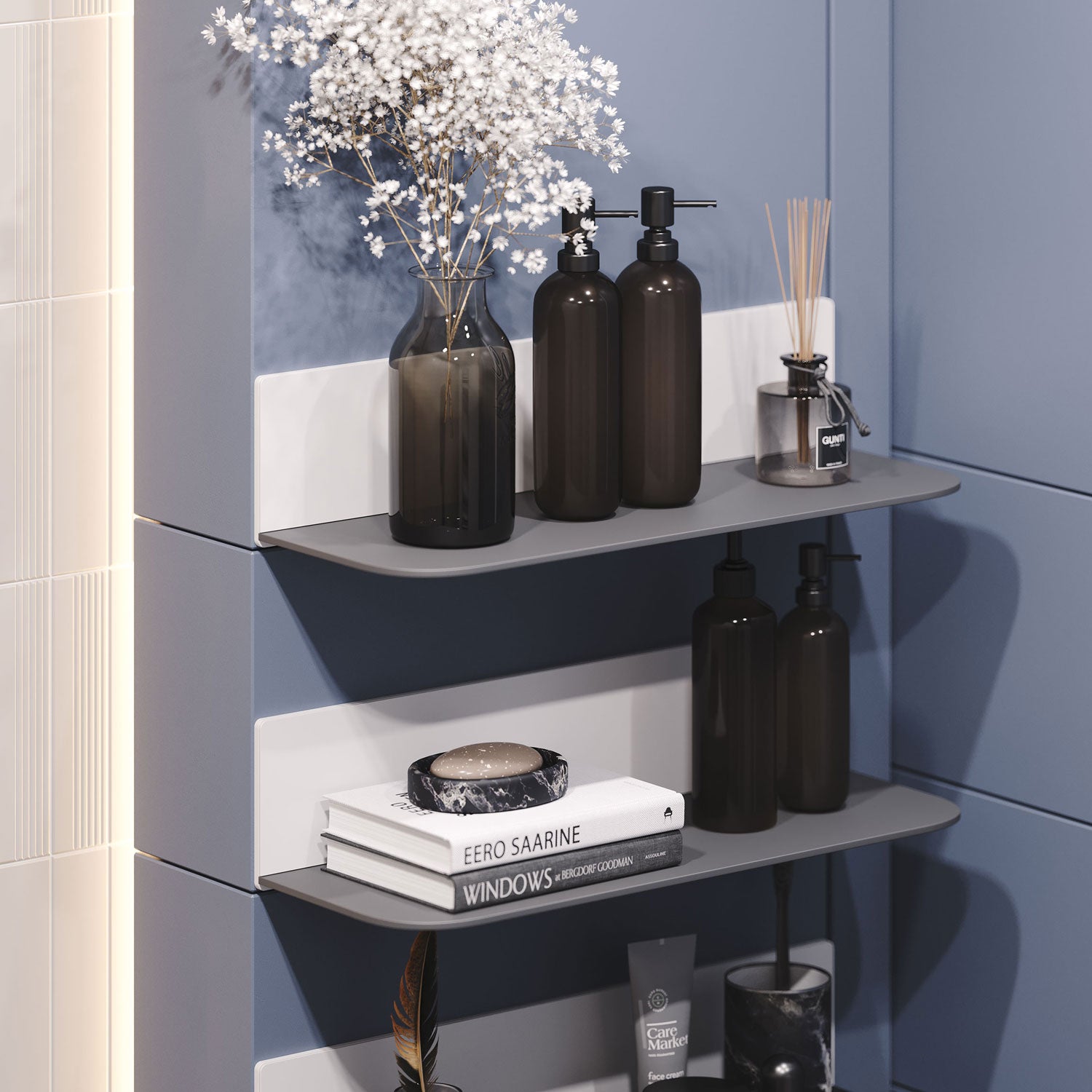
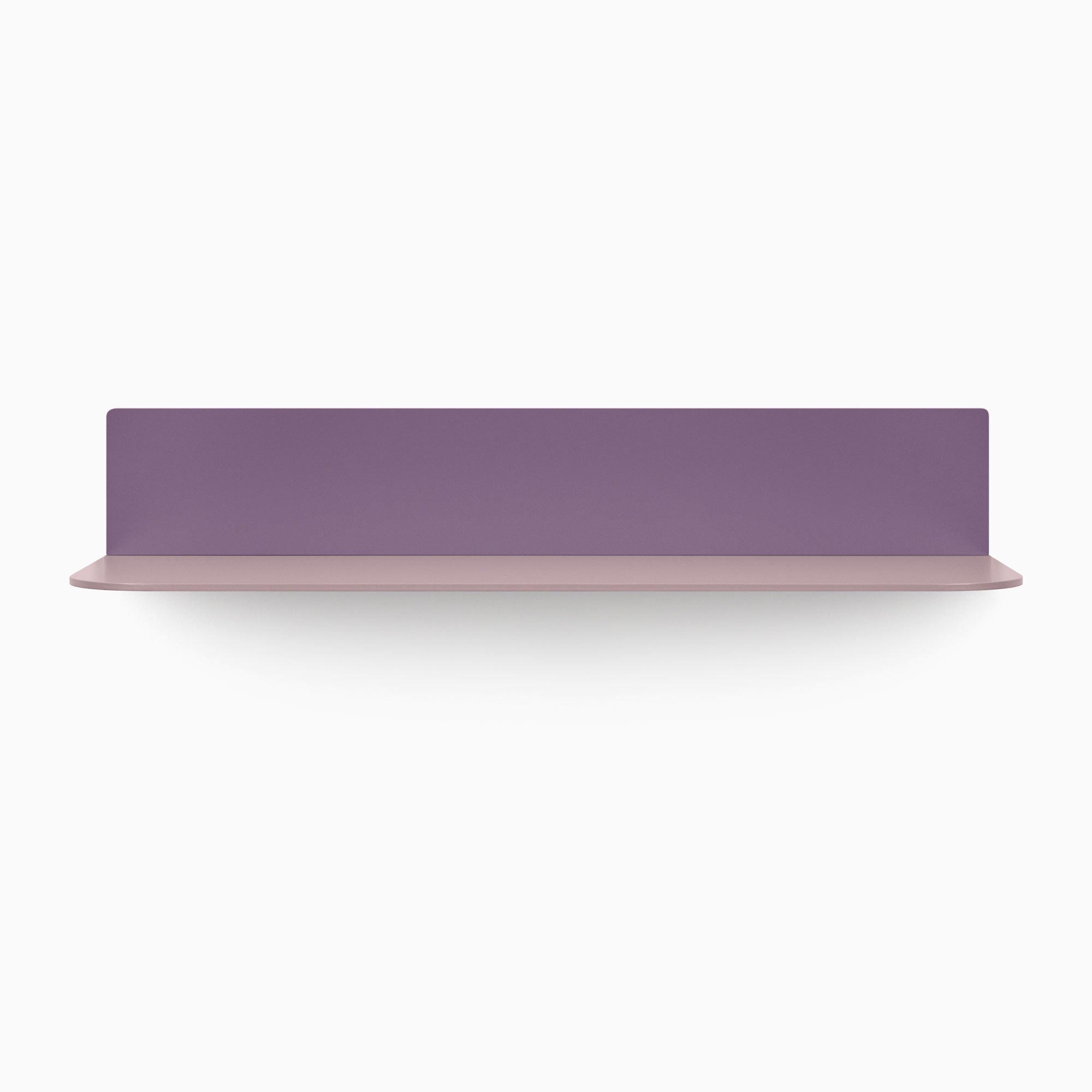
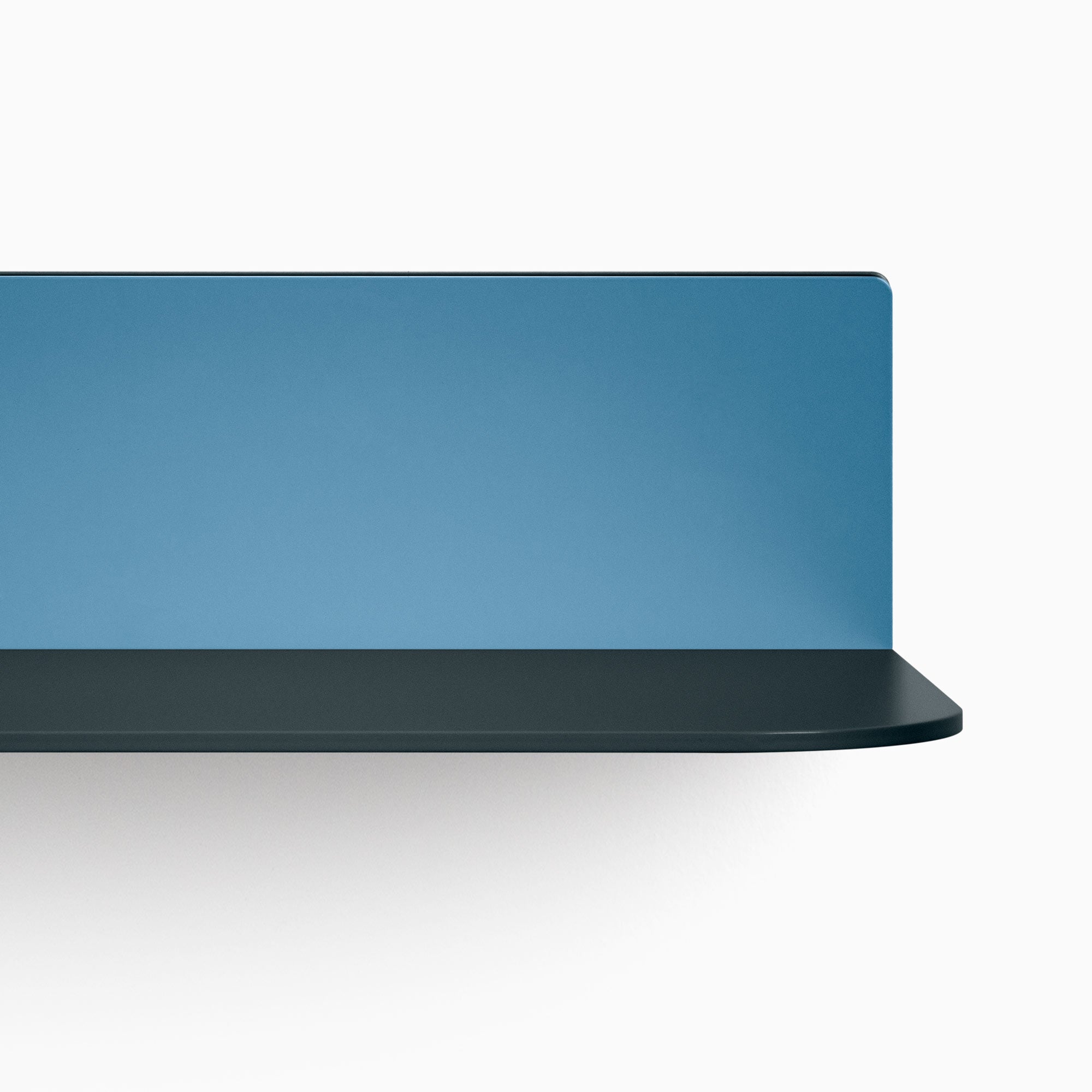
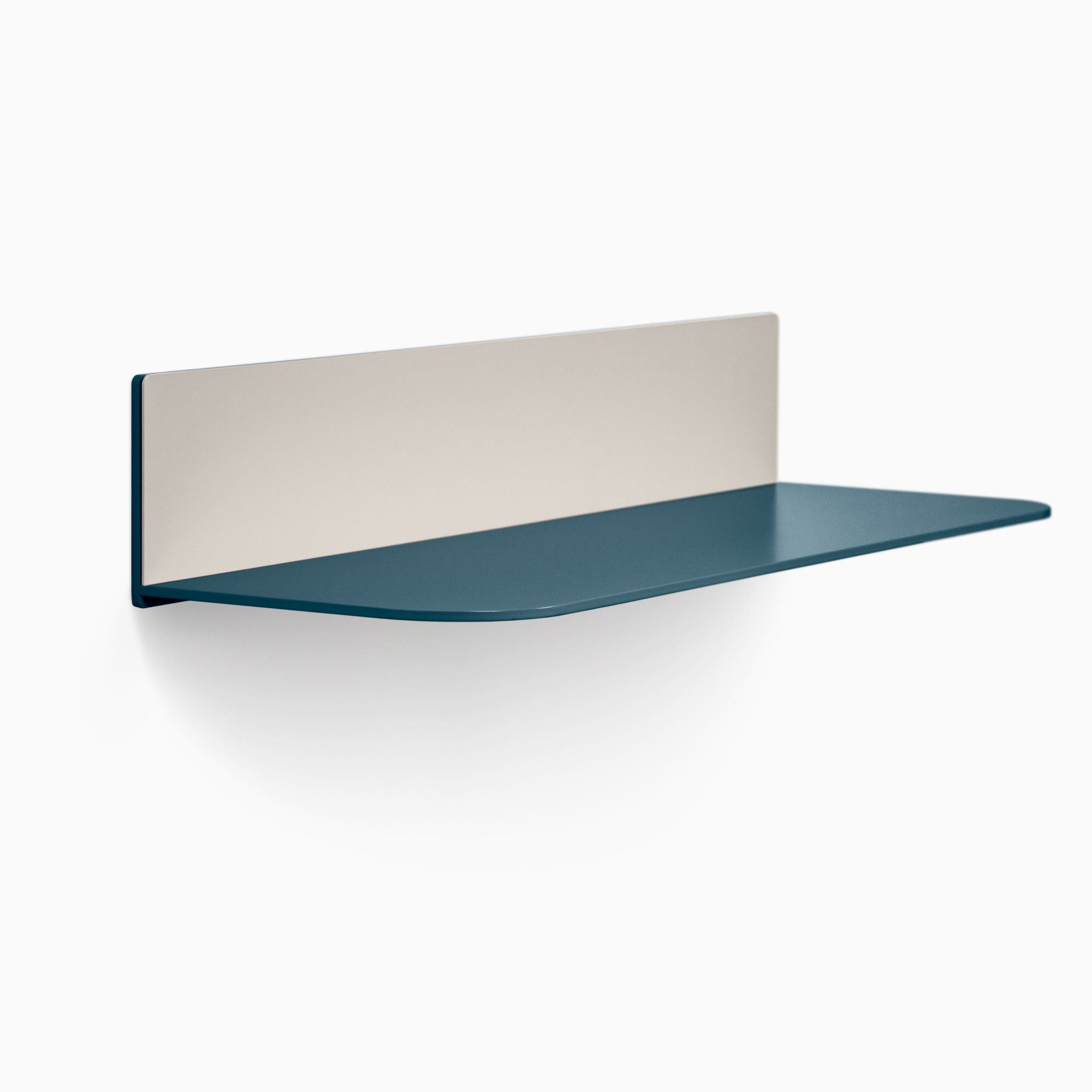
Tromso RADius FM5 Steel Floating Shelf
Designer + Made-to-Measure Metal Floating Shelves by Shelfology
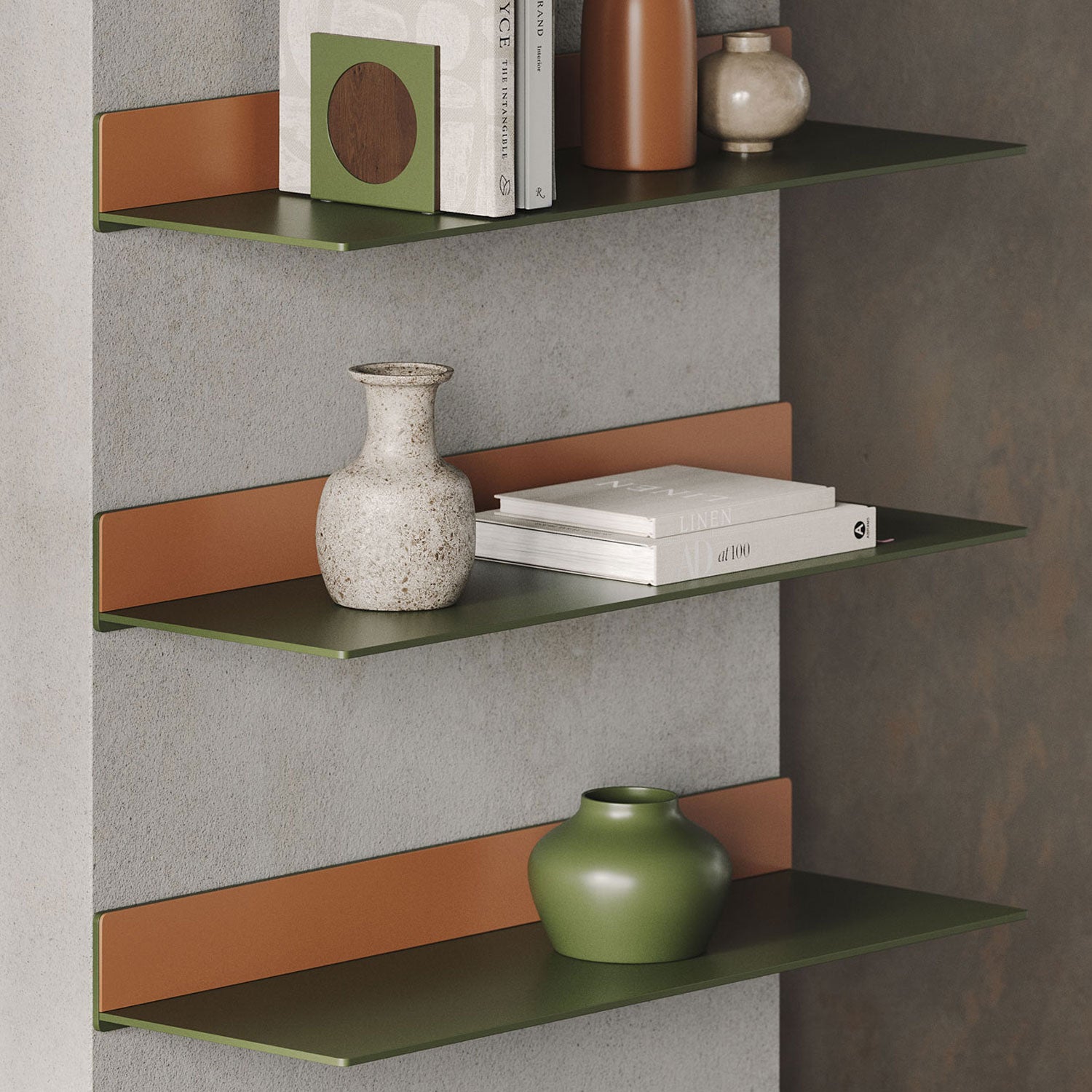
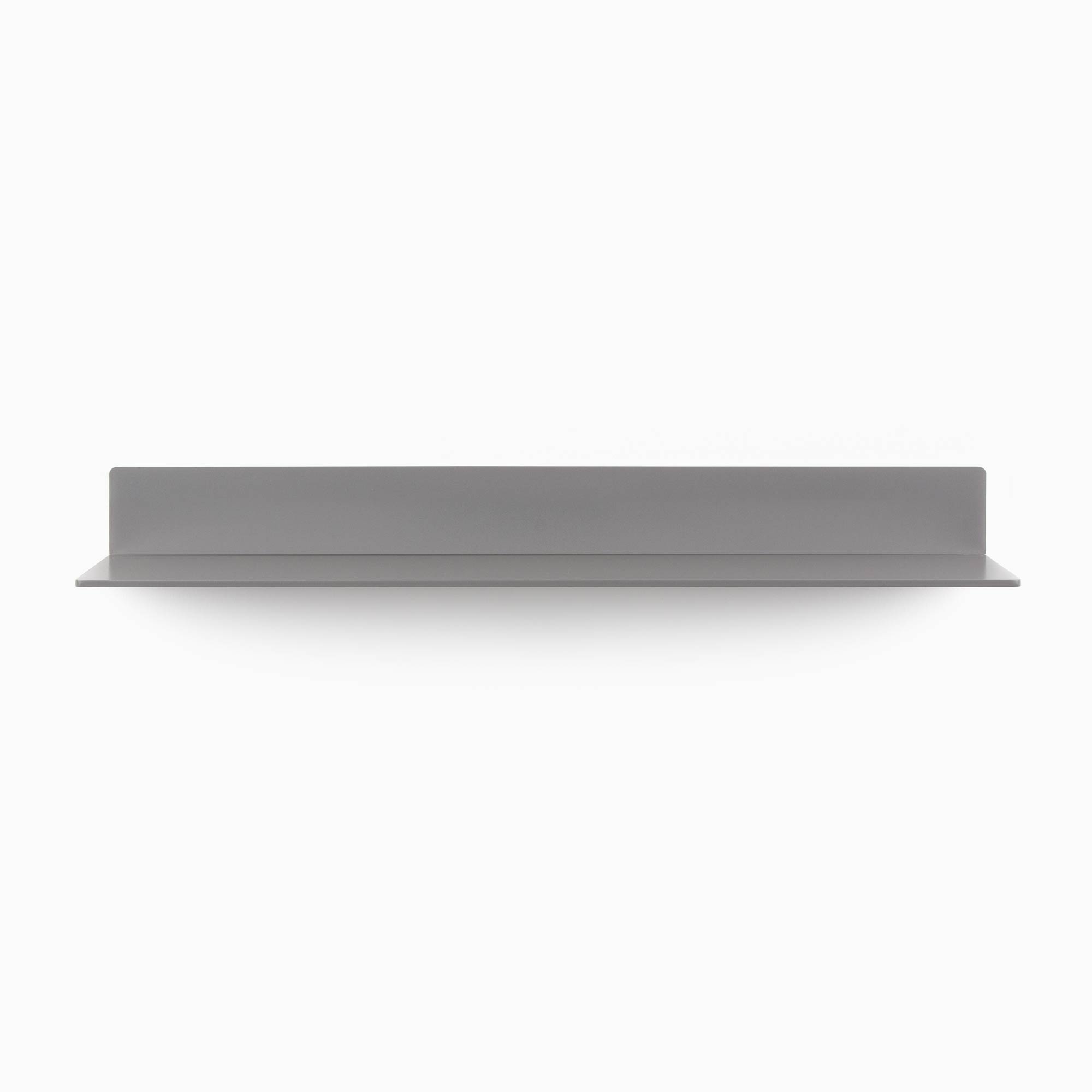
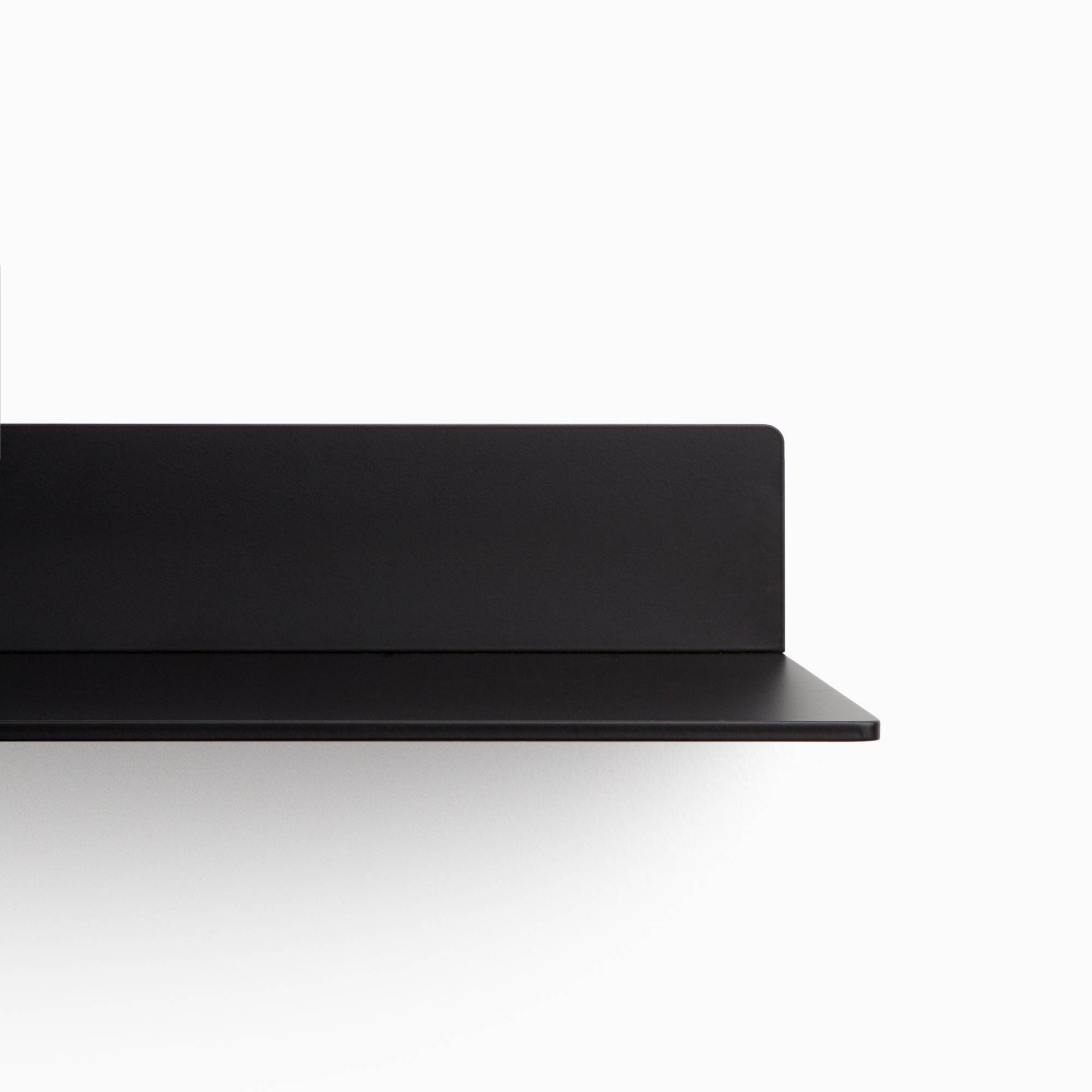
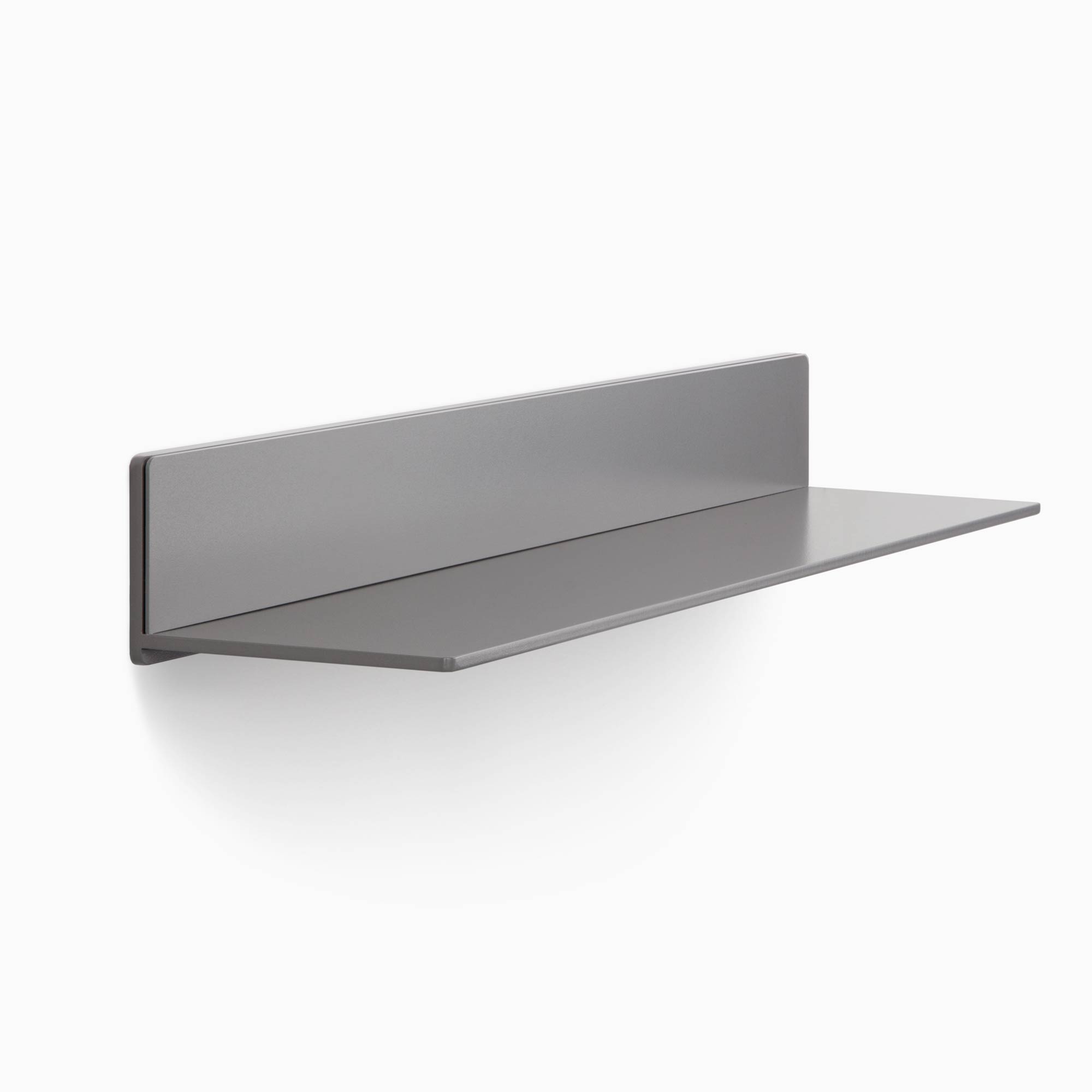
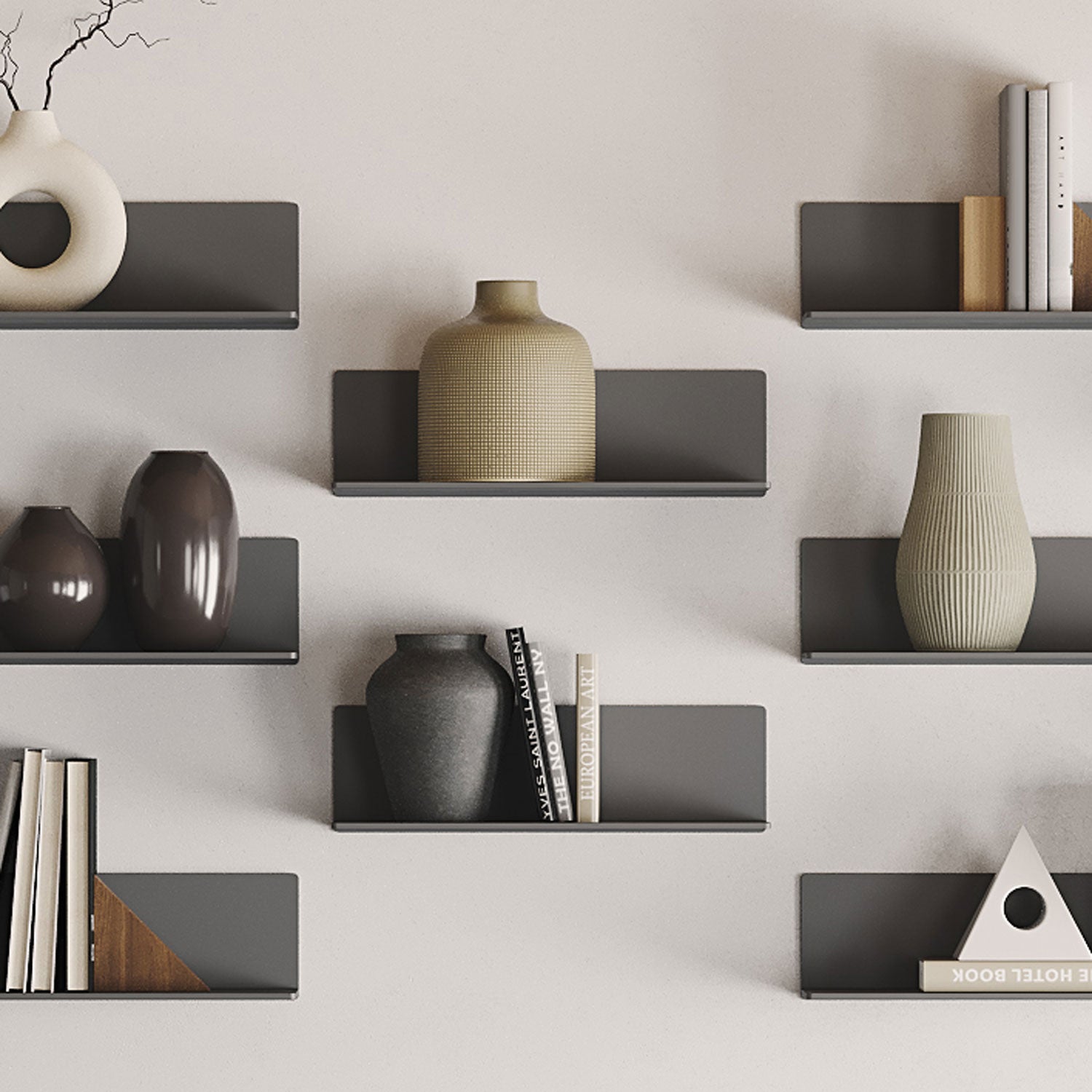
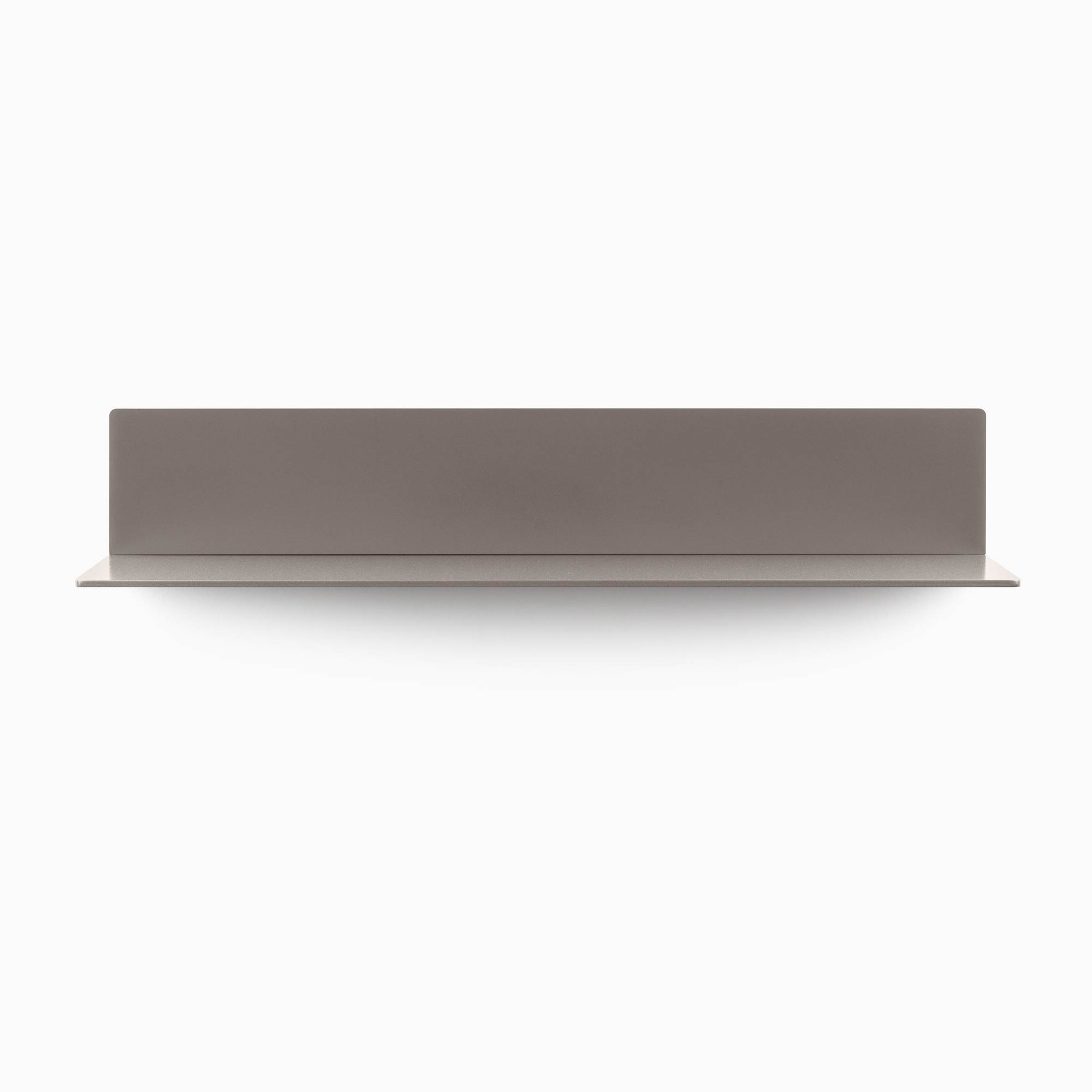
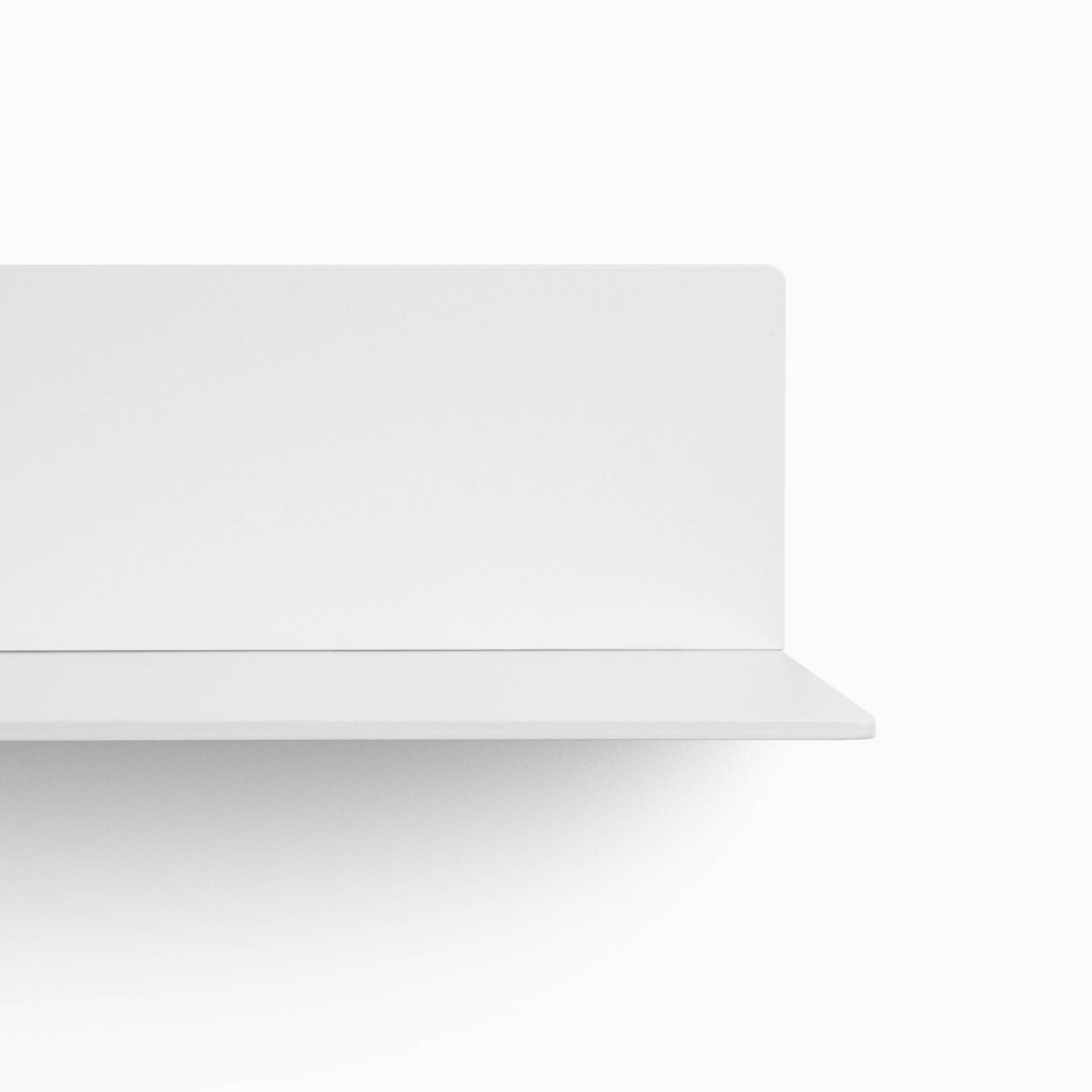
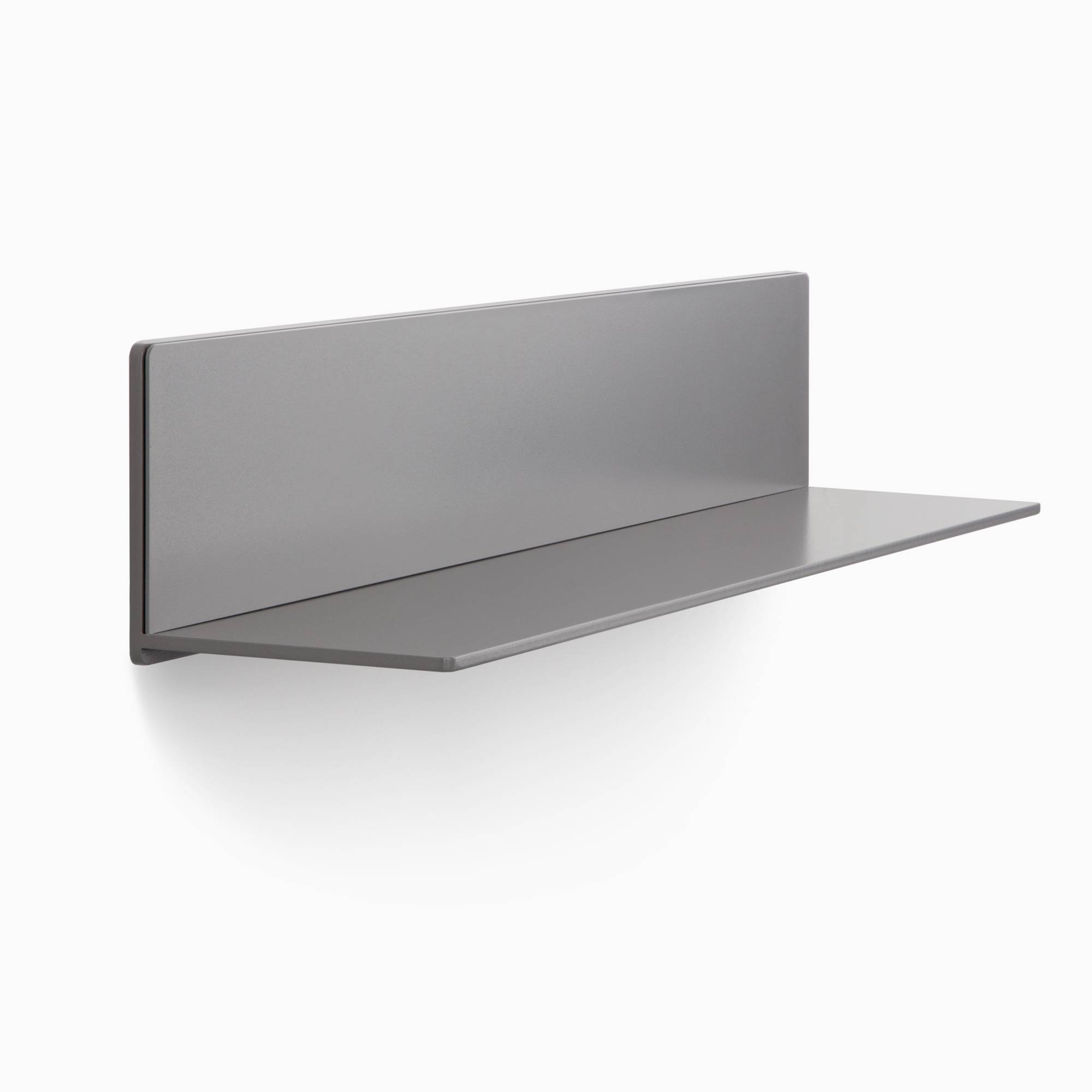
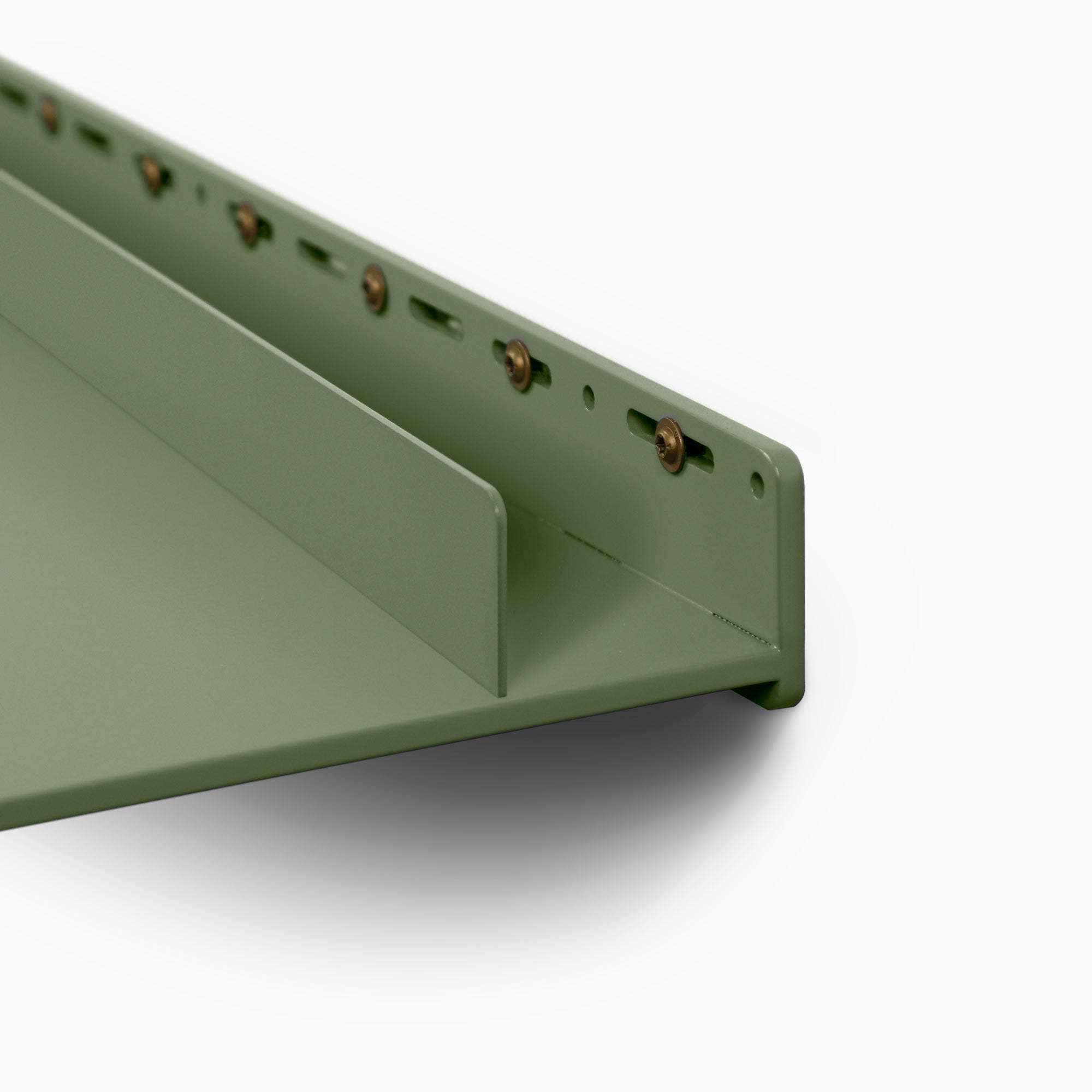
Each of our metal floating shelves is a single piece of solid, hot-rolled steel, welded to a hidden back bar that bolts straight into your studs. Once it’s up, all you see is the shelf — no brackets, no visible hardware, nothing to work loose over the years. Every one is cut to the length and depth you ask for, finished in any of thirty powder-coat colors or a custom color match, and shipped in about five to seven days: real strength, an exact fit, and a color chosen for the room instead of settled for.
How Much Weight Can Our Metal Floating Shelves Hold?
Most floating shelves fail at the wall, not at the shelf itself. Hang weight off the front edge and the shelf works like a lever, prying back against whatever holds it, so thin shelves bow and drywall anchors eventually let go. Ours hold because the back bar is hot-rolled steel with the welds tucked inside it, bolted into your framing rather than into drywall alone.
The payoff is capacity most metal shelves can’t touch. It’s measured by the linear foot, and it climbs as the shelf gets shallower, since a shorter shelf keeps the weight closer to the wall:
- 4″ deep — up to 410 lbs per linear foot
- 6″ deep — 330 lbs
- 8″ deep — 250 lbs
- 10″ deep — 170 lbs
- 12″ deep — 90 lbs
So depth is a trade you make on purpose: go deeper for plates and appliances and you spend a little capacity for the room, though even the deepest shelf carries more than anything in wood or sheet metal at the same size. Length costs you nothing — a longer shelf simply catches more studs. Center the heavy things, mount into studs, and these hold what most shelves won’t.
Load figures describe the Tromso line. Other metal lines carry their own ratings, listed on their pages.
Metal Floating Shelves in 30 Colors, Plus Any Custom Color — And, of Course, Black
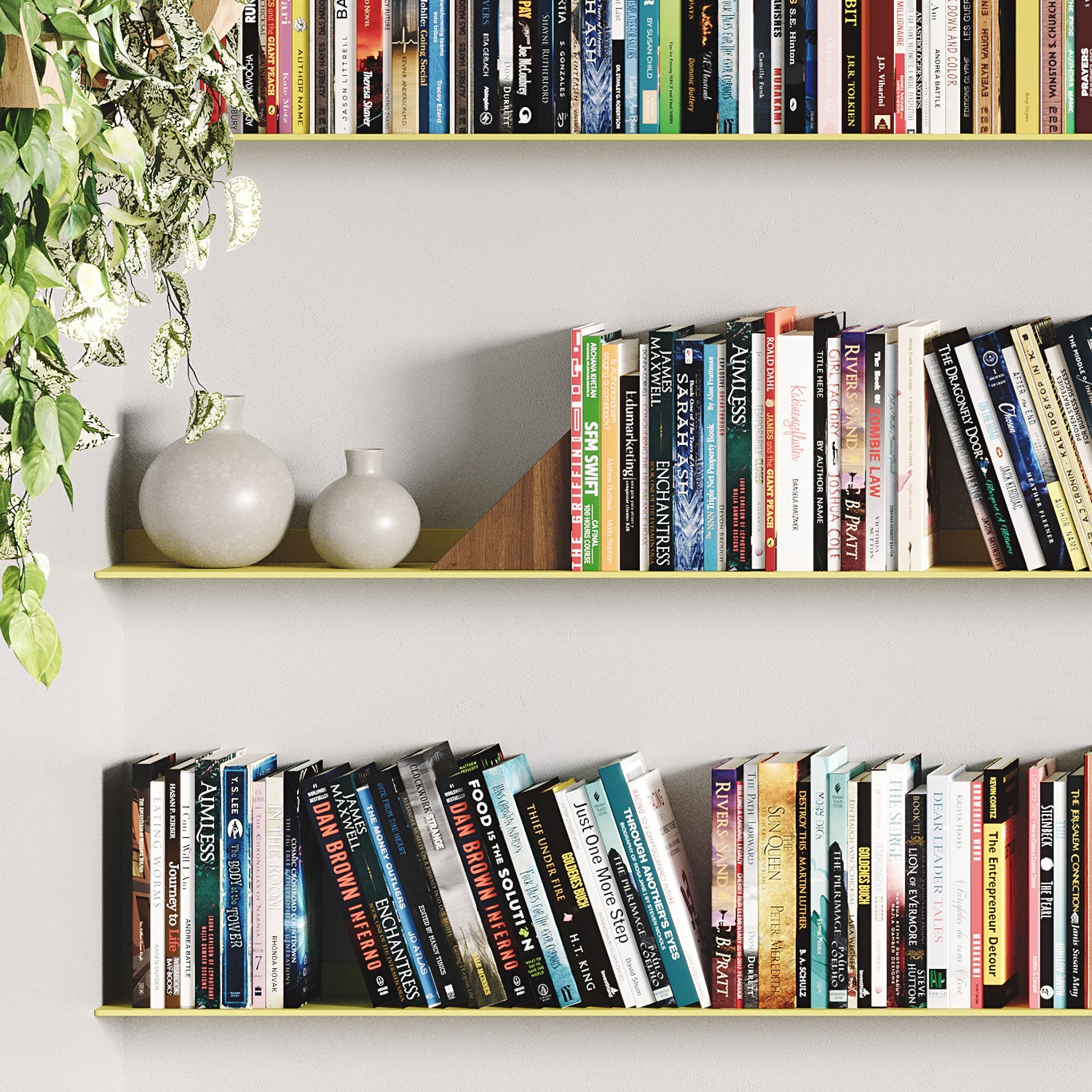
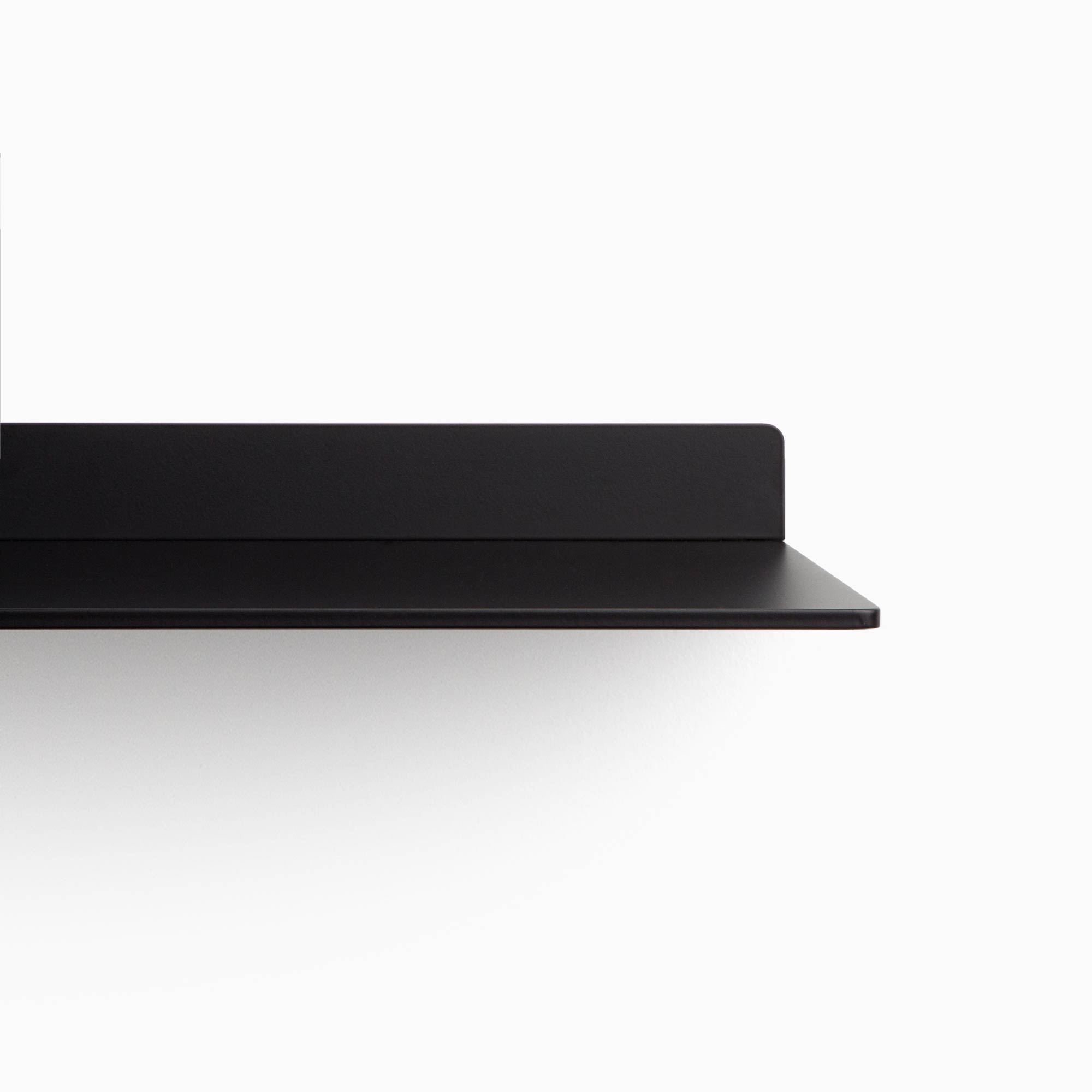
Black is the natural place to start, and it’s well covered — Black Matte is the one most people reach for, with White Matte waiting at the other end of the neutrals. But the palette runs a good deal further than black and white: the full system spans thirty powder-coat colors, from quiet, livable greys like Tungsten, Arsenic, and Concretey to a genuinely wide spread of greens, blues, reds, oranges, yellows, and purples. And if none of the thirty is the one, we’ll color-match a custom order to whatever you bring us — a paint chip, a RAL code, a swatch cut from the sofa — and mix it to order.
Half the fun is in the names. A few favorites from the lineup:
- Shelf Geek Blue — vivid electric blue, and yes, the house color
- Cowabunga — a warm, muted terracotta orange
- Deep Shag — deep retro gold, straight off a ’70s rug
- Bananarama — bright, sunny yellow
- Honey Mustard — warm golden orange-yellow
- Punk Rock — a deep, saturated red
- Witchy Rose — muted dusty rose
- Army Brat — classic olive drab
- Lime Wire — bright, zippy lime green
- Minty Breath — cool, fresh mint
- Aqua Socks — bright, teal-leaning aqua
- Nurple — a bright, unapologetic purple
- Nighty Night — deep navy that reads nearly black
Names aside, the finish is doing real work. Each shelf is powder-coated — dry pigment applied electrostatically and cured under heat into one continuous, hard-wearing surface — which is a large part of why the color holds up so much better than sprayed paint, standing up to the chips, scratches, and everyday moisture and grease that dull a lesser finish over time. Because every shelf is made to order, a five-dollar swatch is the easy way to be sure of a color before you commit to it.
Two of the thirty are meant to look unfinished, and that’s the whole idea. Raw Unfinished and Clear Matte leave the steel close to bare, so the color shifts, texture, and handling marks it picks up on the shop floor come through as part of the character rather than something to hide — though, because they’re essentially uncoated, both are best kept out of humid or wet spots.
One thing you won’t find here is a metallic — no gold, brass, chrome, or silver. Those finishes simply aren’t part of the powder-coat system.
Cut-to-Size Steel Floating Shelves
Standard shelf sizes assume a standard wall, and hardly any wall is one. There’s an outlet in the way, a window return to clear, a cabinet run to meet, or an alcove that lands a few inches short of every stock length. Because we build each shelf to order, you give us the exact measurement instead of rounding to it: any length from six to eighty-four inches, any depth from four to twelve inches, cut to fit.
Depth is the choice worth slowing down for. Four to six inches is right for books and objects, while eight to twelve inches gives you room for plates, stacked dishware, and small appliances. Going deeper trades a little capacity for that space, so it’s worth settling before you order, since it’s fixed once the shelf is cut. Need a size beyond the range, or something the menu doesn’t cover? Go Custom runs on the same made-to-order program.
Steel Floating Shelves, Room by Room
Steel earns its keep a little differently in every room. Here’s where it does its best work.
Steel Floating Shelves for the Kitchen: Open Storage That Holds the Weight
The kitchen is where most people first try open shelving, and it asks the most of a shelf. Powder-coated steel wipes clean and shrugs off the steam and grease that eventually warp a wood shelf. Run it deep — eight to twelve inches on the Tromso line — and it takes plates, stacked bowls, and the small appliances that never have a home, holding cast iron and a full stack without dipping in the middle. Match it to your cabinetry in any of the thirty colors, or send us your own to match.
Steel Floating Shelves for the Living Room: Books, Records, and Media Walls
A wall of books or a run of records is where a cheap shelf shows its hand, sagging in the middle within a year — something quarter-inch steel simply won’t do. This is the room to go long, whether that’s a full media wall or a book run that climbs to the ceiling, and as long as you center the weight and mount into studs, the shelf stays flat and level under loads that would fold a sheet-metal ledge.
Metal Floating Shelves for the Bathroom: Moisture-Ready, Not Rust-Prone
Powder coat handles the everyday humidity of a bathroom far better than raw or painted steel, which makes it an easy call for towels, jars, and anything that lives near a sink or tub. Two honest limits are worth naming, though: the coating is highly rust-resistant but not rustproof, so a deep gouge can eventually let moisture reach the steel — and powder-coated steel isn’t waterproof, which means constant, direct water like a shower’s spray zone will rust it over time and isn’t covered under warranty. Keep it clear of the direct spray, and it’s more than at home everywhere else in the bath.
Metal Floating Shelves for the Home Office: Clean Lines, Room for Books and Binders
An office shelf carries more than it lets on — books, binders, a printer — and steel takes it without the sag. Cut to size, it spans the whole wall above your desk instead of stopping short, and with thirty colors on offer, the room comes together as something designed rather than assembled.
Steel Floating Shelves for Entryways and Mudrooms: Built for the Daily Toss
The entry shelf gets the roughest, least ceremonious handling in the house: keys tossed, bags dropped, a boot swung against it on the way in. Steel takes that in stride where a softer material would dent and scuff, and paired with a row of Shelfology wall hooks, it turns the pile by the door into an actual landing spot.
Steel Floating Shelves Above the Fireplace: A Mantel That Won’t Burn
Steel doesn’t burn, which is its quiet advantage over a wood mantel above a working firebox — no scorching, no off-gassing under the heat. What it can’t do is override code, so before you hang a TV or art above a heat source, check your local clearance-to-combustibles rules and your fireplace manufacturer’s specs. Planning a full mantel? Our floating mantel brackets are made for exactly that.
Our Steel Shelf Lines
For now, the collection runs on one line in a few different shapes. Tromso is the flagship — flat, quarter-inch steel shelves in the full range of sizes and all thirty colors, and the line every load number on this page refers to. It also comes as Tromso RADius, a softened, curved-front version that reads a little calmer than the flat profile while carrying the same steel and the same strength. Between the two shapes and the range of back-bar heights, most walls have a Tromso that fits.
More metal lines are on the way, and each will show up here as it launches, with its own sizes, shapes, and load ratings on its own page. To start, configure your size and color on the Tromso line, or order a swatch first.
Installing a Steel Floating Shelf
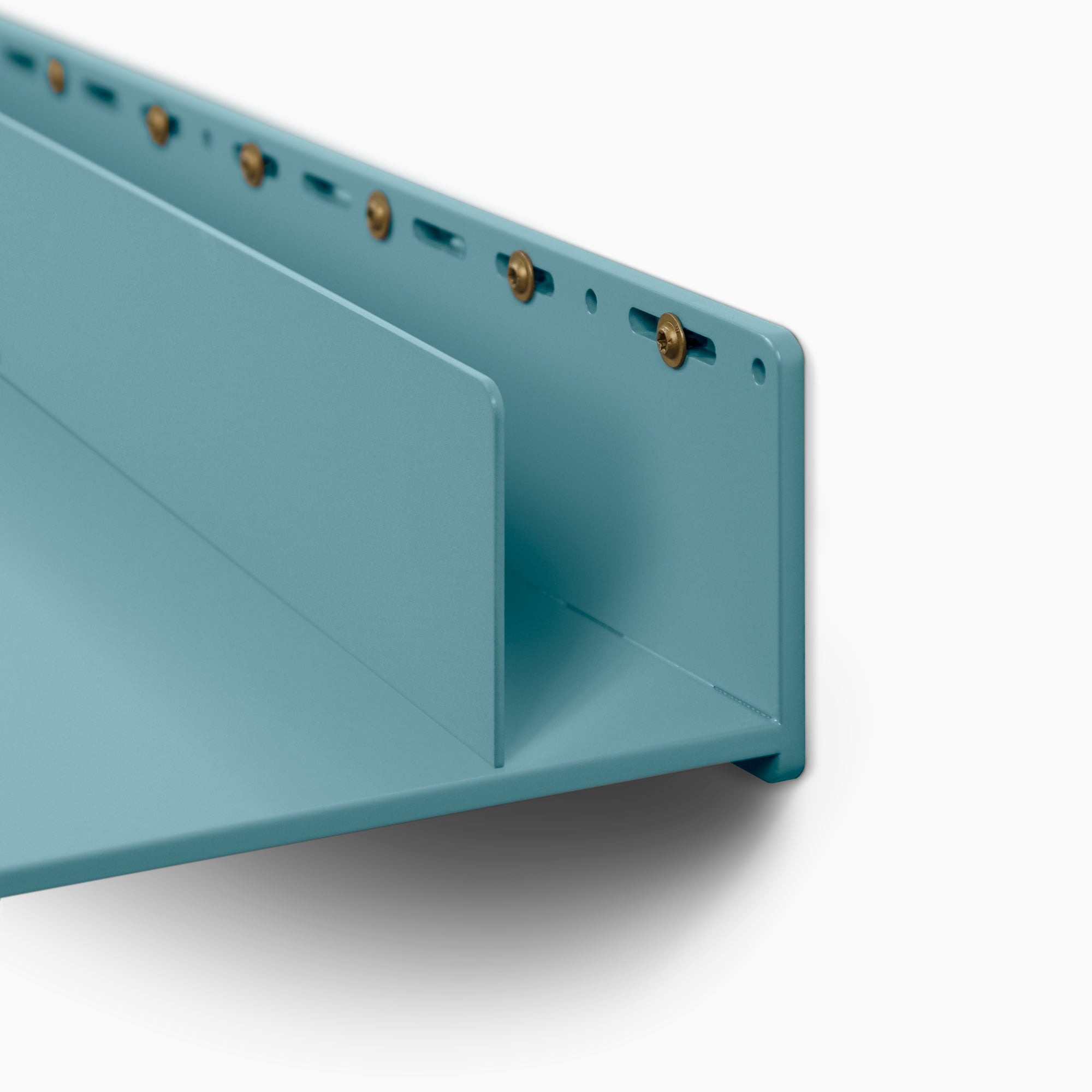
The trickiest part of any floating shelf is landing a stud right where you want the shelf to go. These are drawn up around standard sixteen-inch-on-center framing to take the guesswork out of it: on the Tromso line, countersunk holes run every four inches along the back bar, so wherever your studs fall, one lands close enough to catch. No extra holes, no compromise on placement. From there it’s simple — find the studs, level the bar, and drive your fasteners into framing or solid blocking, with a real level in hand, because a floating shelf gives away every fraction of a degree.
A couple of honest notes on mounting. These don’t go up without drilling — a solid steel shelf under real weight needs a mechanical fastener, and nothing adhesive will hold it. Where studs fall behind the shelf you fasten straight into them; for the spans in between, the included anchor set handles drywall, with an anchor roughly every four to six inches. Masonry is covered too: the same kit ships with masonry anchors, and the install guide walks you through predrilling a ¼-inch hole and setting them flush.
Steel vs. Wood Floating Shelves
Both are real floating shelves; they just suit different jobs. Steel is the stronger, steadier of the two — more weight per foot, no bowing under a load, and no warping or cupping when the humidity swings, all in a thinner profile than wood can pull off. That makes it the easy pick for heavy books, kitchen duty, and damp rooms. Wood answers a different need, bringing a warmth and grain that painted steel doesn’t, and for lighter loads in a bedroom or living room, that character is often the whole reason to choose it. Leaning that way? Our wood floating shelves have it covered. If the shelf has to hold serious weight, or live in a kitchen or bath, steel is the one built for it.
Frequently Asked Questions
How much weight can a steel floating shelf hold?
Far more than most people expect. The Tromso line is rated up to 410 lbs per linear foot, easing off as the shelf gets deeper — roughly 410 lbs at four inches deep, 250 at eight, and 90 at twelve — with stud mounting required to reach those numbers. That’s well beyond the bent sheet-metal shelves most people picture.
Do the screw holes line up with my studs?
They’re designed to. The shelves are built around standard sixteen-inch-on-center framing, and the Tromso back bar has countersunk holes every four inches, so wherever your studs land, one is close enough to catch.
Can I install without drilling?
No. These bolt into studs or blocking, and nothing adhesive or peel-and-stick will hold the weight. If a stud isn’t where you need it, mount into solid blocking or use rated anchors.
What colors do they come in?
Thirty powder-coat colors, Black Matte and White Matte among them, plus a custom color match to any color you send us. Since every shelf is made to order, it’s worth ordering a five-dollar swatch before you commit.
Will they rust in a kitchen or bathroom?
Powder coat strongly resists moisture and grease and is highly rust-resistant, though not indestructible if the coating is deeply gouged. It holds up well through the everyday humidity of a kitchen or bath, but keep it clear of constant, direct water like a shower’s spray zone — powder-coated steel isn’t waterproof, and standing water will rust it over time.
Do steel floating shelves sag?
Quarter-inch steel with hidden welded construction resists the deflection that bows thin sheet-metal shelves. Mounted into studs, with the weight centered, it stays flat under loads that would sink a cheaper shelf.
What’s the longest steel floating shelf you make?
On the Tromso line, eighty-four inches, cut to any length down to six. For something longer, or a run of shelves to span a full wall, Go Custom or call a Shelf Geek.
What sizes are available?
Made to order and cut to size. The Tromso line runs from six to eighty-four inches long and four to twelve inches deep, and other lines carry their own ranges, listed on their pages.
Which line should I choose?
Right now it’s Tromso, in one of two shapes: flat, for a crisp edge, or RADius, for a softened curved front. Both use the same steel, the same strength, and the same thirty colors, so it really comes down to the look. More lines are on the way.
What’s the difference between powder coat and raw or clear steel?
Powder coat seals the steel in a single continuous, chip-resistant color. Raw Unfinished and Clear Matte leave it close to bare, showing the real color shifts, texture, and marks of the material as the finish itself. One hides the steel’s history; the other frames it. Keep the raw finishes out of humid or wet spots, since they aren’t sealed against moisture.
Metal or steel — what’s the difference?
No difference at all. Both names describe the same shelf, since steel is the metal we build them from.
Can they go above a fireplace?
Steel is non-combustible, so it won’t char or off-gas the way a wood mantel can. Always follow your local clearance-to-combustibles code and your fireplace manufacturer’s specifications before mounting electronics or artwork above a heat source.