

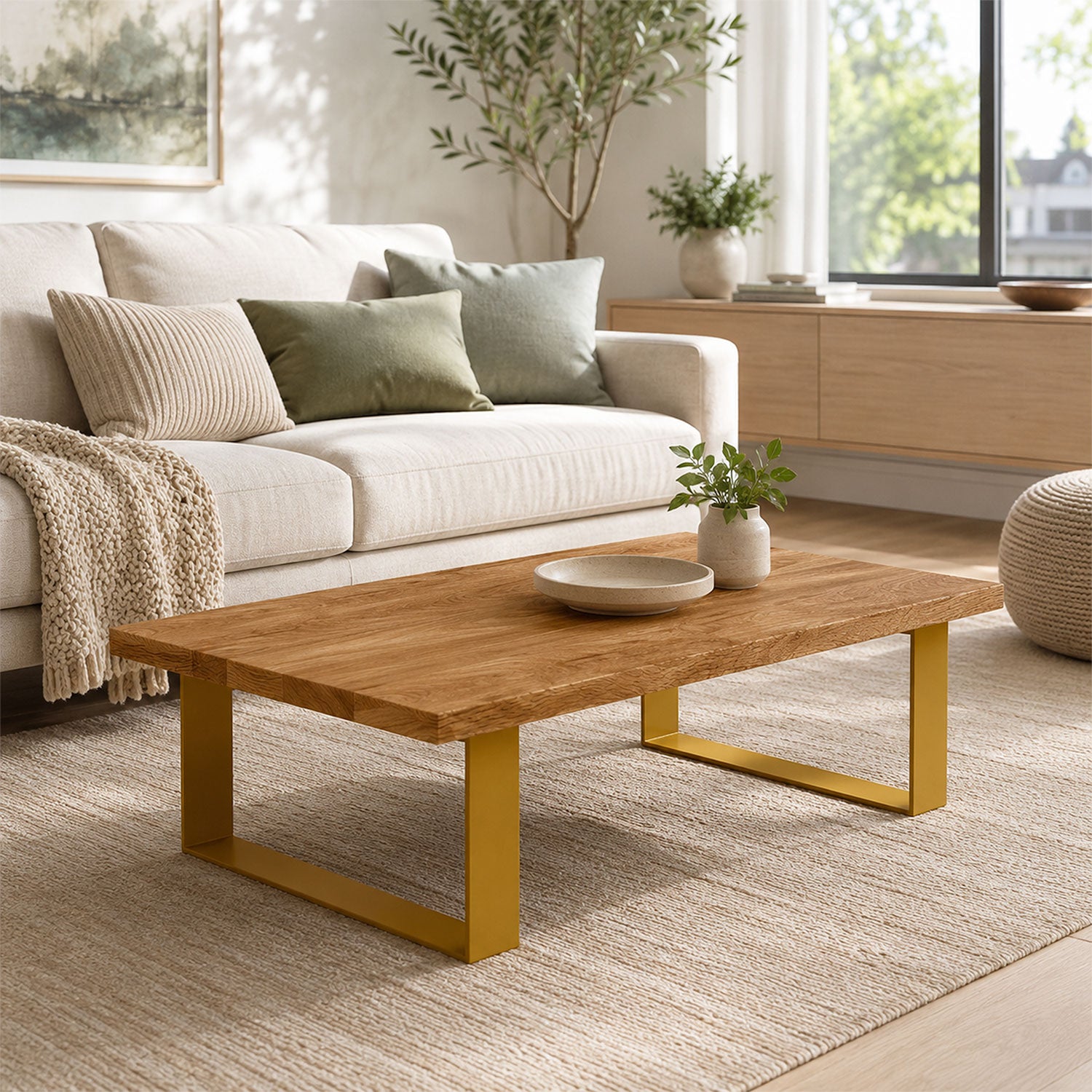
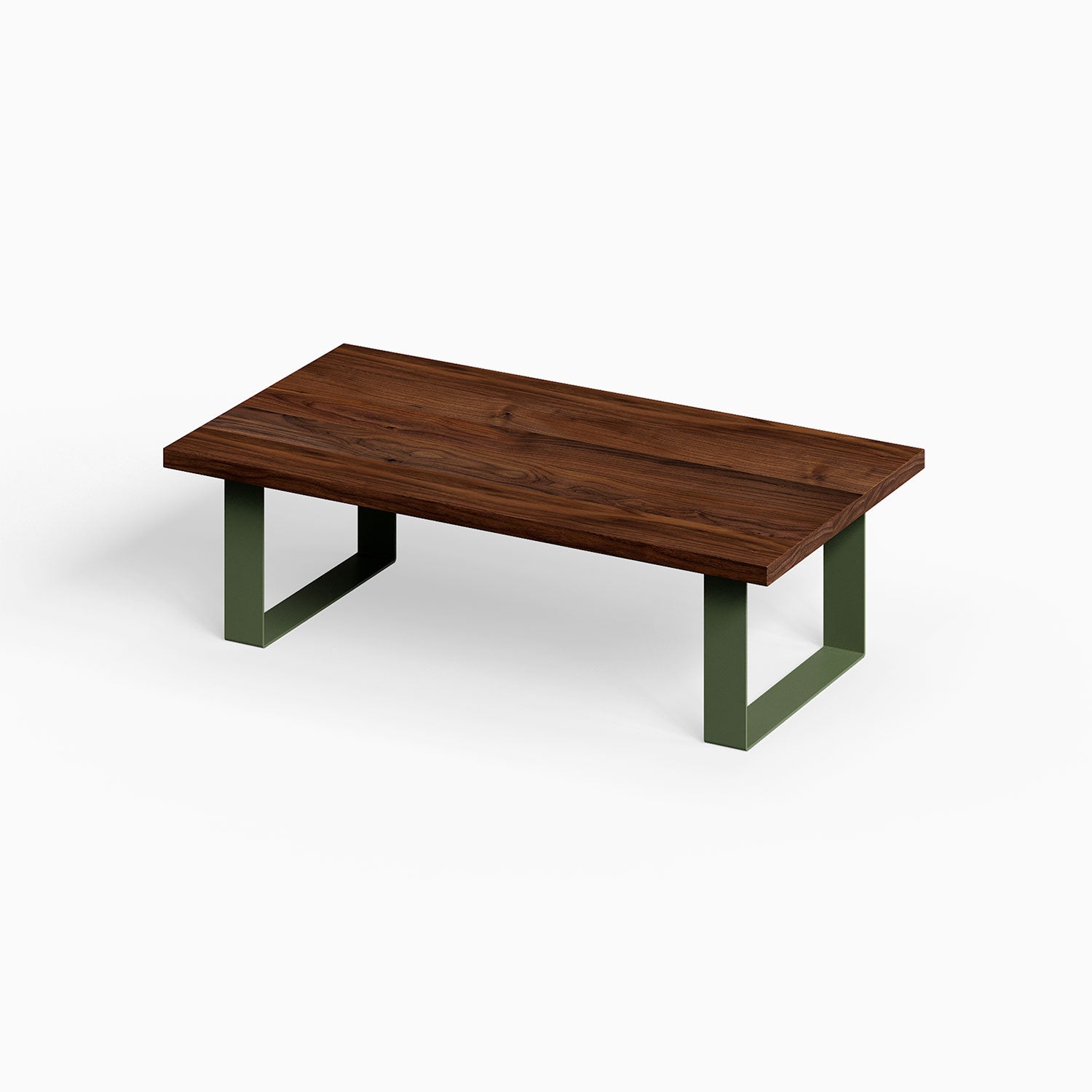
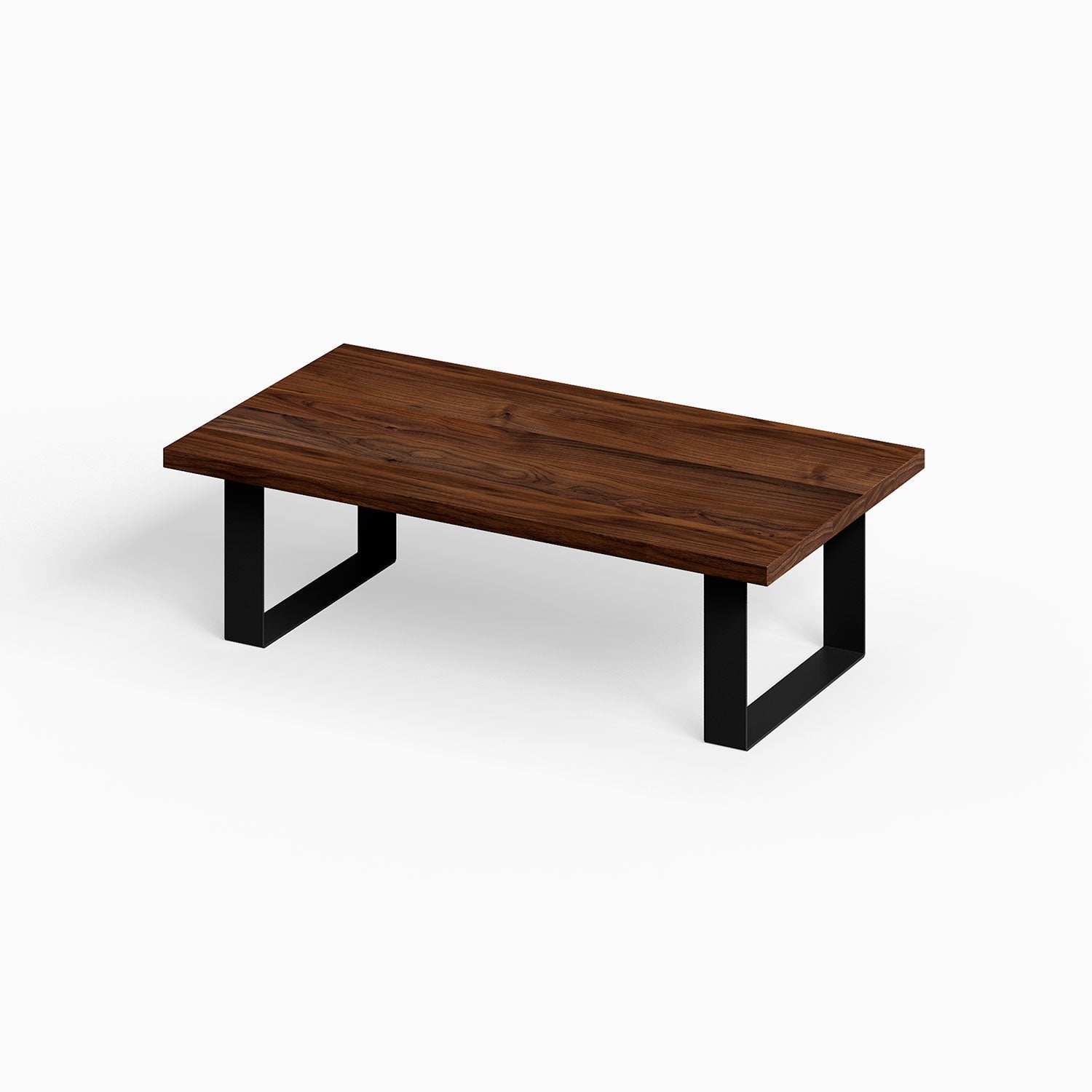
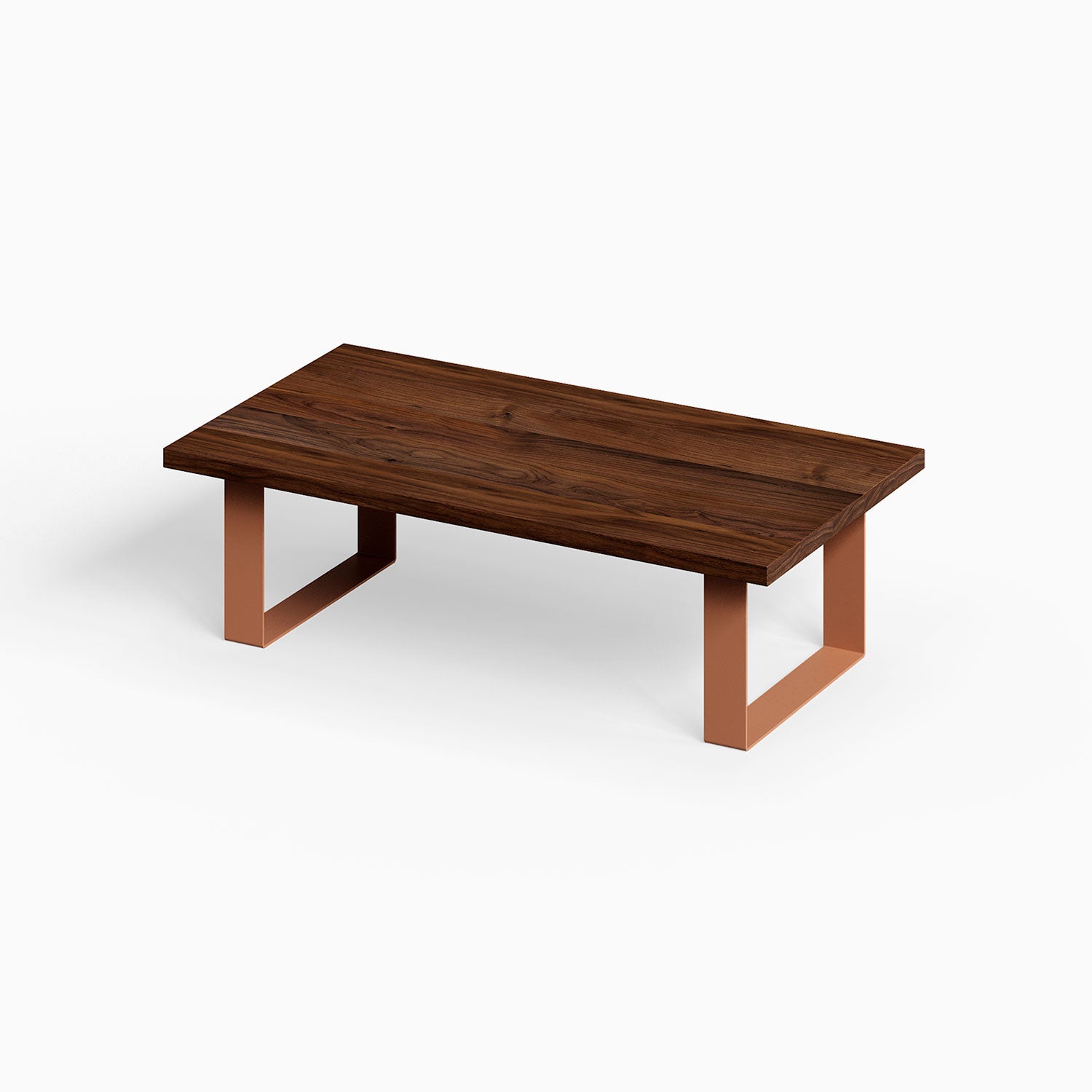
Coffee Tables Built to Last Decades, Not Years
Coffee tables take more abuse than almost anything else in a living room, and most aren't built for it. The particleboard ones swell and sag where drinks land. The veneered ones chip at a corner and can't be sanded back. The flat-pack ones develop a wobble by the second year and a lean by the third, until replacing the whole thing feels easier than fixing it. We got tired of that cycle too.
This collection is our answer. We've spent more than a decade building furniture-grade shelving from solid hardwood and steel, learning exactly how those materials carry weight and wear over years of daily use, and these coffee tables bring that same knowledge down to the floor. Each one is made to order in Idaho, built to be lived on rather than tiptoed around, and meant to be the table you stop replacing.
Solid Hardwood and Powder-Coated Steel, in Six Matte Colors
Every table is solid Walnut or White Oak. Solid wood means the grain runs all the way through, so a scratch sands out and a nicked edge is still real wood, not a printed film over a particleboard core. Where a table calls for a steel surface, that steel is a full 11-gauge, heavier than the category bothers with, and it's powder-coated rather than painted.
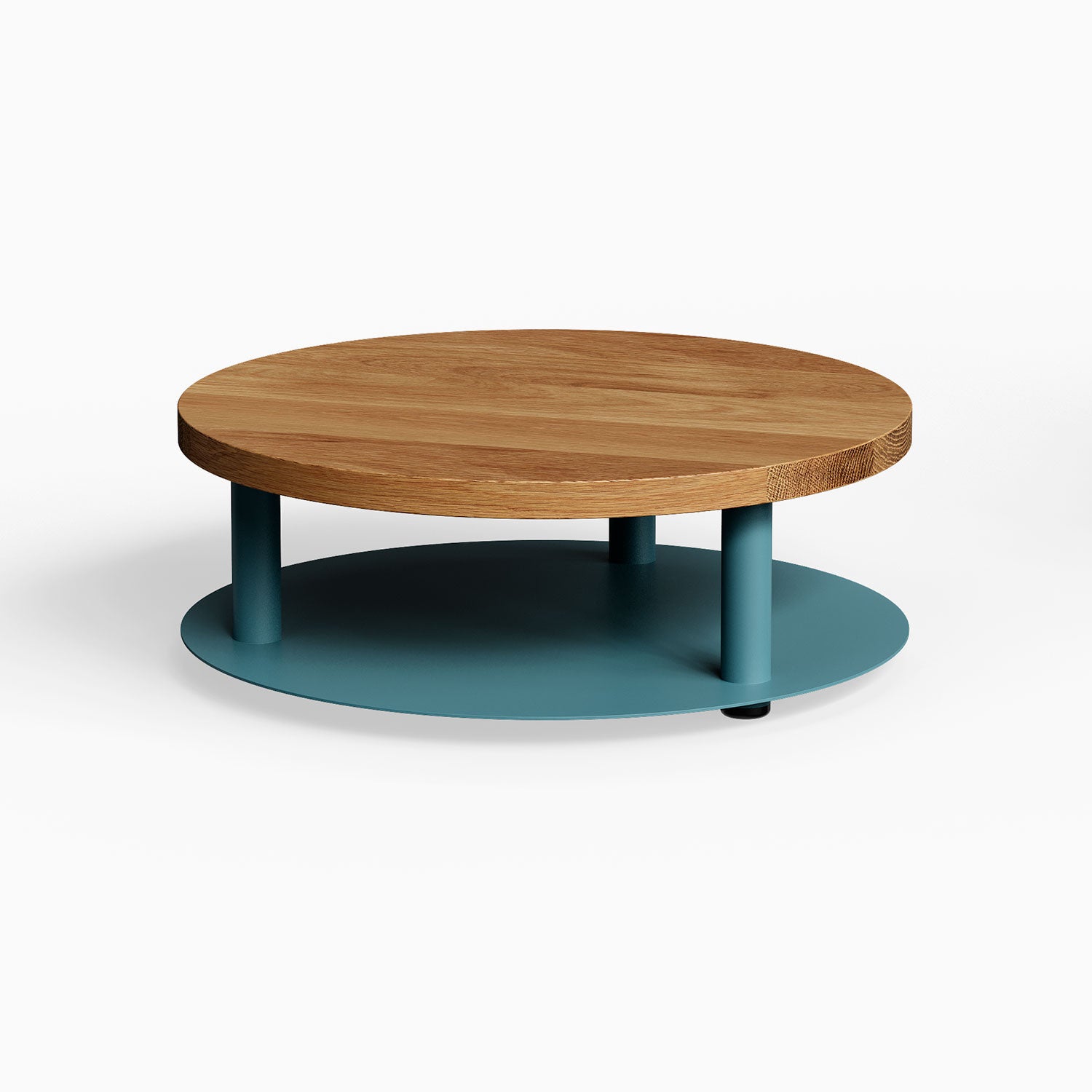
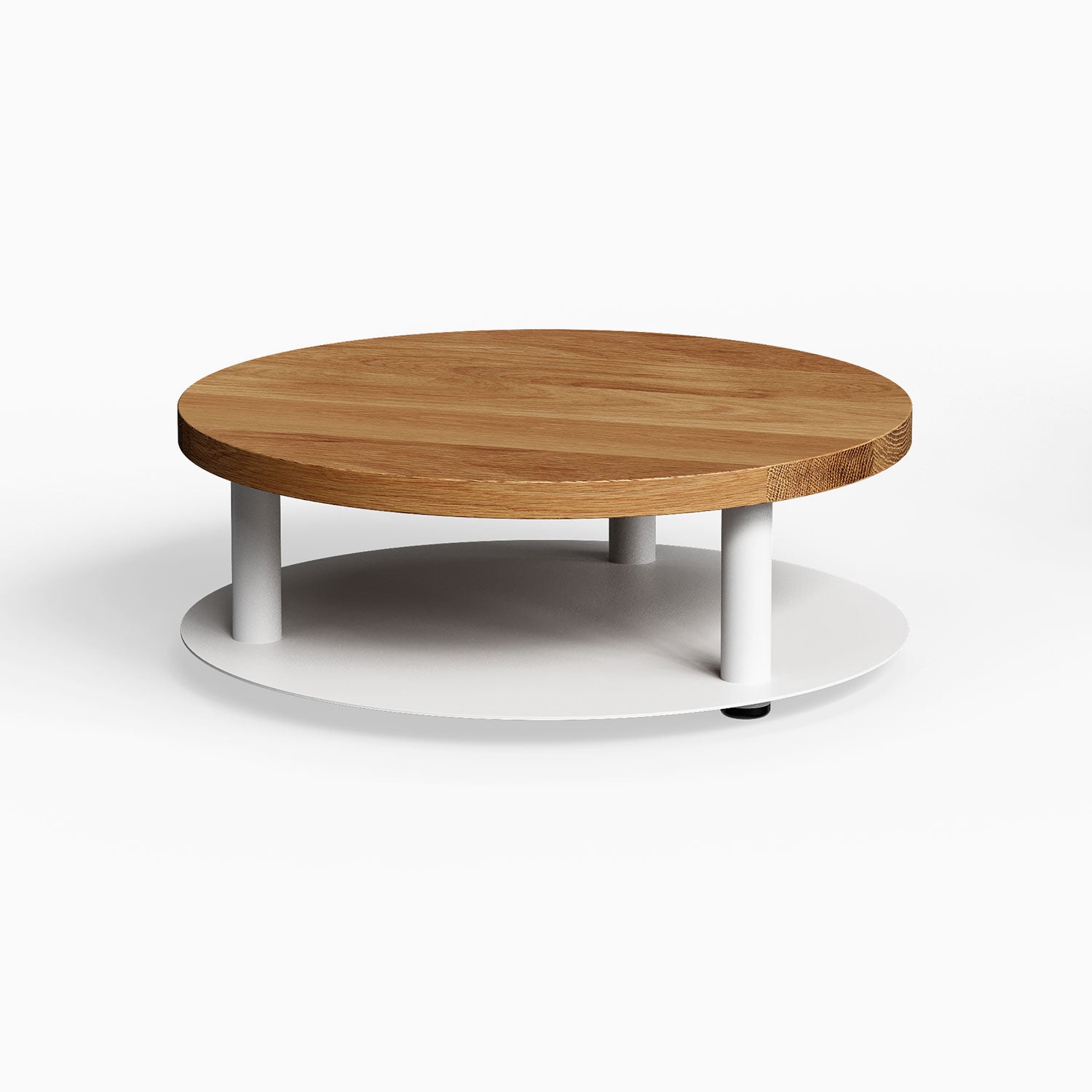
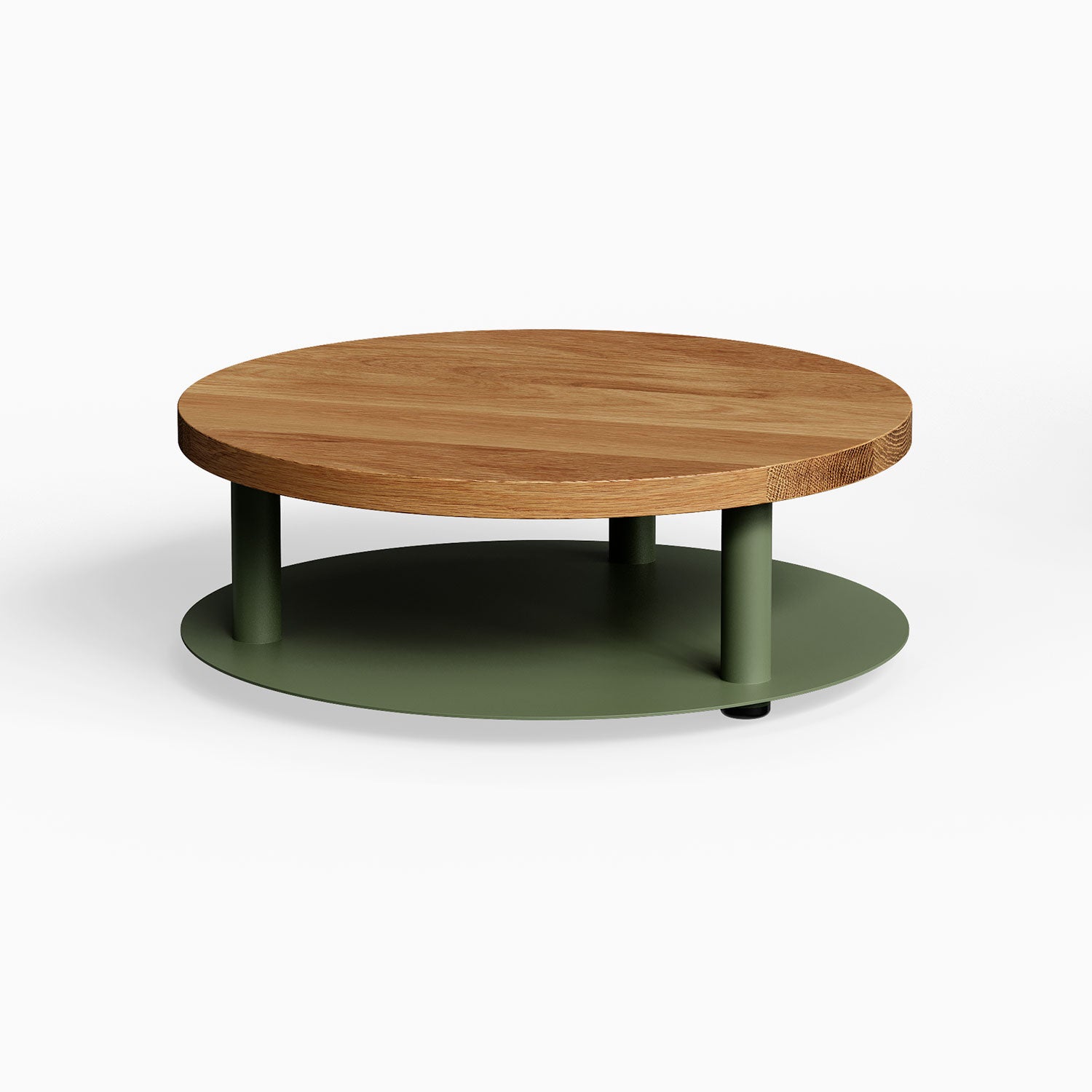
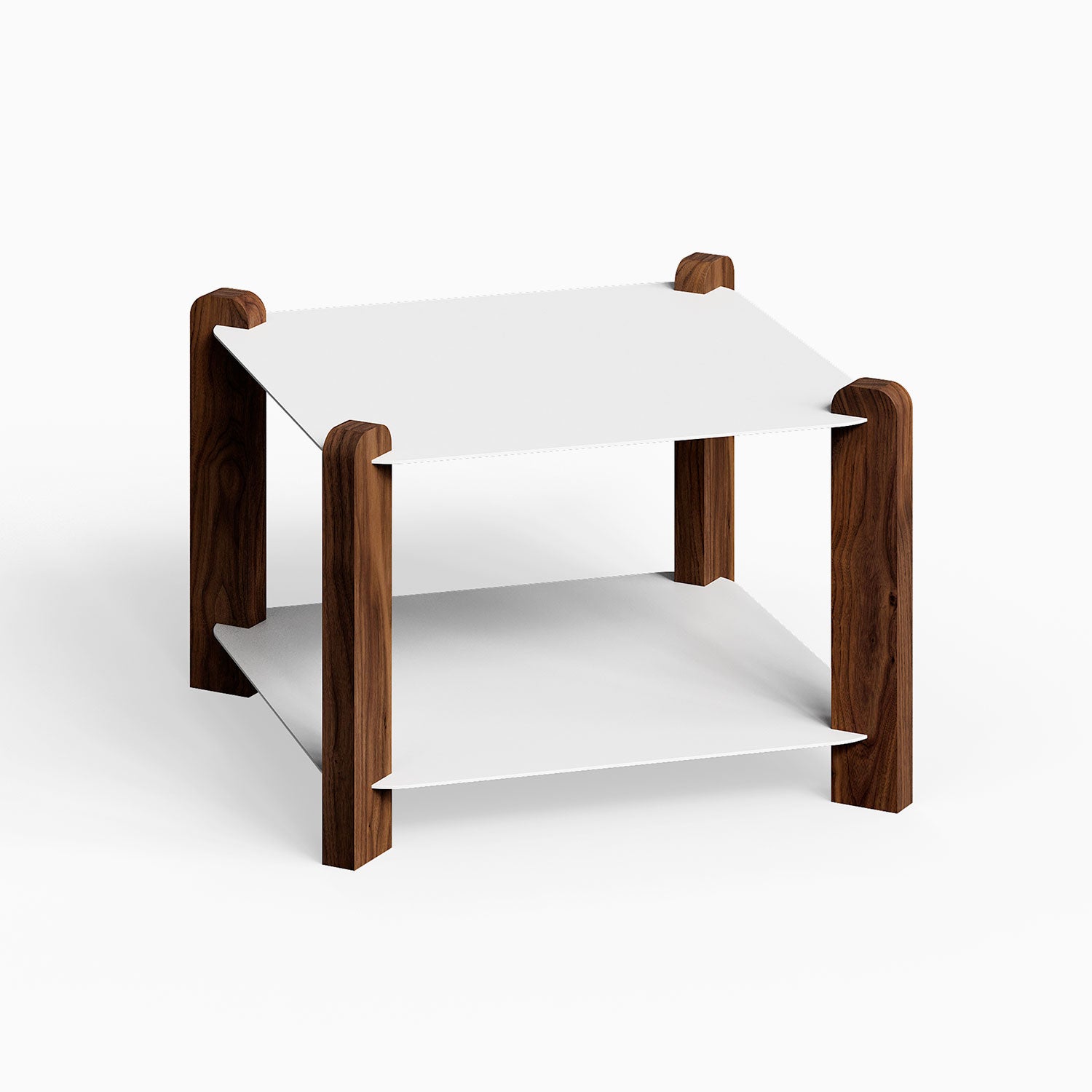
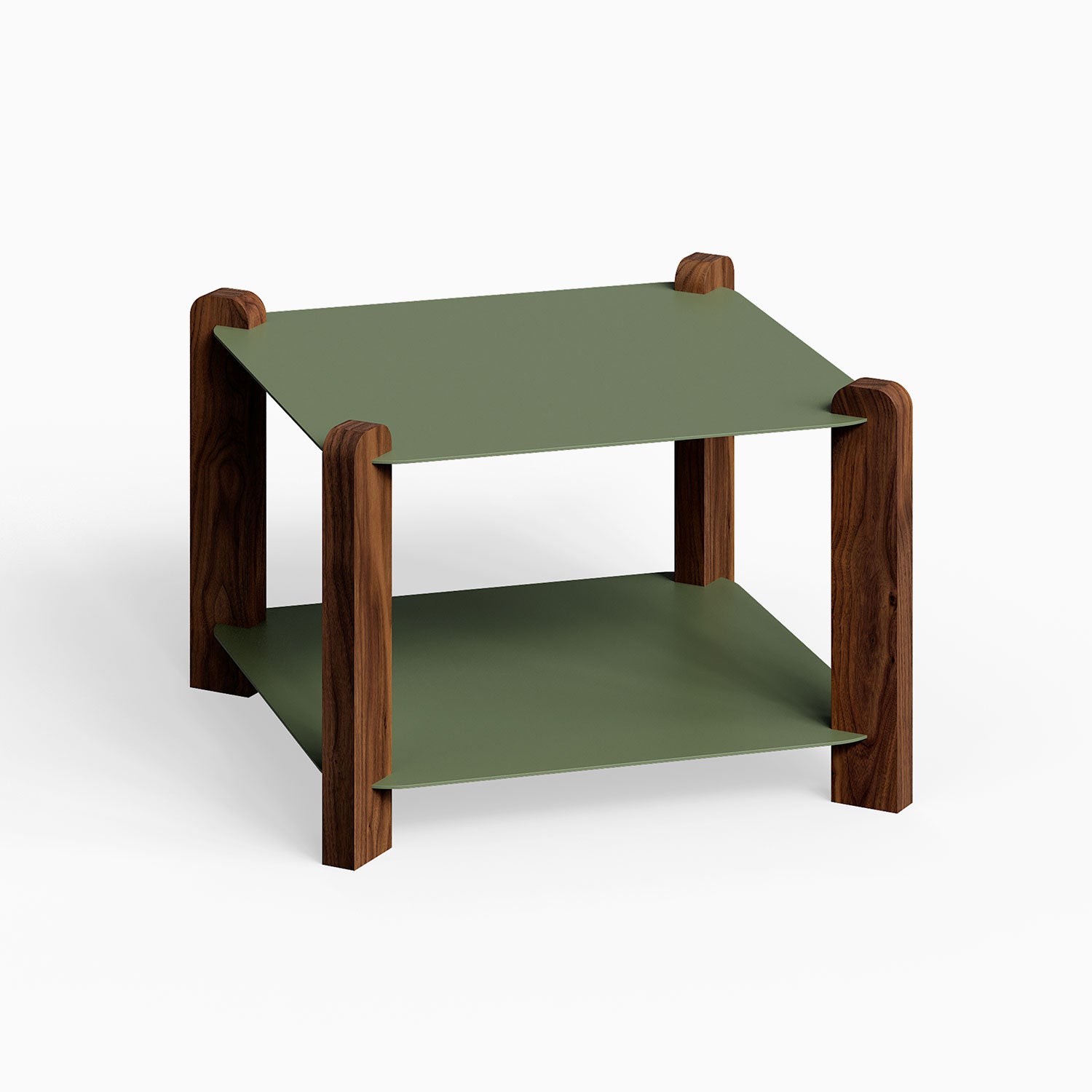
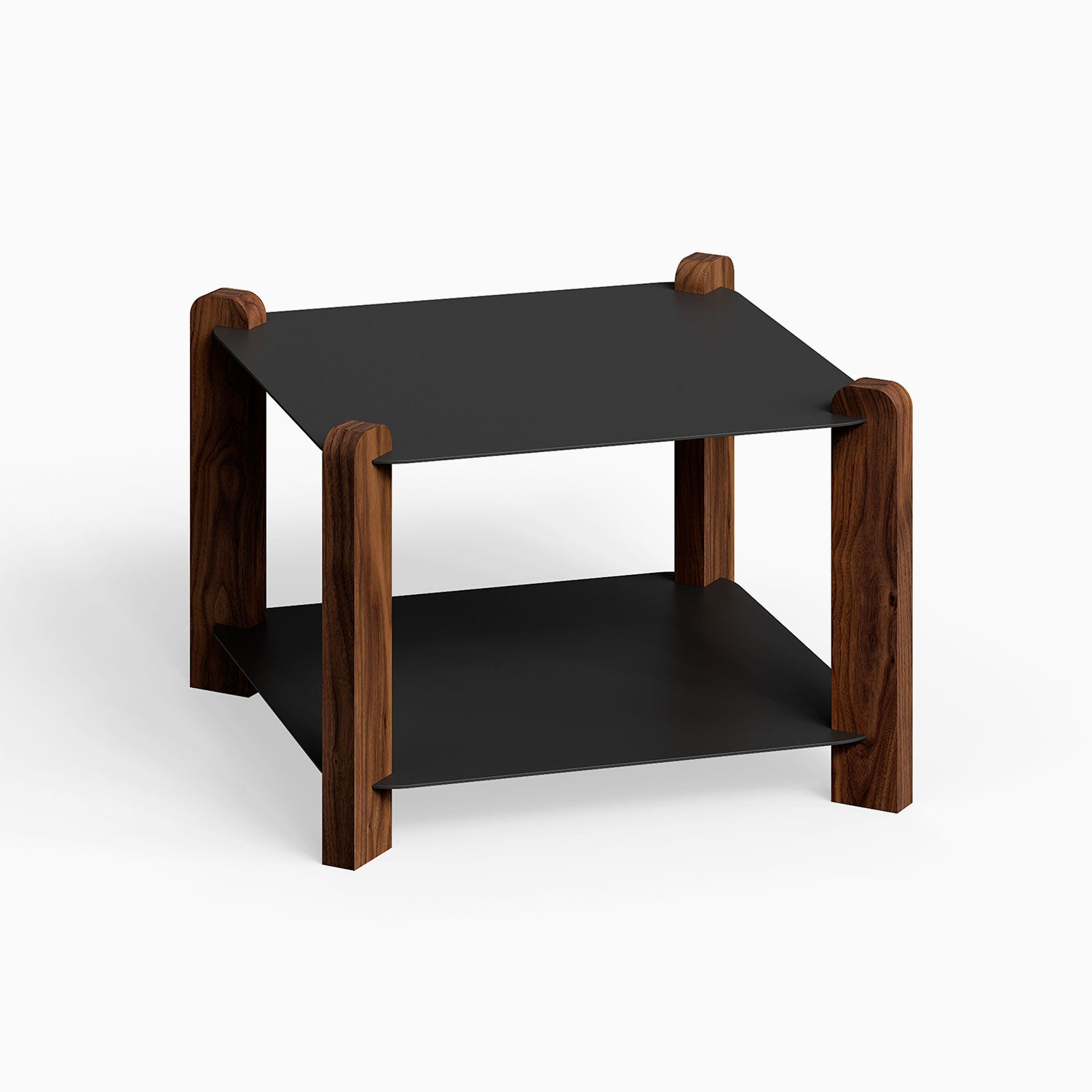
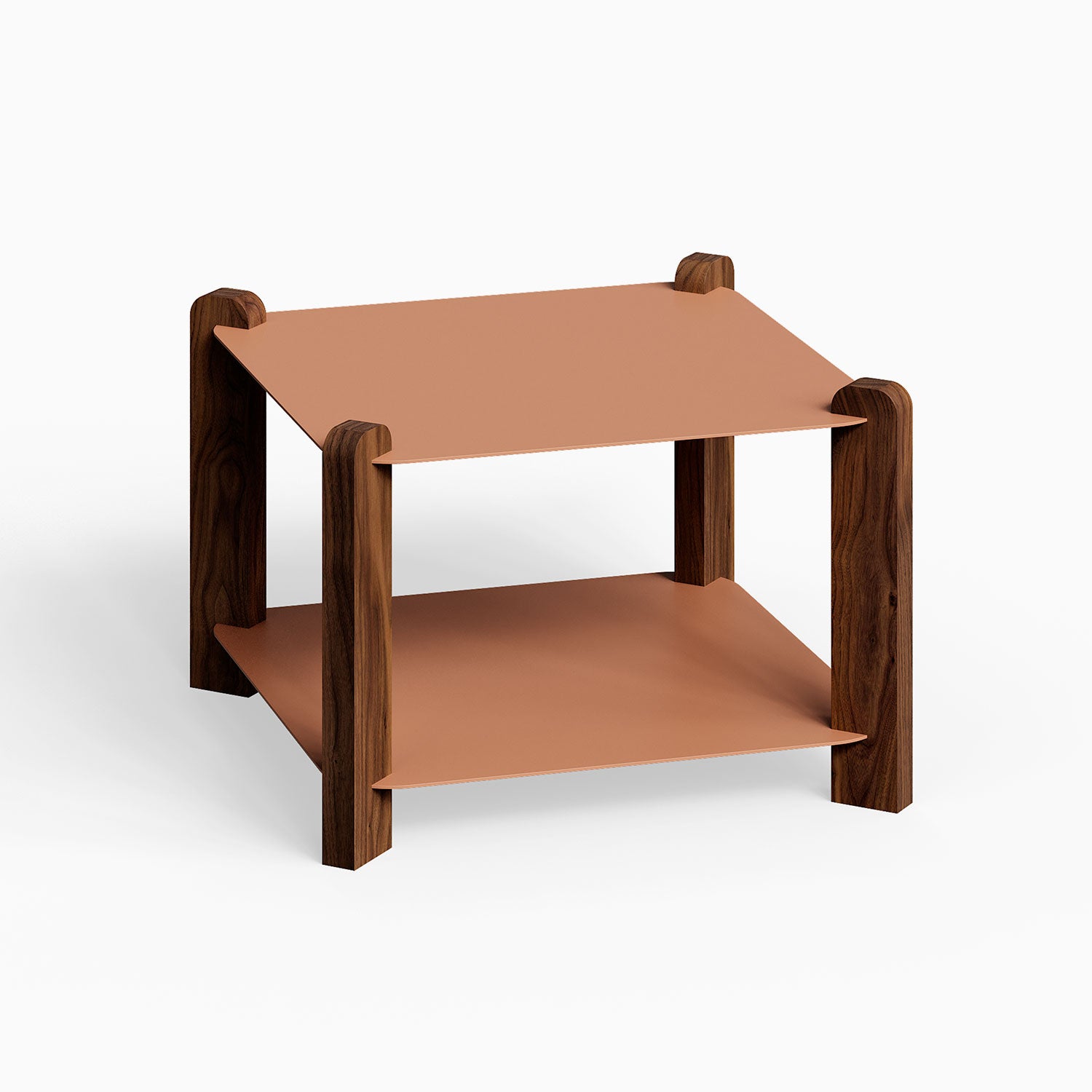
On most steel furniture, the color is sprayed-on paint, and paint chips and eventually peels. Ours isn't painted at all. Powder coating bonds dry pigment to bare steel with an electrostatic charge, then bakes it into a single hard shell, fused to the metal rather than laid on top, so it shrugs off years of cups, keys, and shoes without flaking at the edges. For the powder-coated steel surfaces, you choose from six matte colors, quiet to loud:
- White Matte
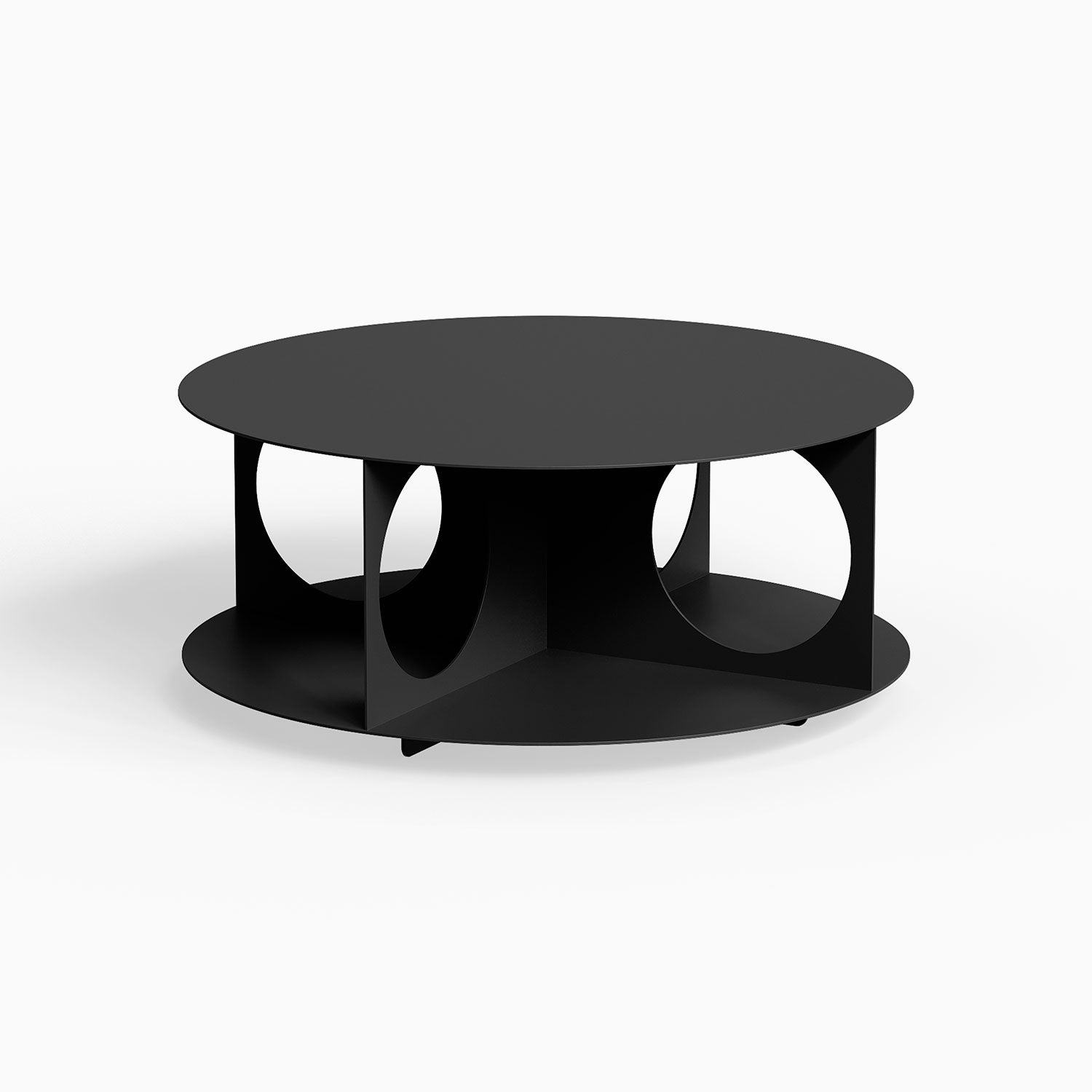
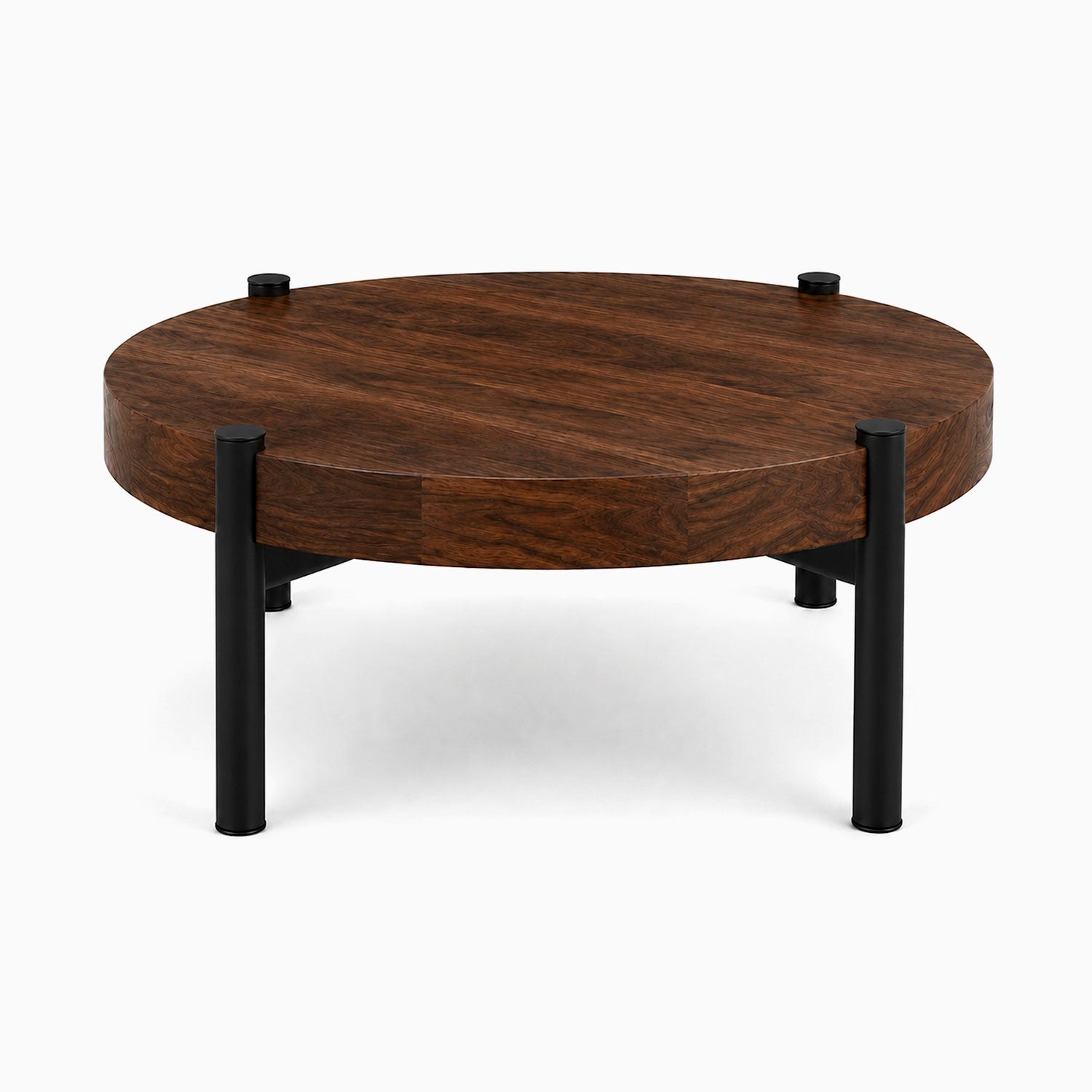
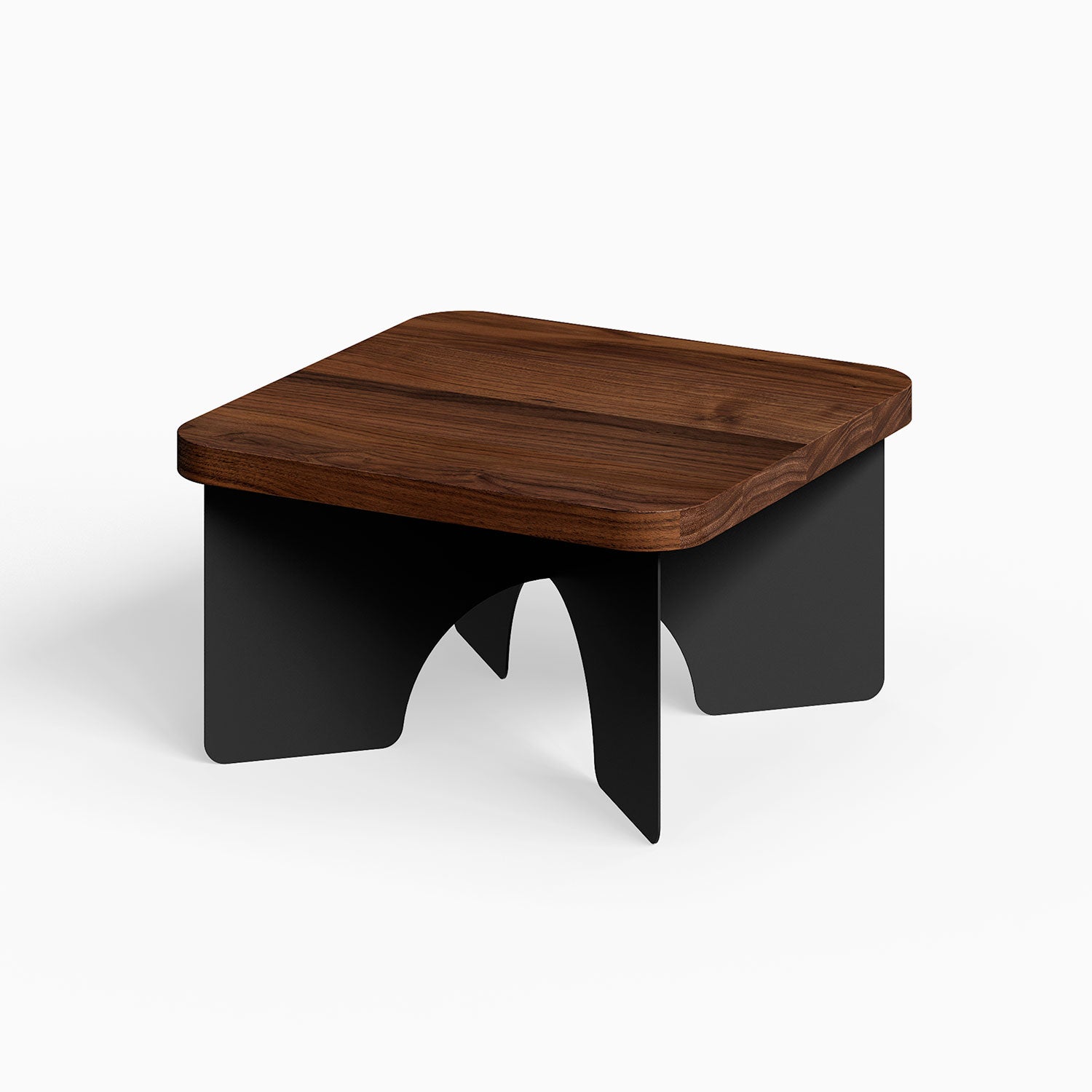
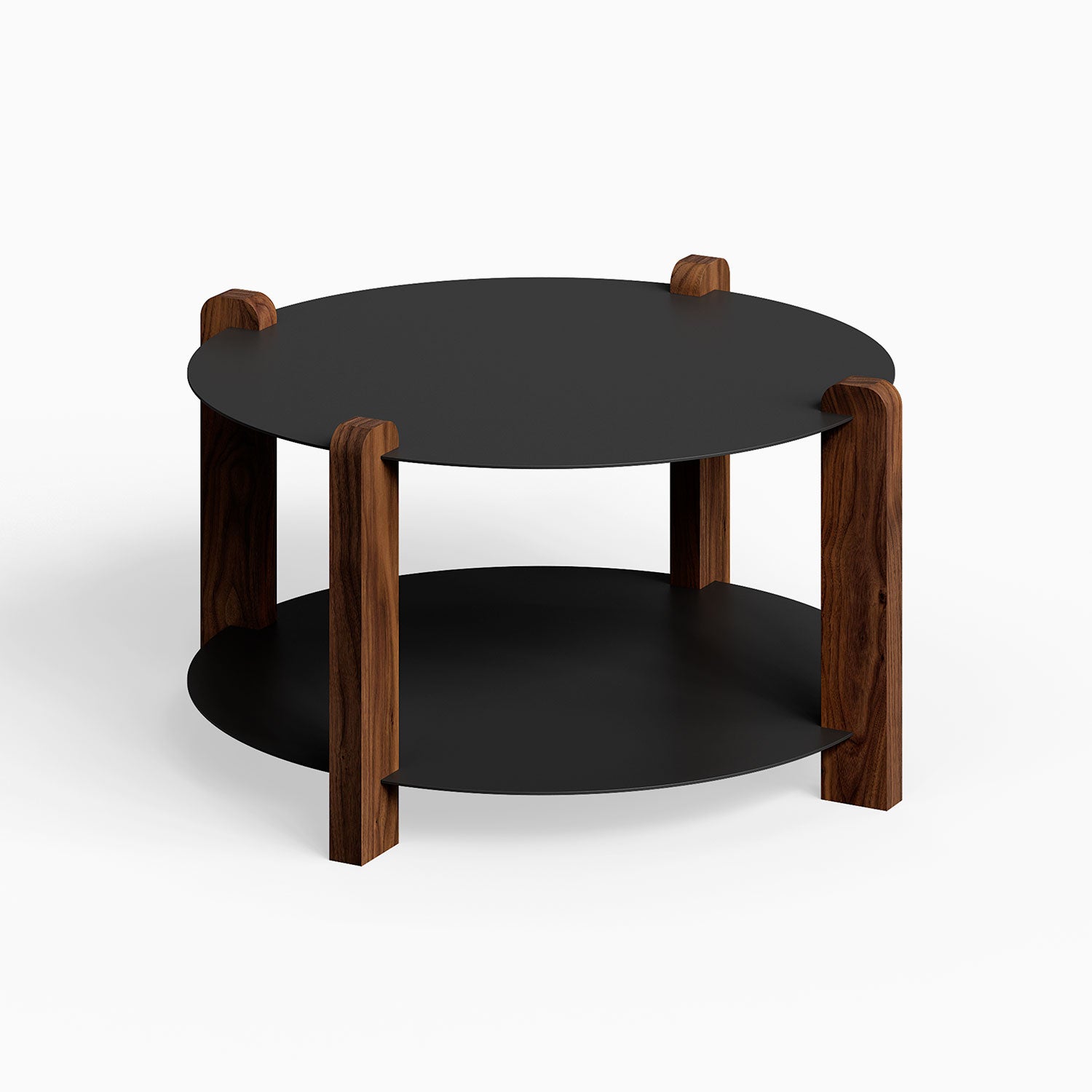
- Black Matte
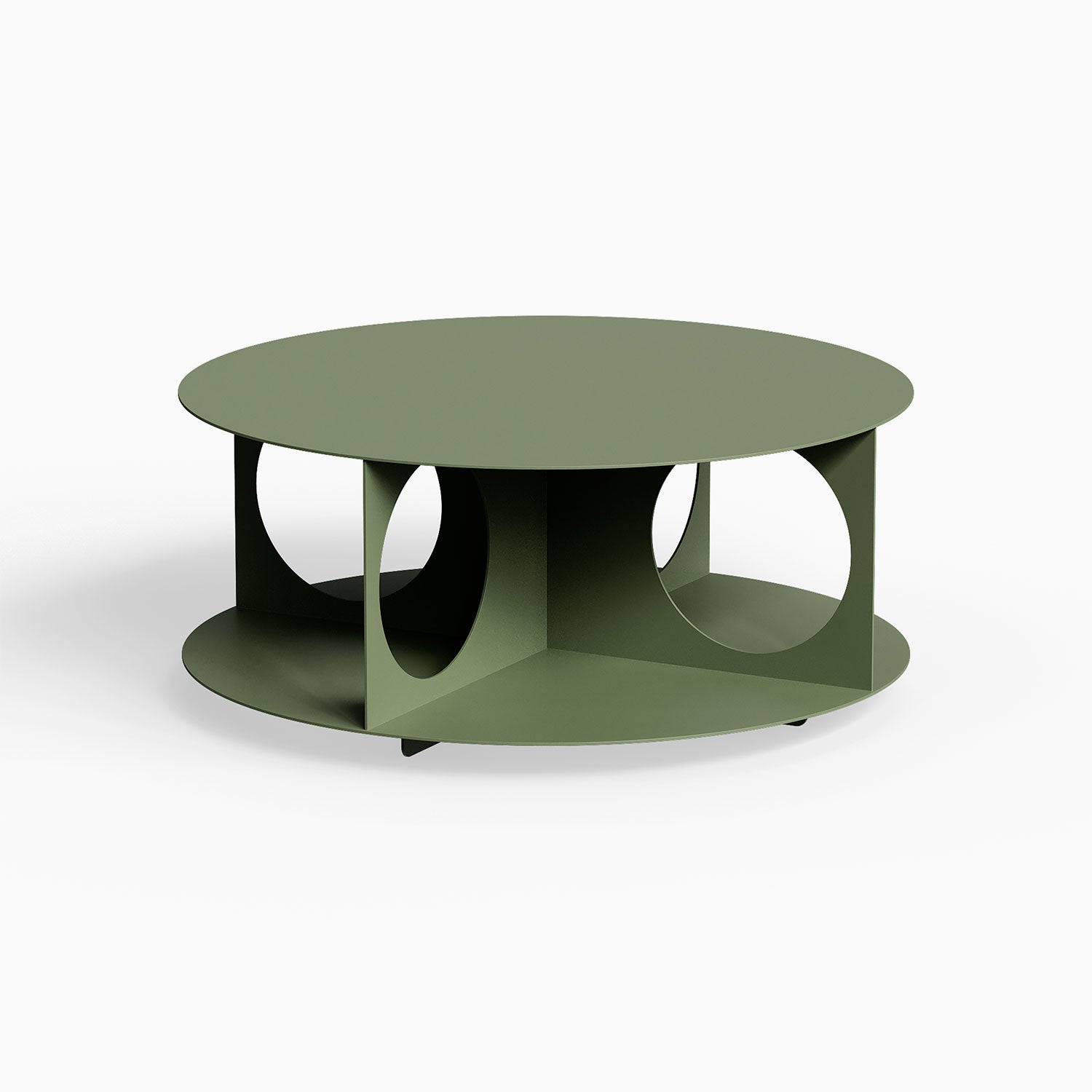
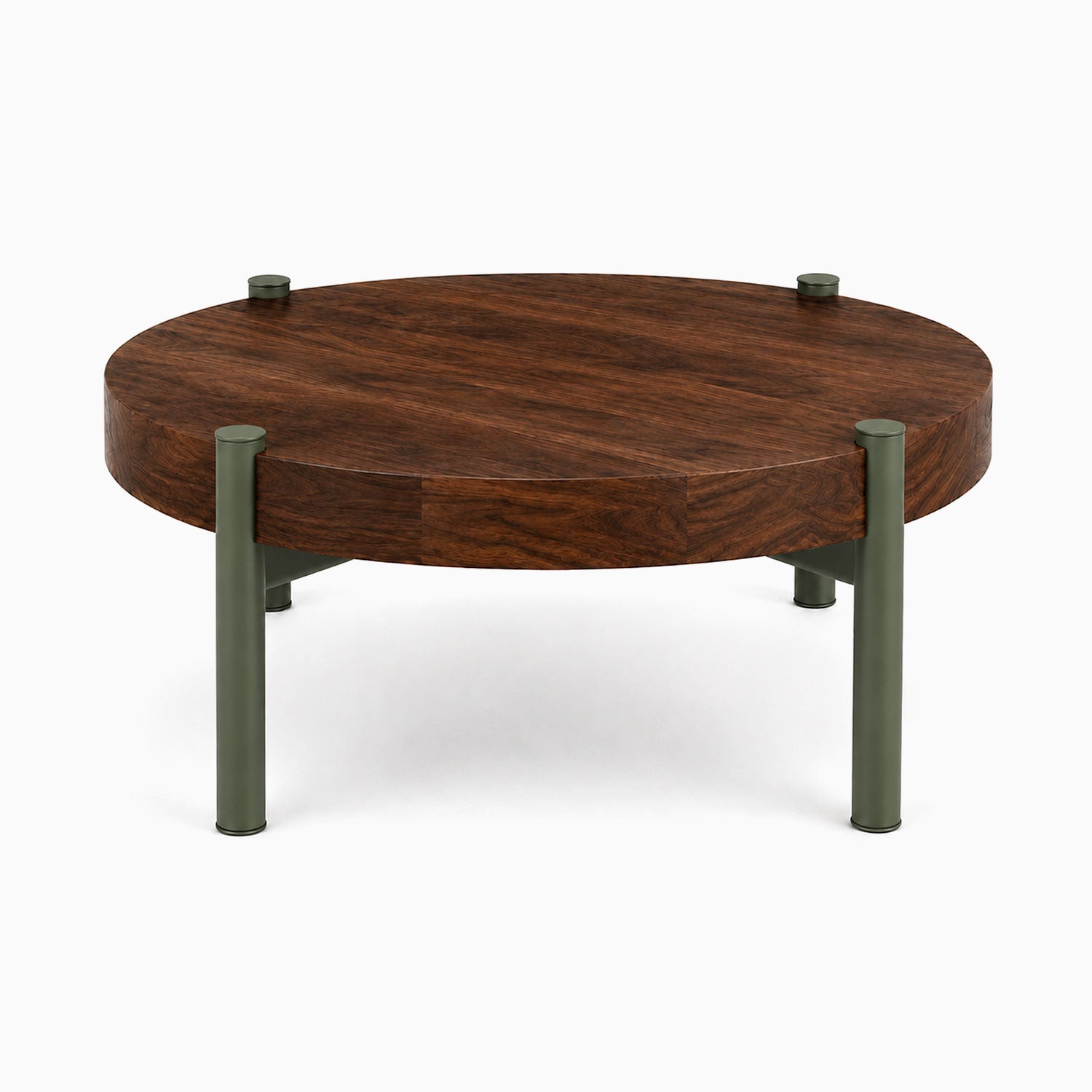
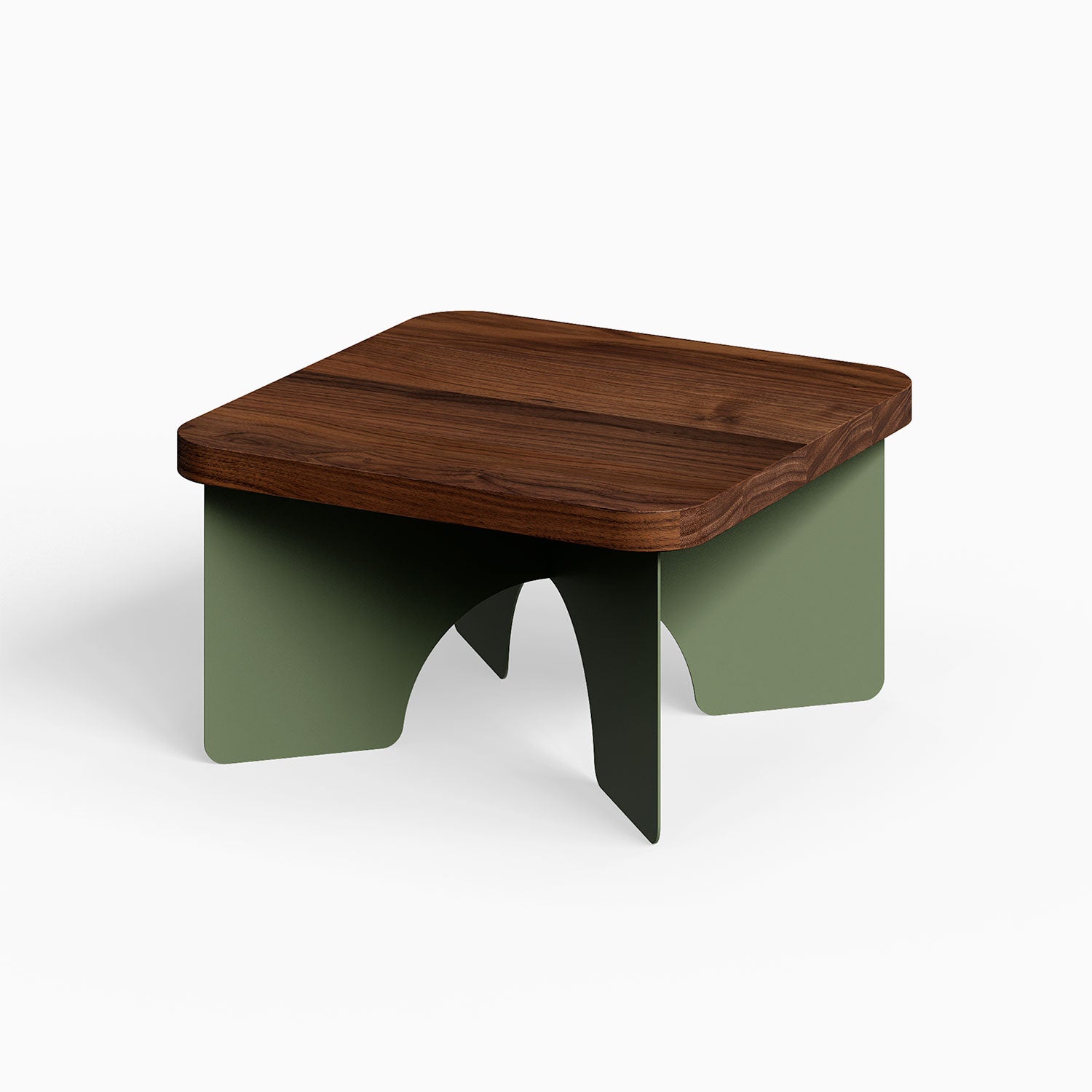
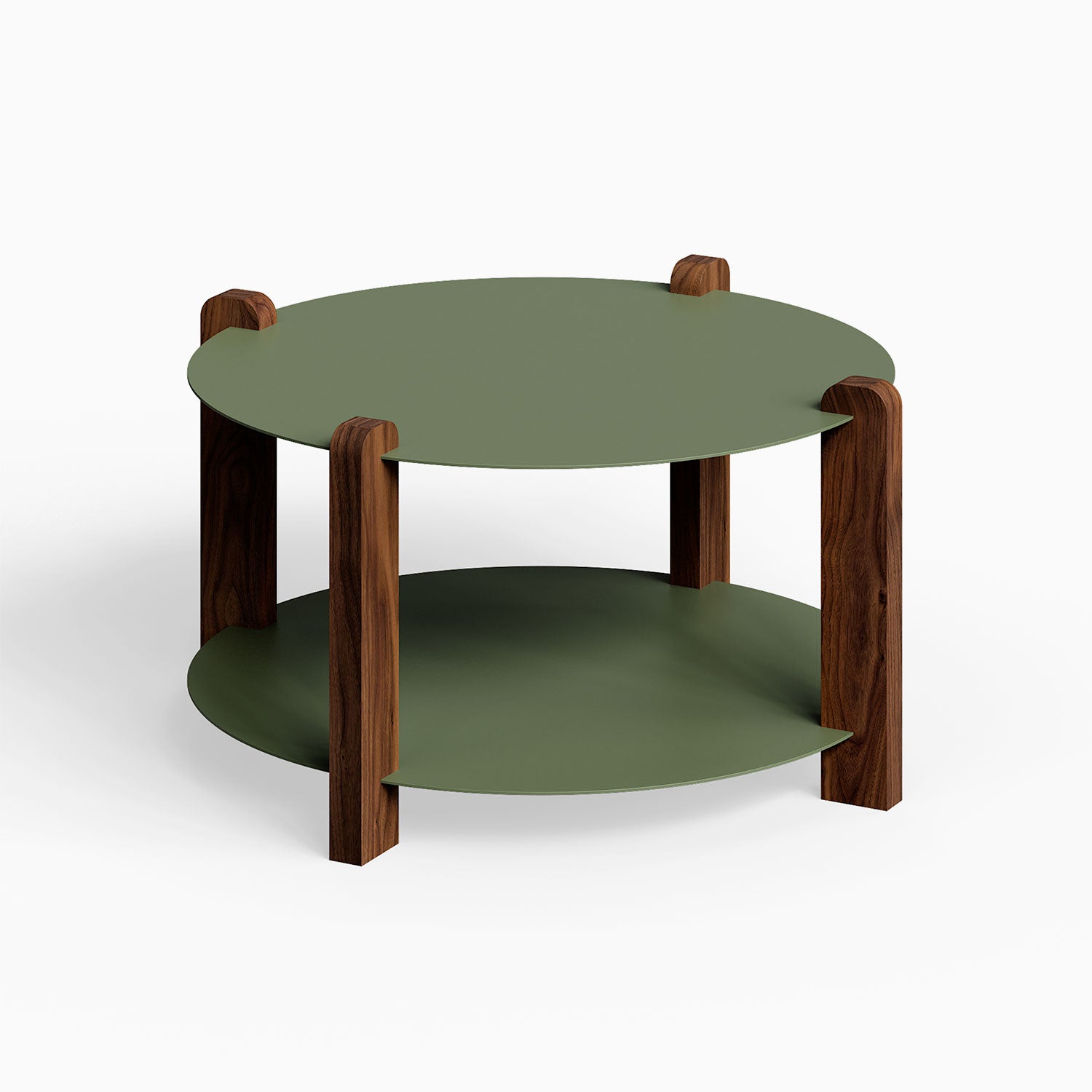
- Army Brat — an olive army green
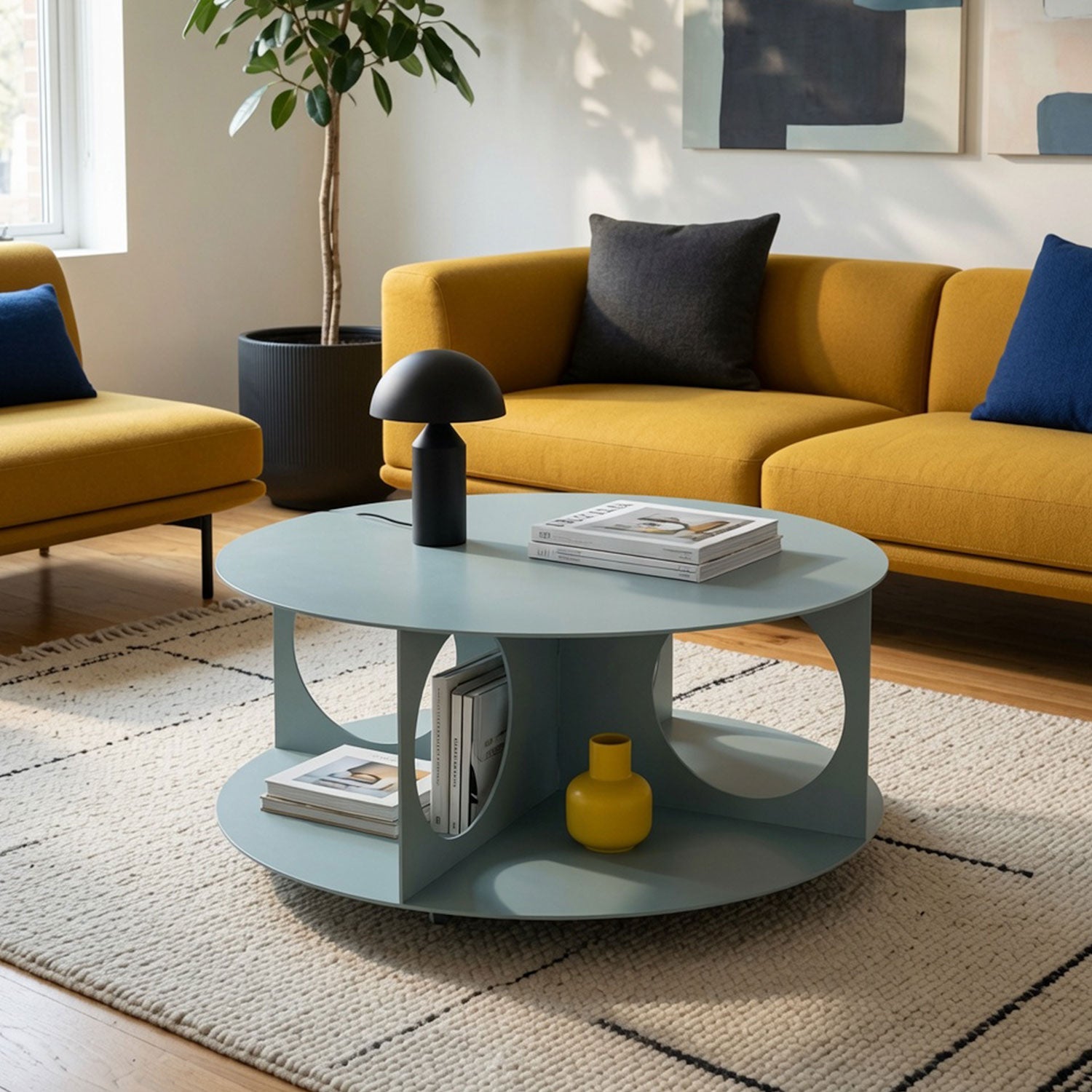
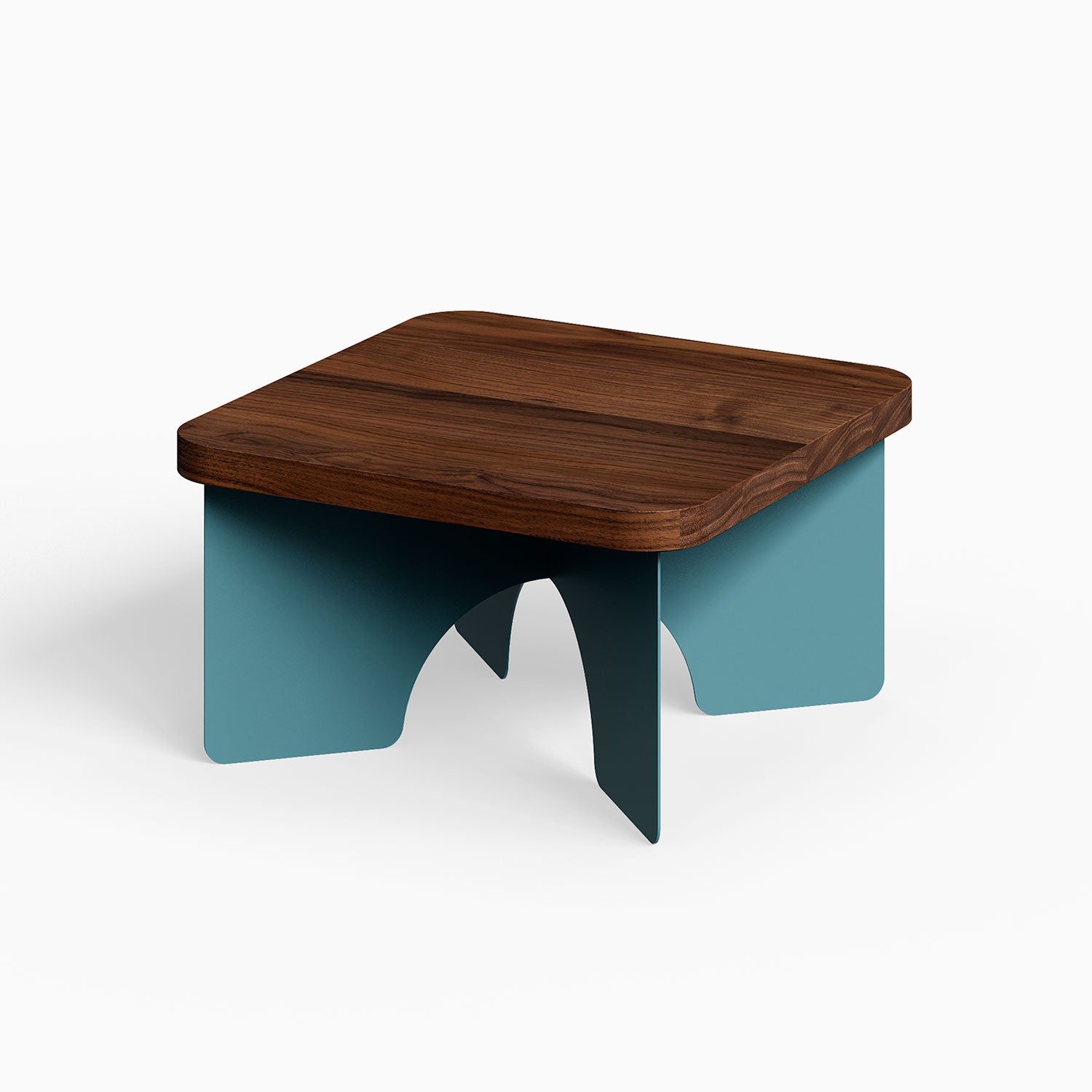
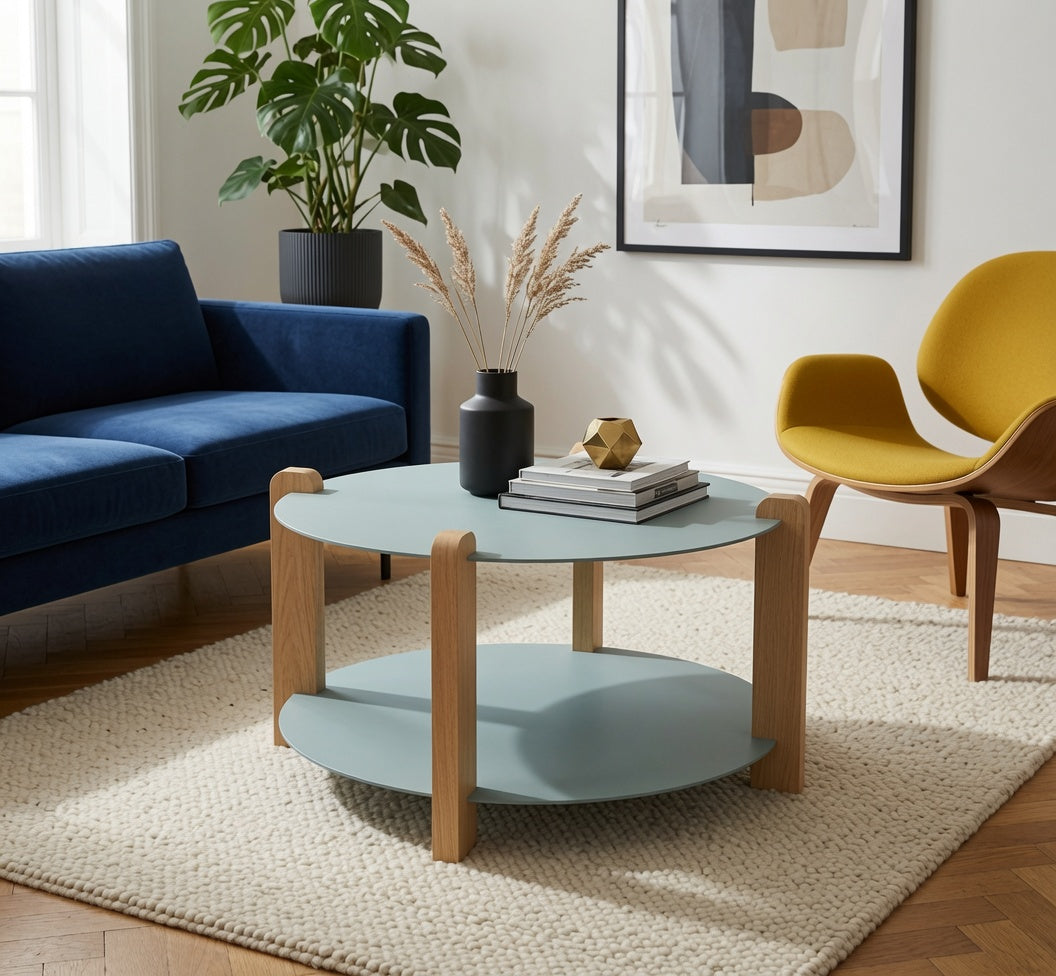
- Steely Blue — a muted steel blue
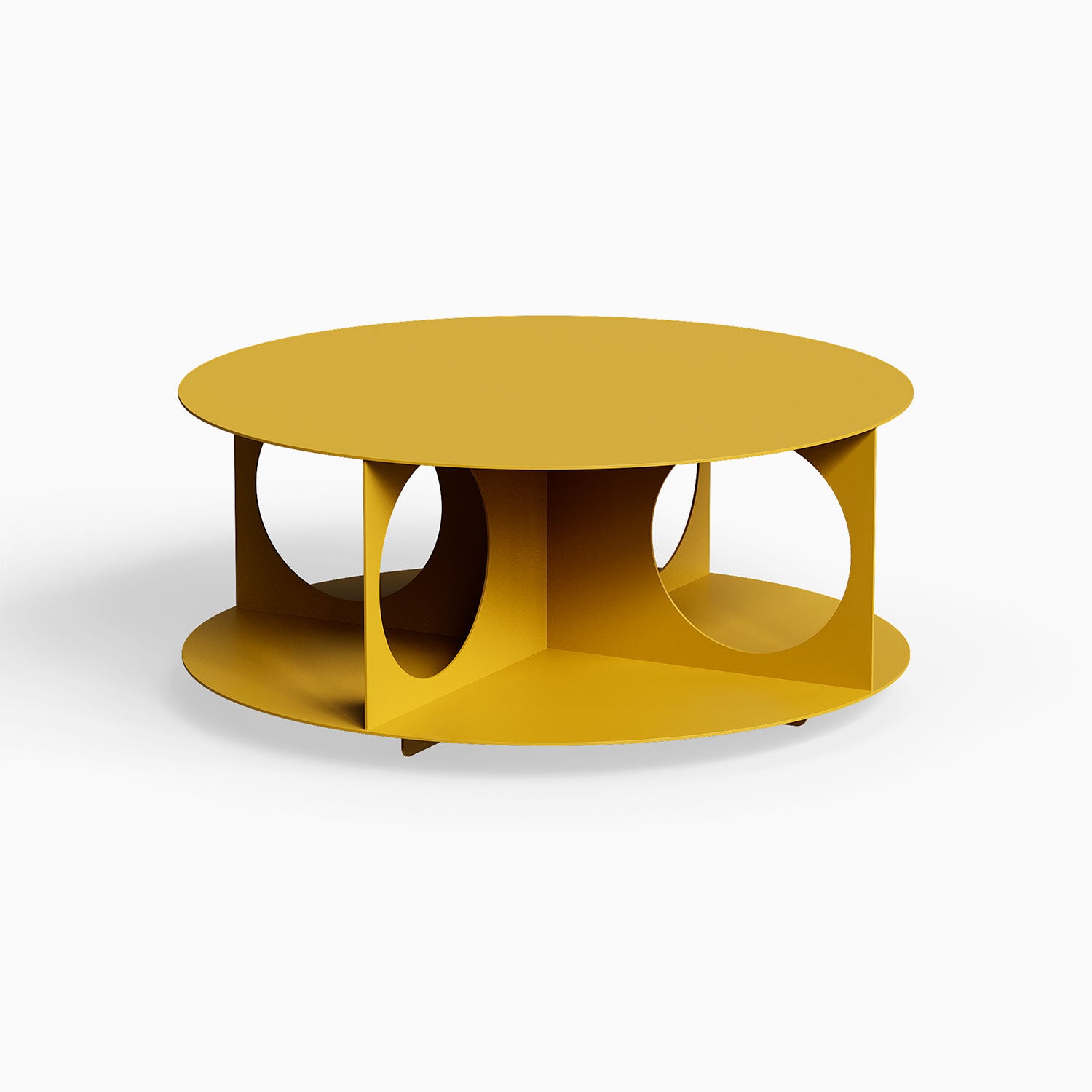
- Honey Mustard — a warm golden yellow
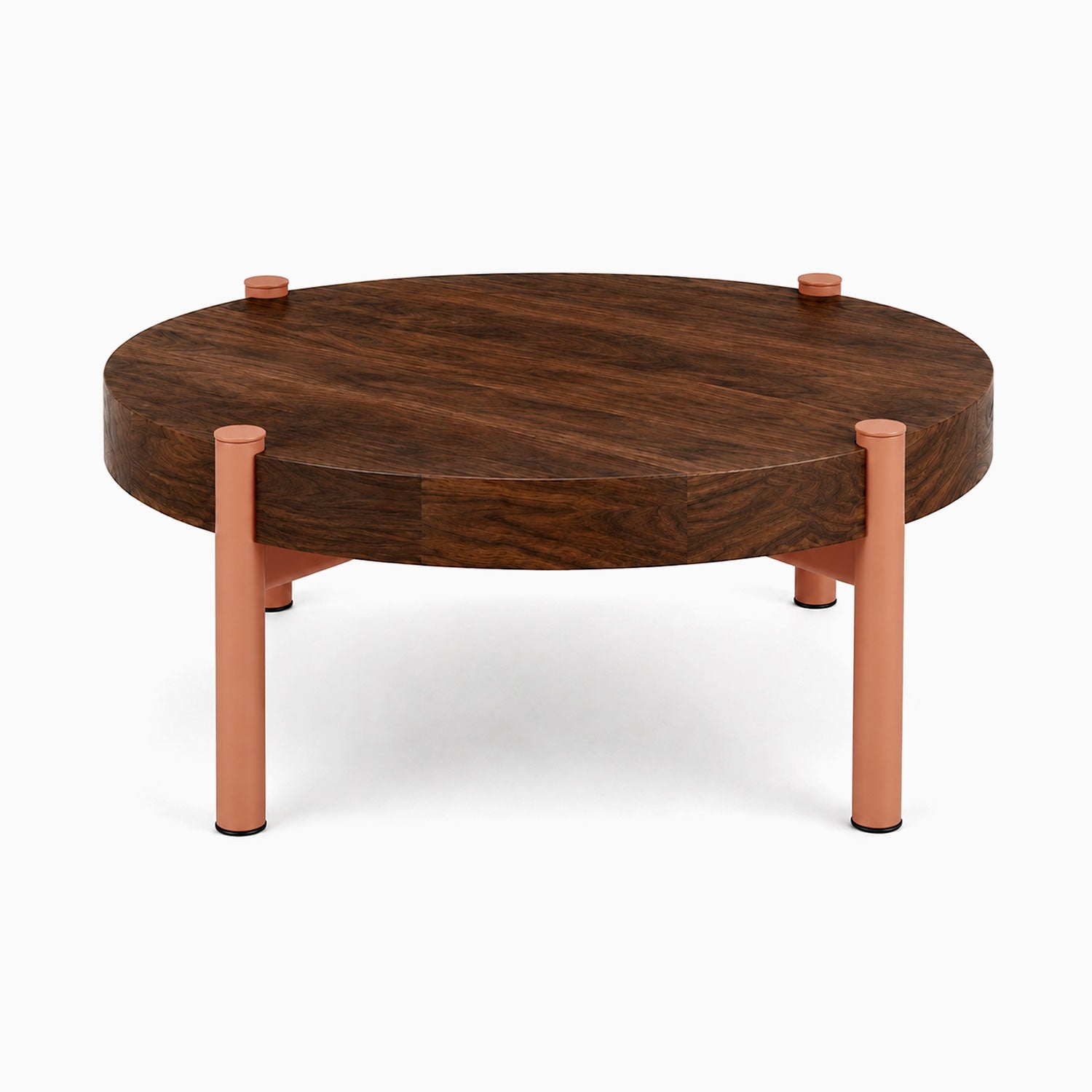
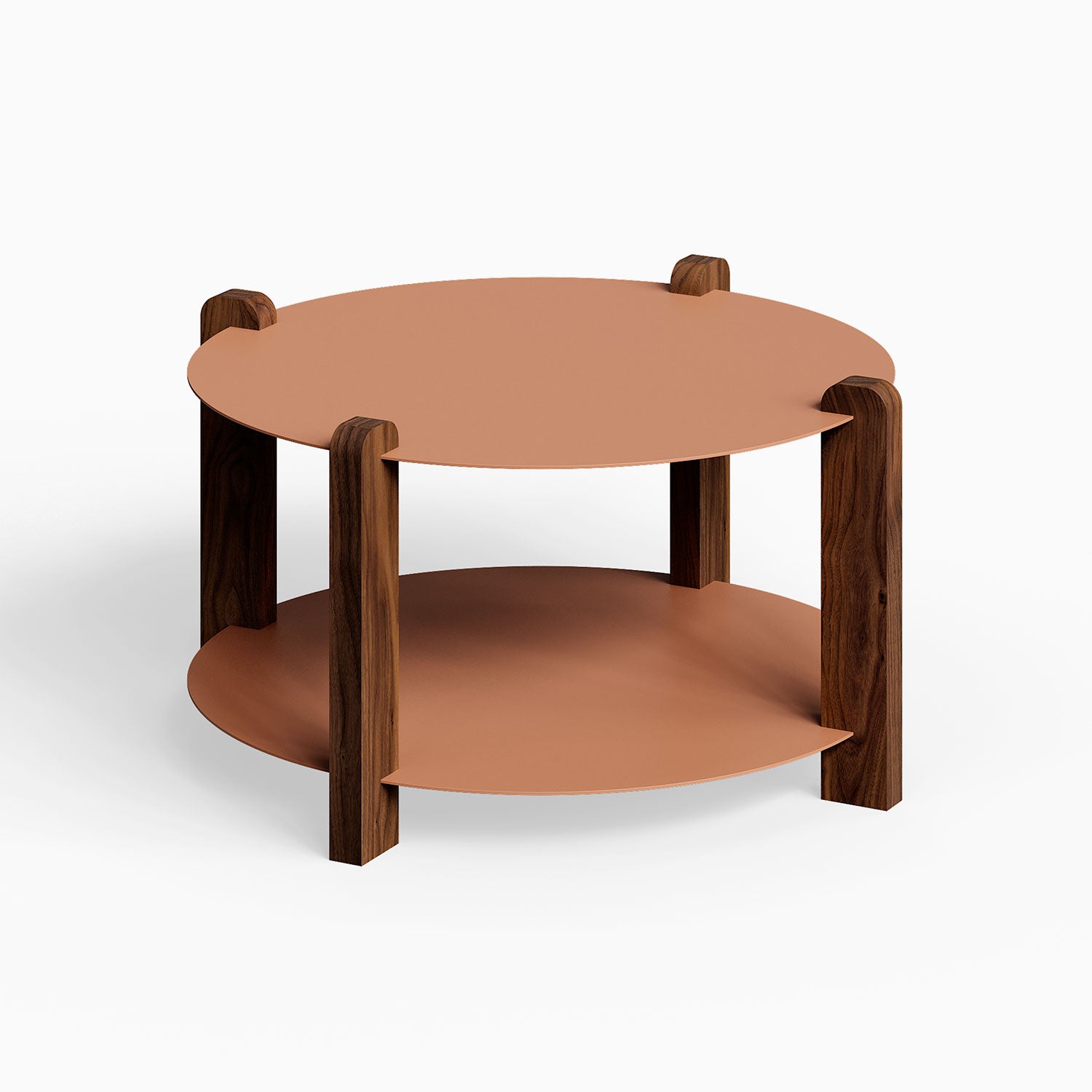
- Claymore — a deep burgundy, for when you want the table to be the color in the room
Those same colors, and the same two woods, run across everything we make, which is the advantage of buying a table from the company that also builds your shelves. The Walnut on an Otis is the Walnut on a floating shelf, and Army Brat is Army Brat whether it's underfoot or overhead. A table can hold a room on its own, or fall into step with floating shelves, floating mantels, and a whole living room pulled from one palette.
Each table is overbuilt on purpose, with heavier steel and hand-finished, furniture-grade construction, so it takes feet on the edge, someone perched on the corner, and kids piling on, comfortably holding two or three kids or a couple of adults without a wobble.
How to Choose the Right Coffee Table
Choosing the right table comes down to four questions: what shape suits your room, whether you want a lower shelf, wood or steel on top, and how to size the table to your sofa.
Should You Choose a Round or Square Coffee Table?
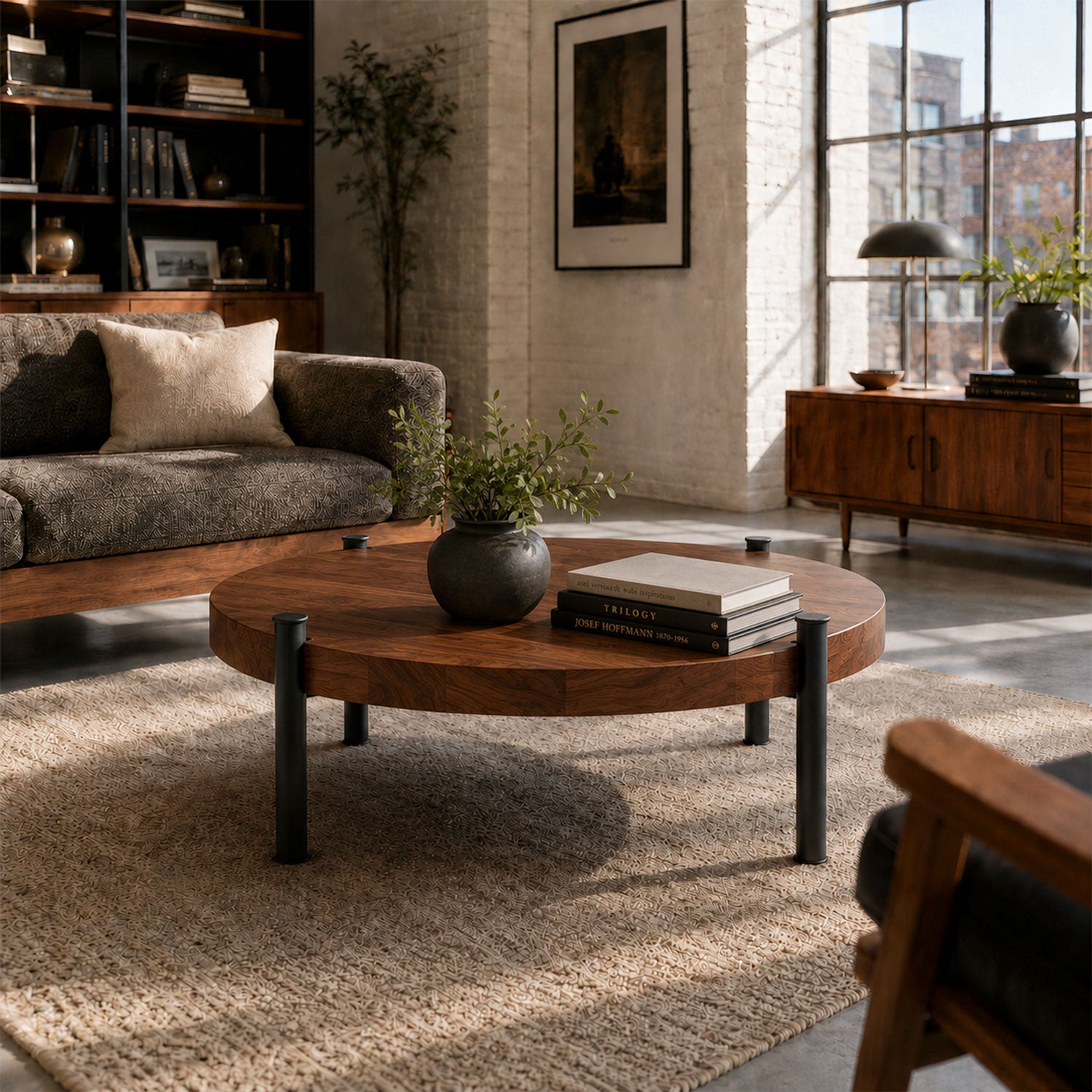
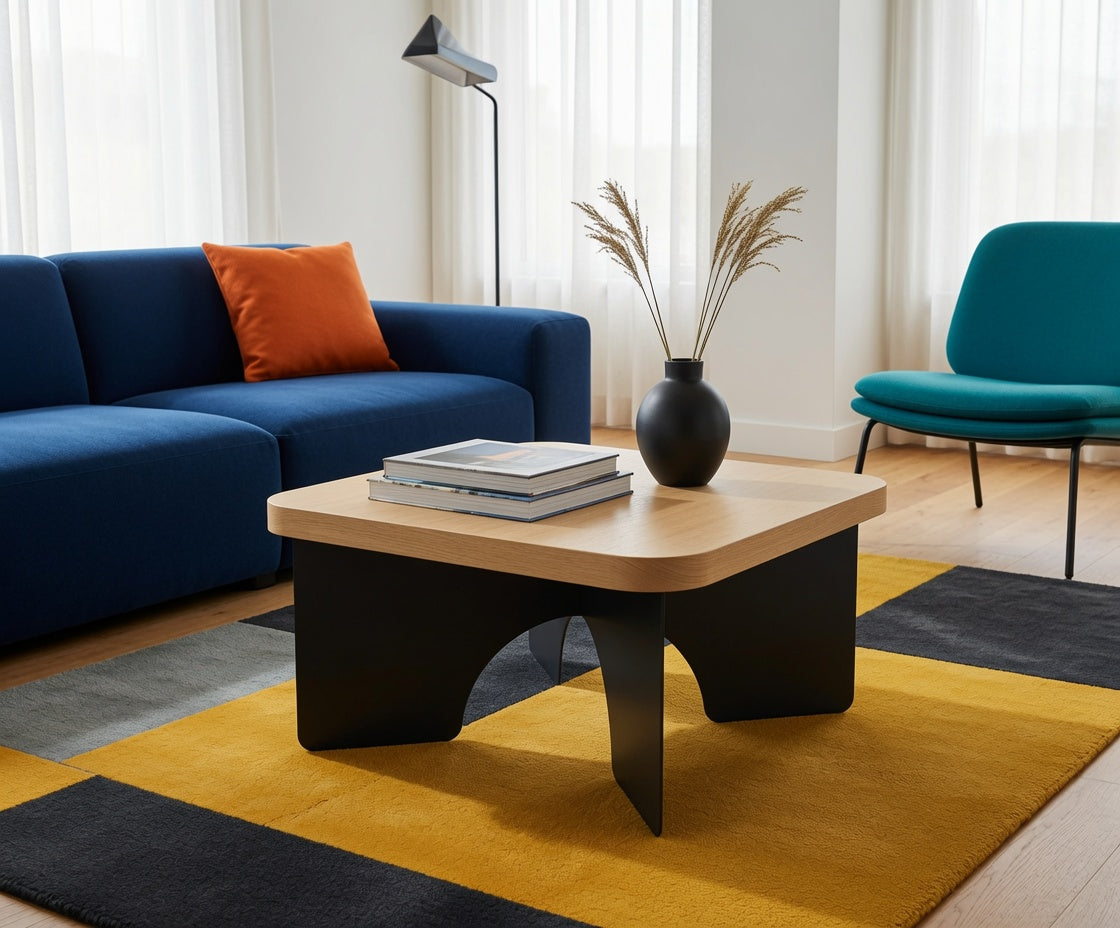
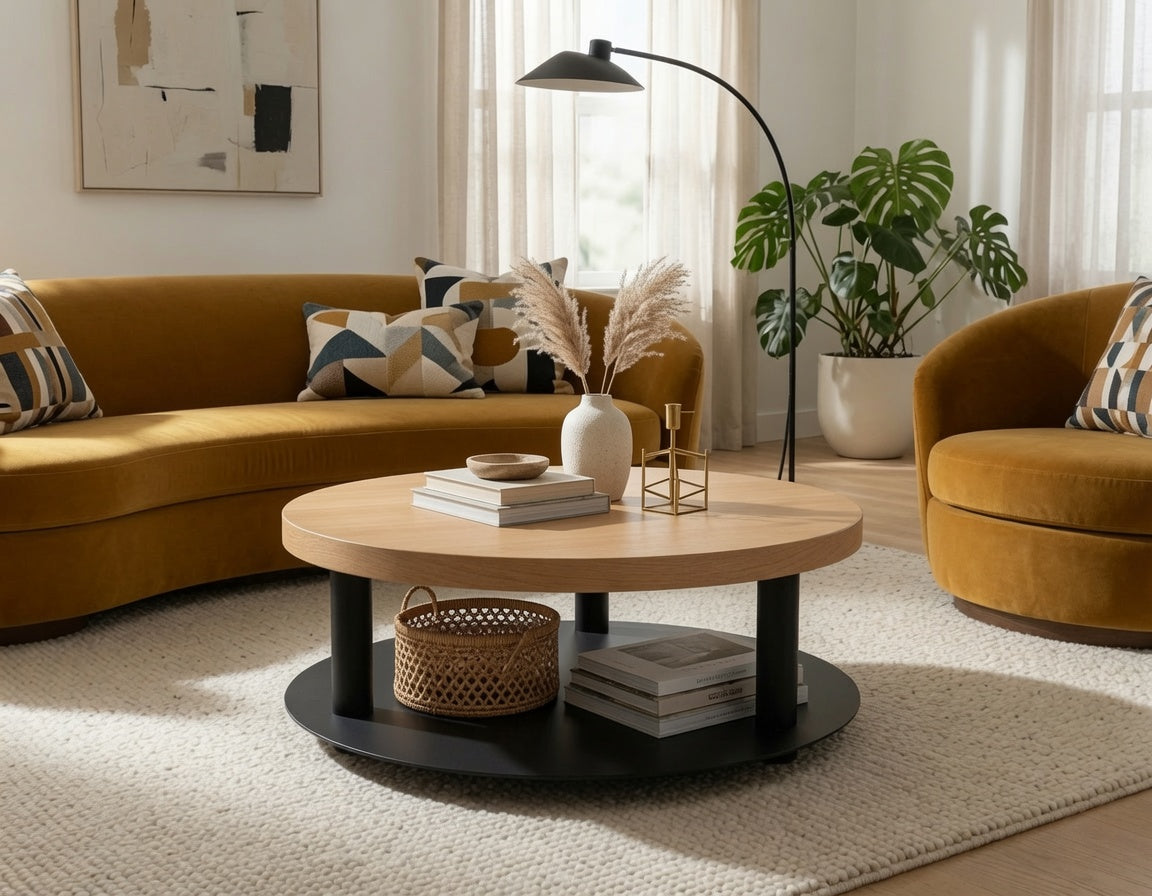
The choice between round and square has more to do with your room than your taste. The round tables, the Otis and the Ledger, soften a seating area and keep sharp corners away from shins and toddlers, which is why they work so well in tight or high-traffic spaces. The square Hugo trades that for more surface and clean lines that sit flush against a sectional or a long sofa. All three carry the same open lower shelf, so the decision really comes down to feel rather than features.
What Kind of Storage Do These Coffee Tables Have?
Search for a coffee table with storage and you'll picture a lift-top or a hidden drawer. These are neither, and that's worth knowing up front. The Otis, Hugo, and Ledger each have an open lower shelf, a second surface a few inches off the floor for the books, trays, and remotes that otherwise pile on top. Nothing hides behind a lid or a mechanism, which also means nothing there can break. The Good Point skips the shelf entirely, one clean surface on a single steel leg for rooms that want the floor to breathe.
Wood Top or Steel Top: Which Coffee Table Is Right for You?
This is the real decision in the collection, and it's about look, not quality. A wood top is warm and grained, solid Walnut or White Oak straight through, the kind of surface that ages into a table you keep for decades; the round Ledger and the single-leg Good Point are the wood-top pair. A steel top puts the emphasis on color, solid-wood legs under a powder-coated 11-gauge surface, so the whole table reads as one block of matte color, and the Otis and Hugo are the steel-top pair. Choose a wood top for warmth and grain, or a steel top for a bold, wipe-clean surface in any of the six colors.
How Tall Should a Coffee Table Be, and How Far From the Sofa?
A few proportions apply to any coffee table, ours included. Set the top level with or just below your sofa seat, so a cup stays easy to reach without bending down to it. Leave 14 to 18 inches between table and sofa, enough to set a drink down without leaning and to walk past without turning sideways. And size the length to about two-thirds of your sofa, which keeps the table from looking marooned in front of a sectional or crowding a loveseat. If your space calls for something smaller, or a spot beside a chair, that's side-table work, and it lives over in Side Tables.
Build Your Own Coffee Table With Good Point Steel Legs
Already have a slab you love, a live-edge cut, a salvaged door, or a butcher block waiting for a purpose? You can buy just the legs. The Good Point Legs are ¼-inch steel with a bold 3-inch face, sold in pairs in the same six colors as everything else here. Pick from four widths and match the leg width to your tabletop, so the base carries the top square and steady. It's the same steel we run under our own tops, sold on its own for the table you'd rather build than buy.
Frequently Asked Questions
How sturdy are these coffee tables?
They're built for a real living room. Solid hardwood and heavy-gauge steel, the same overbuilt materials as our shelving, mean feet on the edge, someone perched on the corner, and kids piling on won't faze them. Each one comfortably holds two or three kids or a couple of adults without a wobble.
Are these real solid wood?
Yes, solid Walnut or White Oak rather than veneer over particleboard. The Ledger and Good Point have solid-wood tops, while the Otis and Hugo pair solid-wood legs with an 11-gauge steel top.
What is powder coating, and why does it matter on a coffee table?
Powder coating bonds dry pigment to bare steel with an electrostatic charge, then bakes it into one hard, continuous finish. Because it's fused to the metal instead of sprayed on like the paint used on most steel furniture, it resists chips, scuffs, and peeling far longer, which is exactly what you want on a surface that lives through daily use.
What's the difference between a wood-top and a steel-top table?
A wood top, on the Ledger and Good Point, gives you a warm solid-hardwood surface with natural grain. A steel top, on the Otis and Hugo, sets a powder-coated 11-gauge steel surface on solid-wood legs, so the table reads as a block of matte color. Same build quality either way; the look is the choice.
Can I customize the color and finish?
Yes. Two wood finishes, Walnut Clear and White Oak Clear, across six matte powder colors: White Matte, Black Matte, Army Brat, Steely Blue, Honey Mustard, and Claymore. Custom colors and configurations are available on request.
Will they match my Shelfology shelves?
Exactly, yes. They come in the same Walnut and White Oak and the same six powder colors as the shelving line, so the Army Brat on your shelves is the Army Brat on your table, down to the same powder coat.
What kind of storage do they have?
An open lower display shelf on the Otis, Hugo, and Ledger, sized for books, trays, and remotes. It isn't a lift-top, a drawer, or a hidden compartment. The Good Point skips the lower shelf by design.
Round or square, which should I choose?
Round softens a room and handles walk-around traffic, which suits tight spaces and homes with kids, and it's the shape of the Otis and Ledger. Square gives you more flat surface and squares up to a sectional or long sofa, which is the Hugo.
How tall should a coffee table be, and how far from the sofa?
Set the top level with or just below your sofa seat, about 14 to 18 inches from the couch, close enough to reach a drink and far enough to walk past.
Can I build my own coffee table?
Yes. The Good Point steel legs come in four widths and six colors, sold in pairs, ready to carry a solid-wood top you supply. Just match the leg width to your tabletop.
Are they made in the USA?
Yes, each one is made to order by Shelfology, a small family-owned company.
Are they made to order, and how fast do they ship?
Every table is built once you order it. Standard configurations ship after about 5 to 7 days, and made-to-order or custom builds take a little longer.
Do they require assembly?
Very little. The tables arrive nearly complete, with only minor assembly to finish.
How do I care for them?
Wipe both the wood and the steel with a soft microfiber cloth dampened with mild soap and water, wrung out, then wipe clean and repeat as needed. Skip harsh chemicals.
Can a coffee table be returned?
Because each table is built to order for you, it isn't returnable the way a stocked item is, but two things soften that. You have a 24-hour window after placing the order to change or cancel before it enters production, so a color you second-guess overnight is an easy fix. And anything that arrives defective or damaged in transit is repaired or replaced under warranty, with coverage varying by product. The one thing worth settling first is color, so order a swatch before you buy and confirm the finish in your own light rather than on a screen.