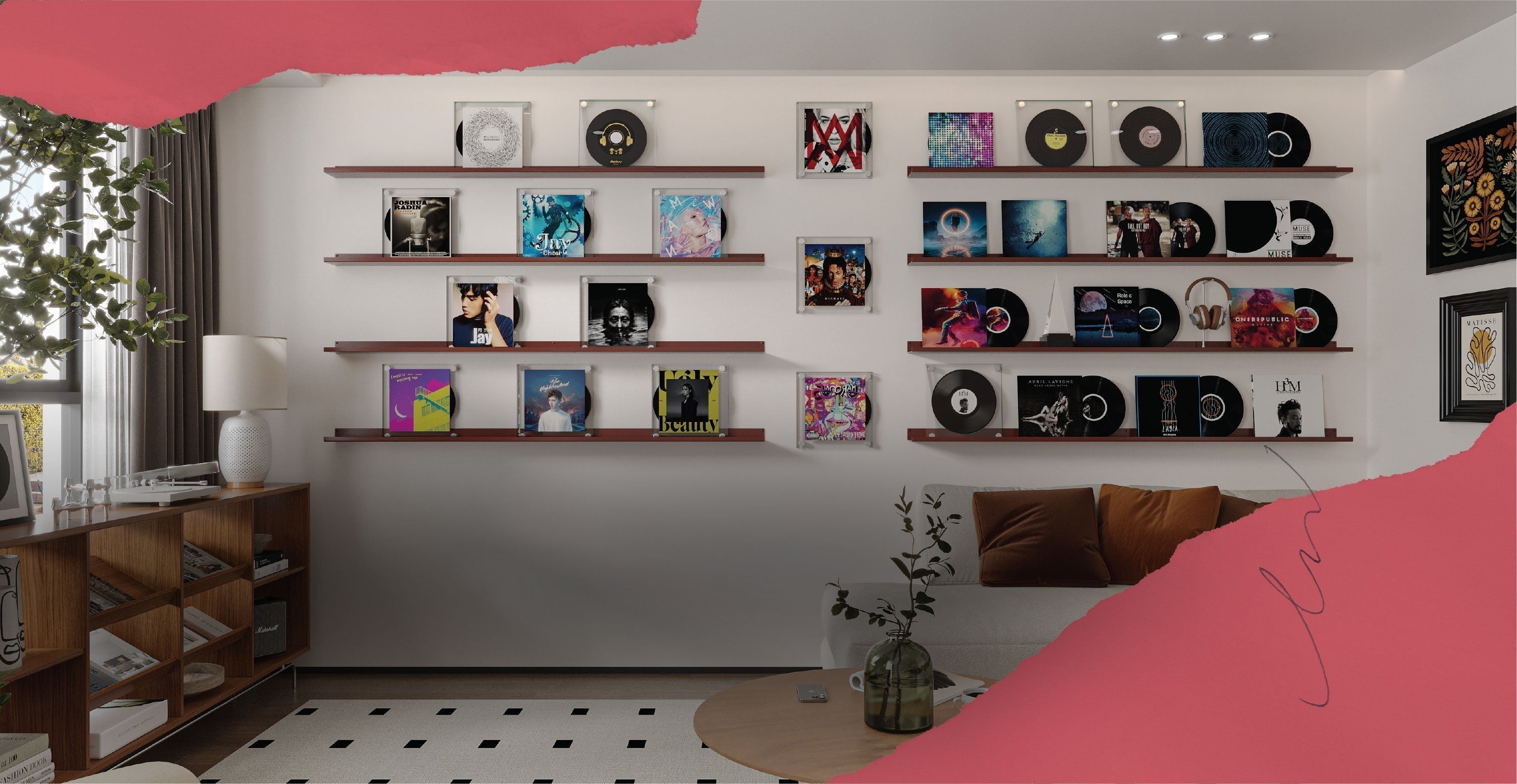
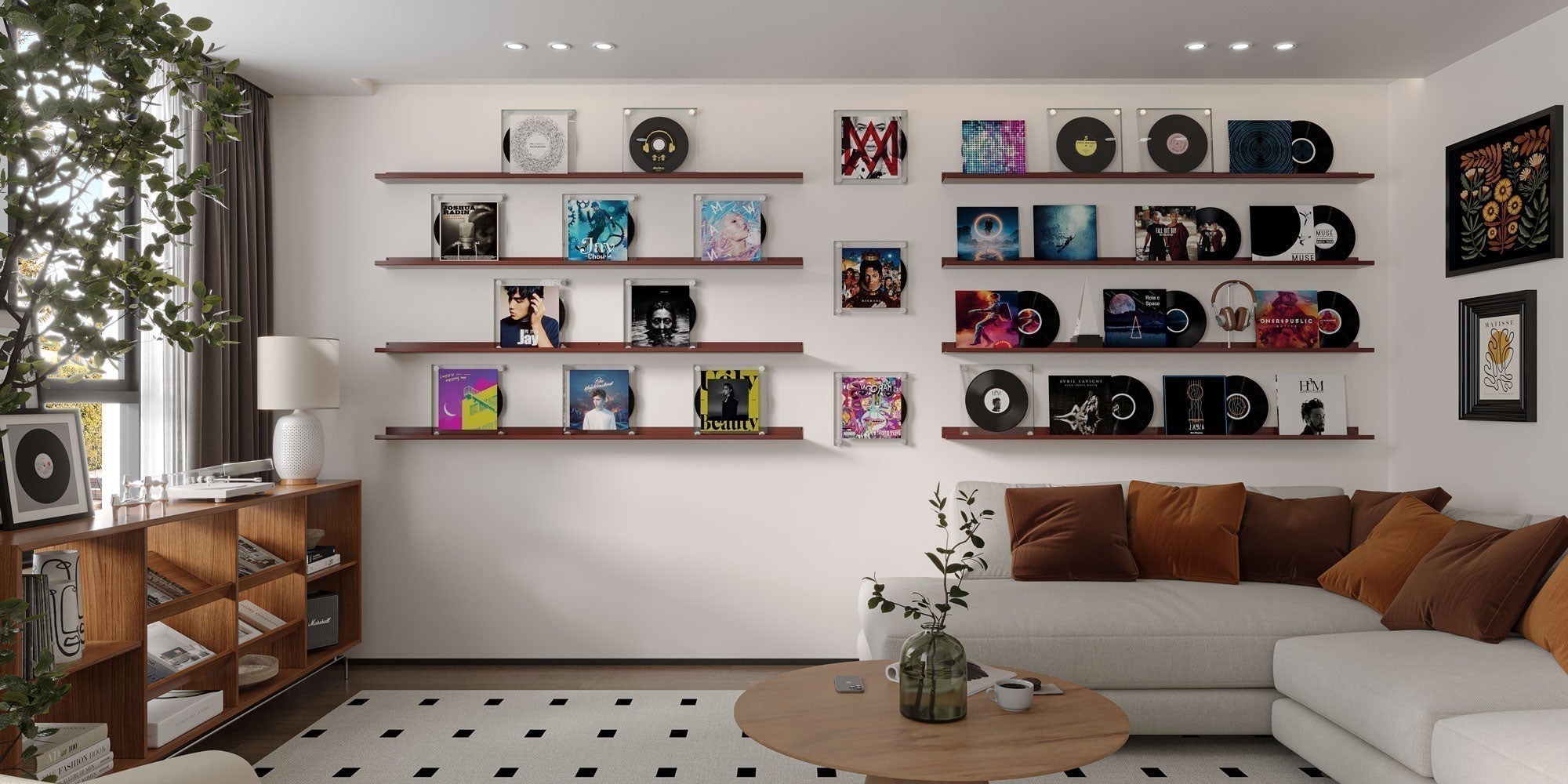
In this guide: how floating shelves work, how much weight they hold, what depth and thickness you need, how to install them, and how to build your own — with real load ratings from the people who engineer the brackets.
Everything about a floating shelf comes down to one part you never see: the floating shelf bracket. The shelf is the easy part. The hidden steel behind it — and what it's fastened to — decides whether your shelf holds 20 pounds or 400.
This guide covers the whole subject: how floating shelves work, how much weight they hold, how to install them, how to build your own, and how to get depth, height, and spacing right in every room. We've engineered floating shelf brackets since 2013, and everything we've learned about steel, studs, and what makes a shelf hold is on this page.
Here's the whole guide in one table — every number is covered in depth below:
Floating Shelf Quick Reference
| Floating Shelf Question | Quick Answer |
|---|---|
| What is a floating shelf? | A floating shelf is a wall-mounted shelf supported by a concealed steel bracket hidden inside the shelf, leaving no visible mounting hardware. |
| How much weight can a floating shelf hold? | About 20 lbs (big-box shelves) to 1,500 lbs (engineered mantel brackets), depending on the bracket and installation. |
| What is the standard floating shelf depth? | 10 inches for most applications; 10–12 inches for kitchens; 5–8 inches for bathrooms. |
| How thick should a floating shelf be? | 1¼ inches minimum for solid wood shelves; ¾–3 inches for hollow-core shelves. |
| How high should floating shelves be hung? | Eye level (4–5 ft) for most rooms; 18–24 inches above kitchen countertops. |
| Do floating shelves need wall studs? | Yes. Install into wall studs or blocking for meaningful loads. Drywall anchors alone are only for very light decorative shelves. |
Jump to a topic:
- What is a Floating Shelf?
- How Floating Shelves Work
- Floating Shelf Weight Capacity: The Real Numbers
- Floating Shelf Troubleshooting
- Floating Shelf Dimensions: Depth, Thickness, Height, and Spacing
- Choosing Floating Shelf Materials and Styles
- How to Install Floating Shelves
- Floating Shelves Without Visible Brackets, on Drywall, or Without Drilling
- How to Build Your Own Floating Shelves
- Done-for-You Floating Shelf Systems
- Floating Shelves Room by Room
- Floating Shelf FAQ
What is a Floating Shelf?
With a traditional wall shelf, you can see the support: typically an L-bracket or corbel under the board. A floating shelf is attached to a wall with concealed mounting hardware (a floating shelf bracket). And since there are no visible supports, floating shelves create the illusion that the shelf is magically “floating” on the wall. The hardware — a steel bracket hidden inside the shelf — does all the heavy lifting. The result is clean, open storage with no visible mounting hardware.
Curious where the style came from? We traced it back further than you'd expect: A Brief History of Floating Shelves and Open Shelving.

How Floating Shelves Work
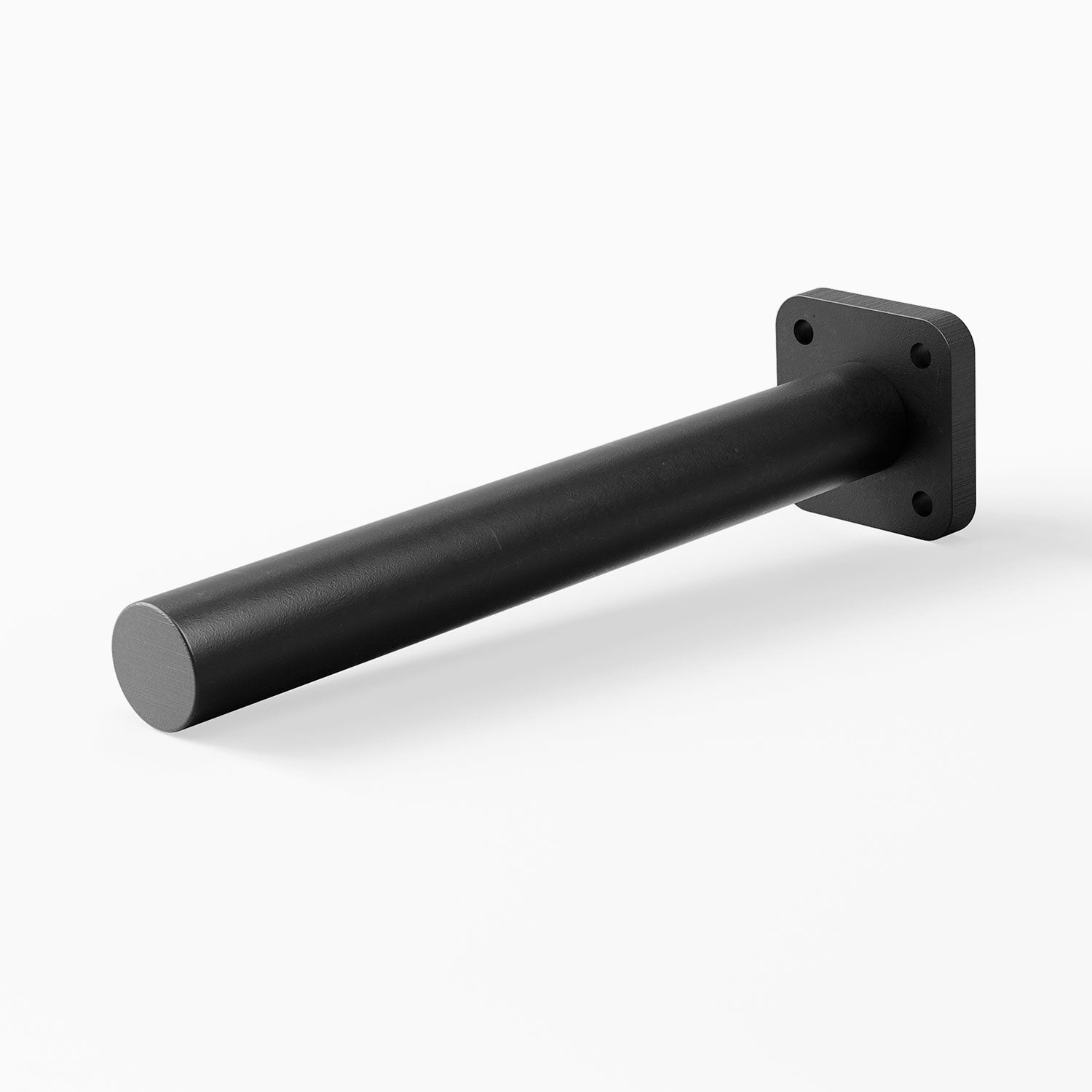
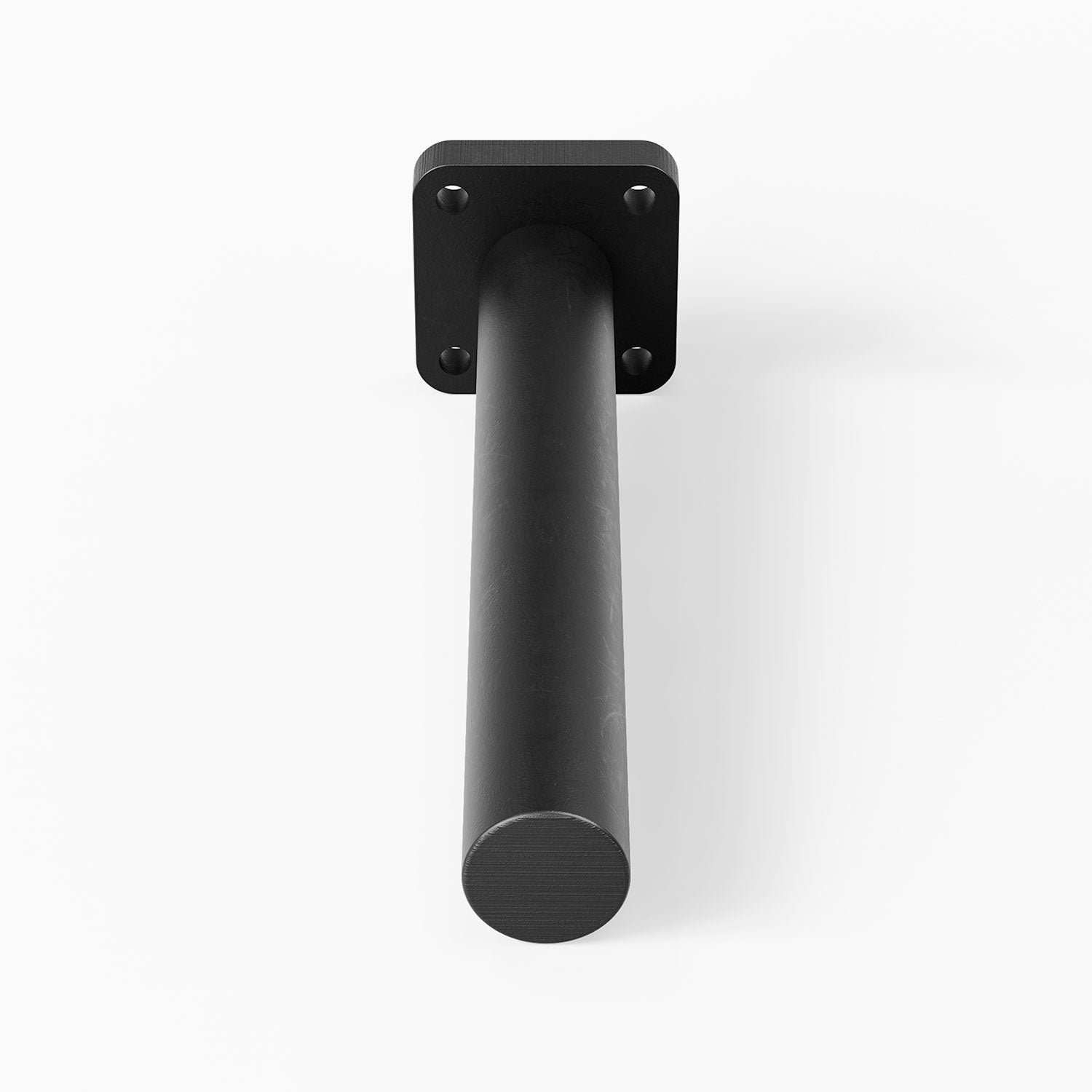
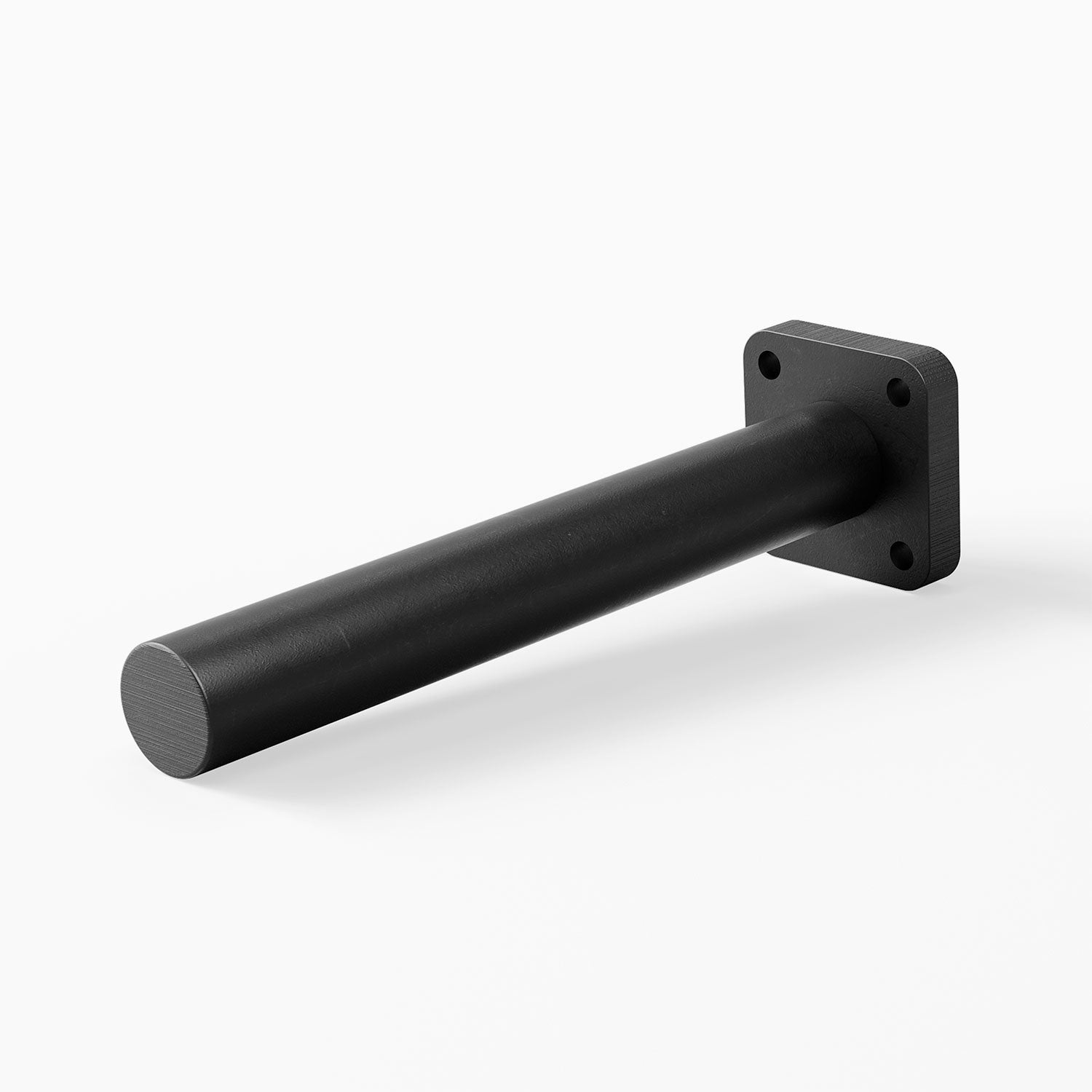
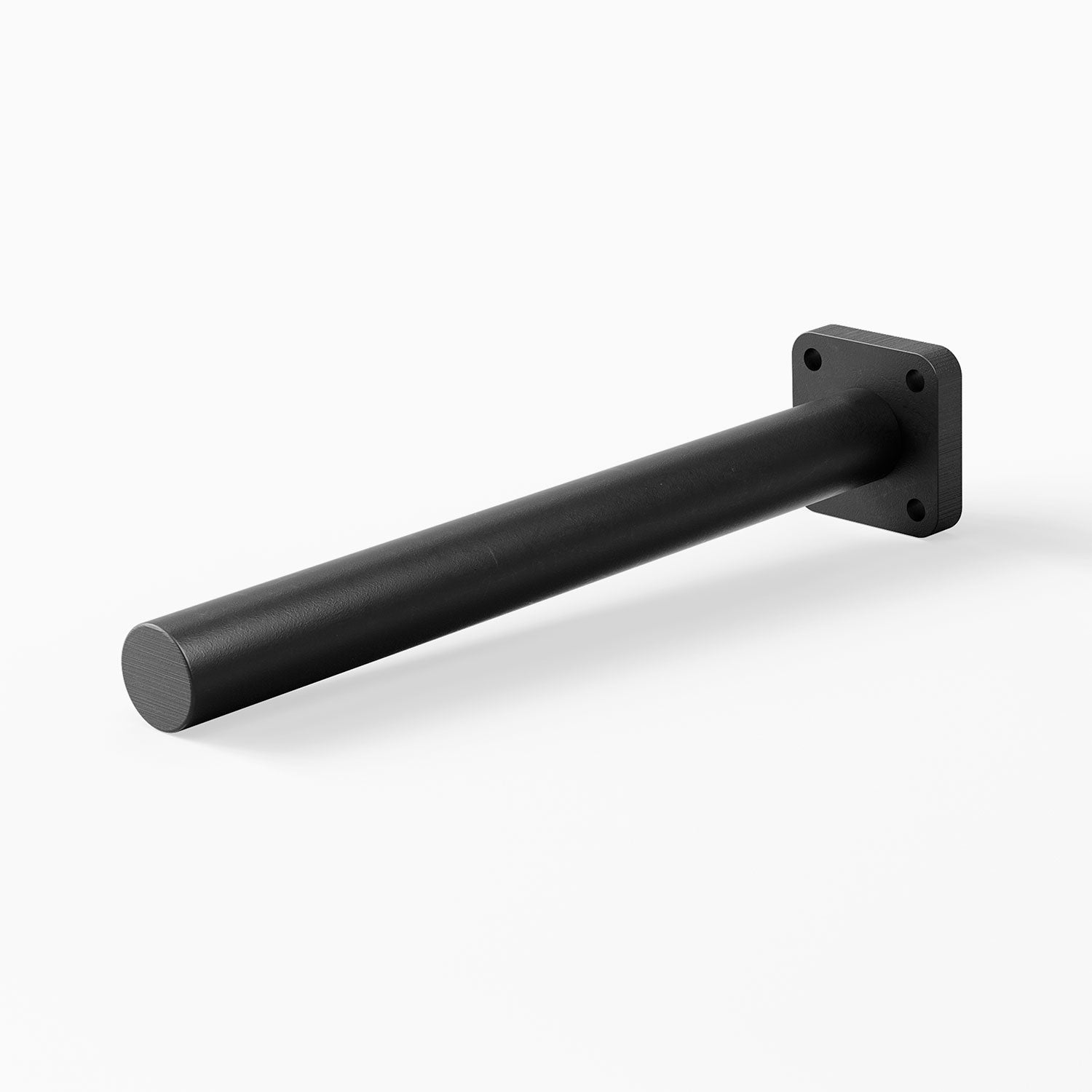
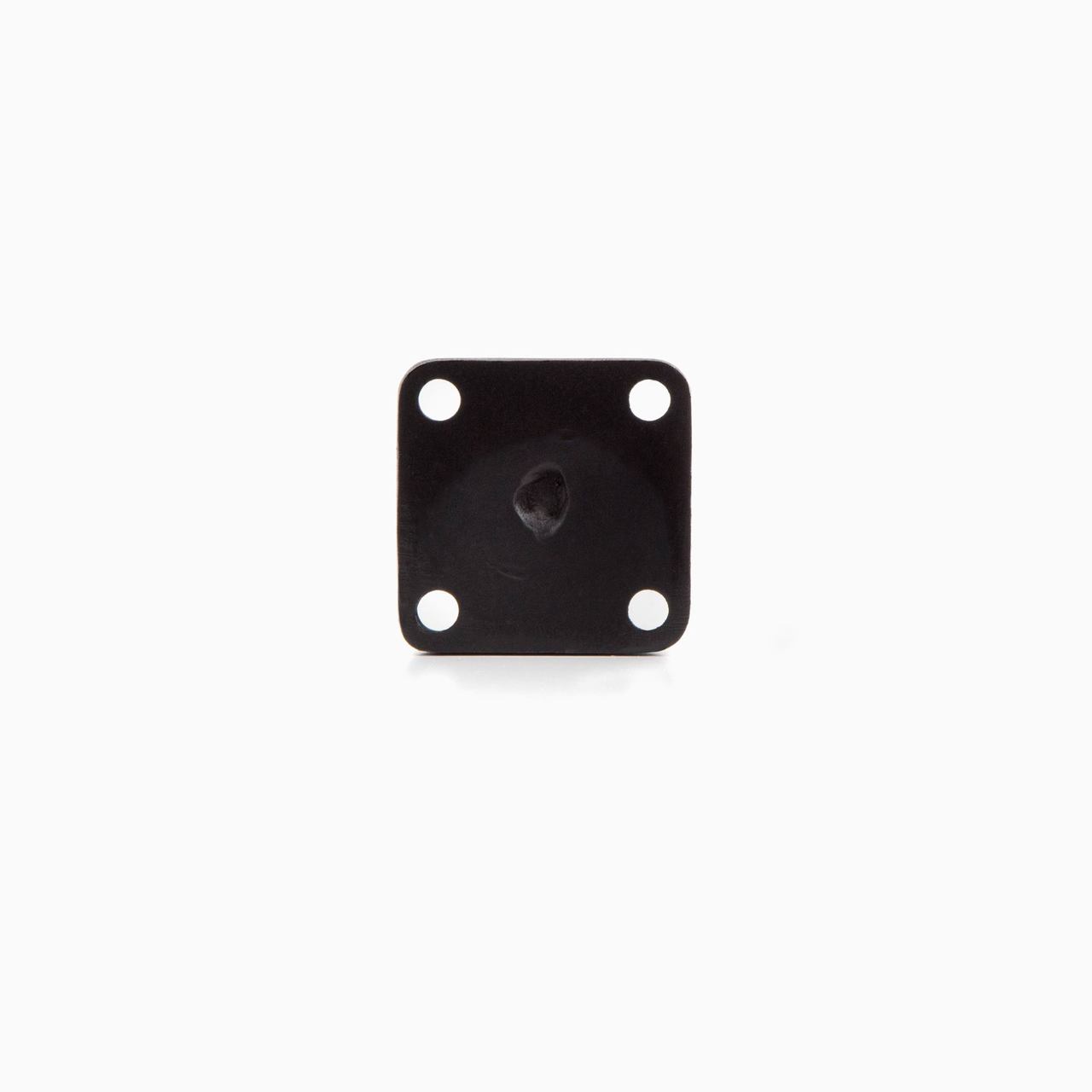
Floating shelves are attached to the wall by means of a hidden rod-and-bracket system: a steel back bar mounts flat against the wall (or in some cases attaches directly to studs), and horizontal steel rods project out from it. The shelf slides over those rods like a glove over fingers. Once it's on, the hardware disappears and the shelf appears to float.
A floating shelf is a lever, and the wall is its fulcrum. Weight on the shelf pushes down at the front and pries outward at the top of the bracket. Two things resist that force: rods stiff enough not to bend, and fasteners anchored in wall studs or solid blocking — not drywall alone. Every floating shelf rule — stud mounting, depth limits, bracket sizing — comes from that one piece of physics.
It's why we tell customers the bracket is the product. The wood sets the look; the steel sets the capacity. Get the bracket right and almost any shelf works. Get it wrong and no shelf does.
THE INVISIBLE HERO BEHIND SUCCESSFUL FLOATING SHELF PROJECTS:
Aksel Floating Shelf Brackets
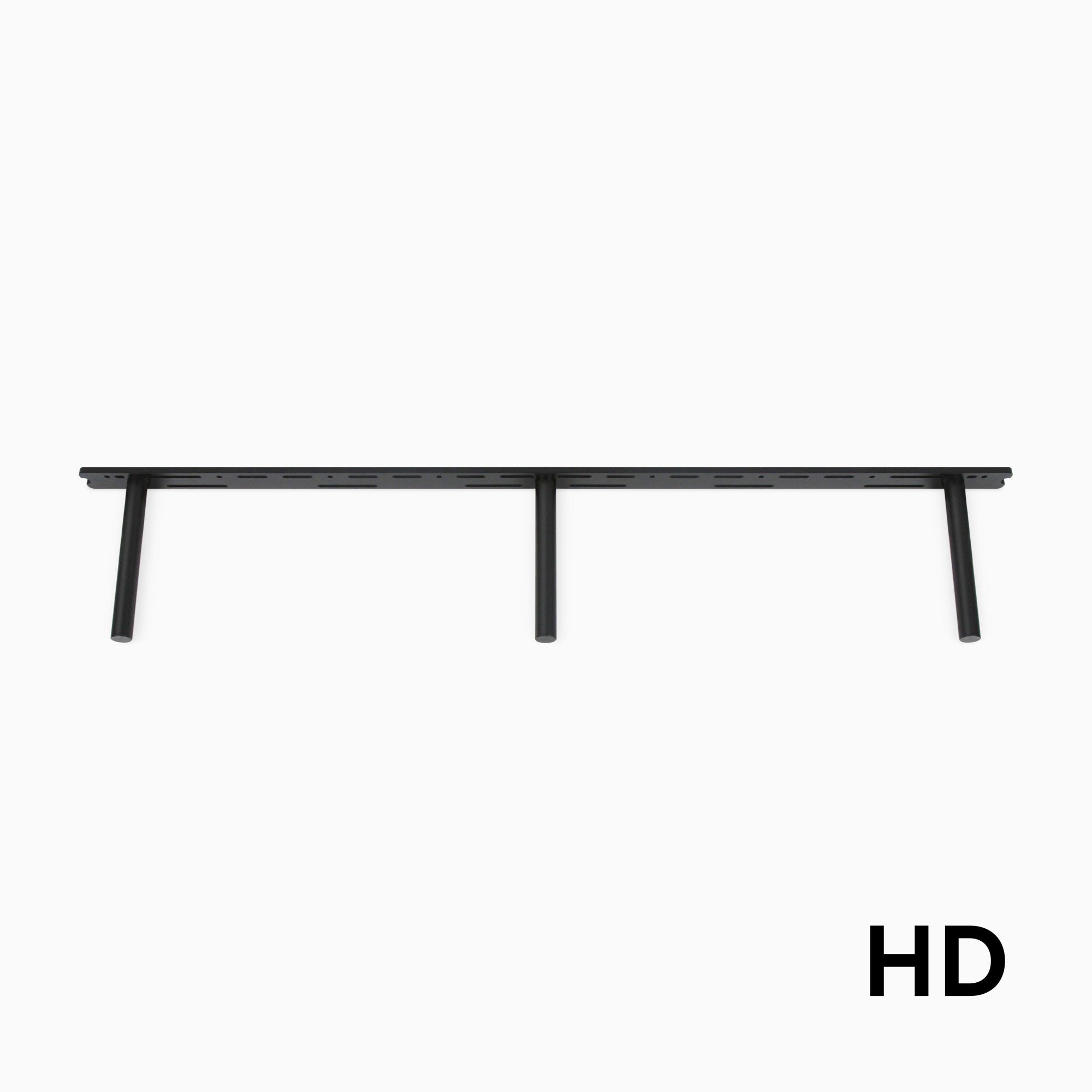
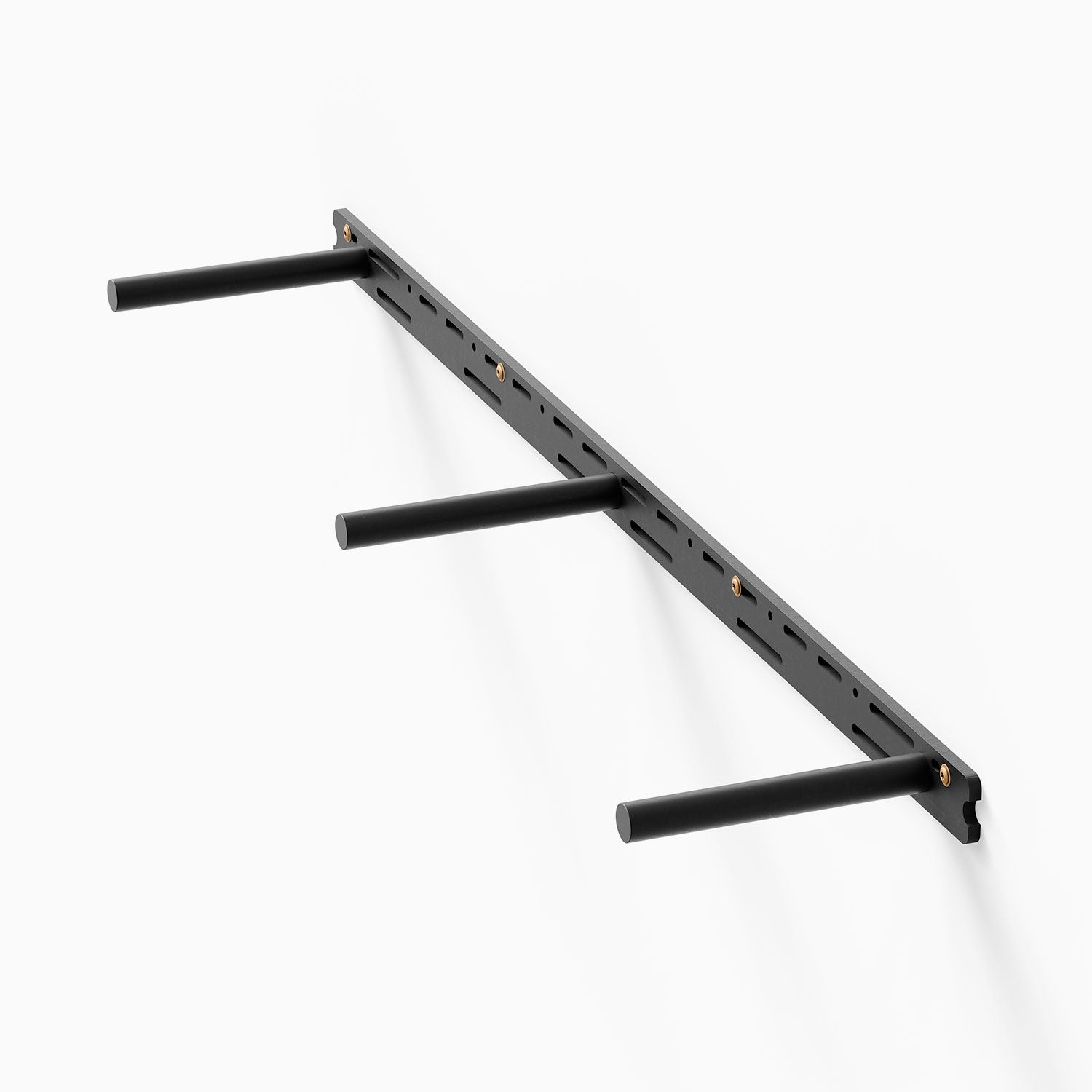
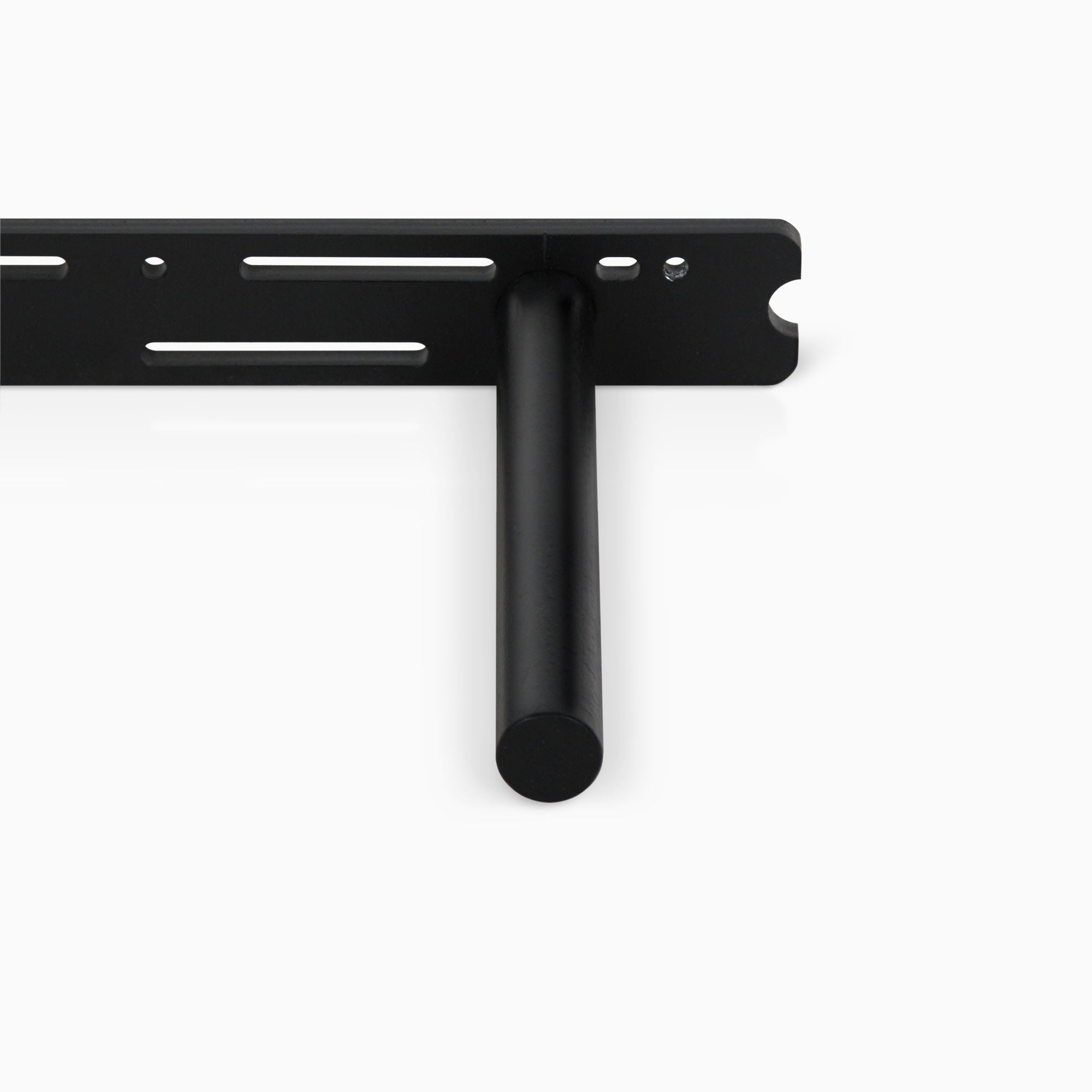
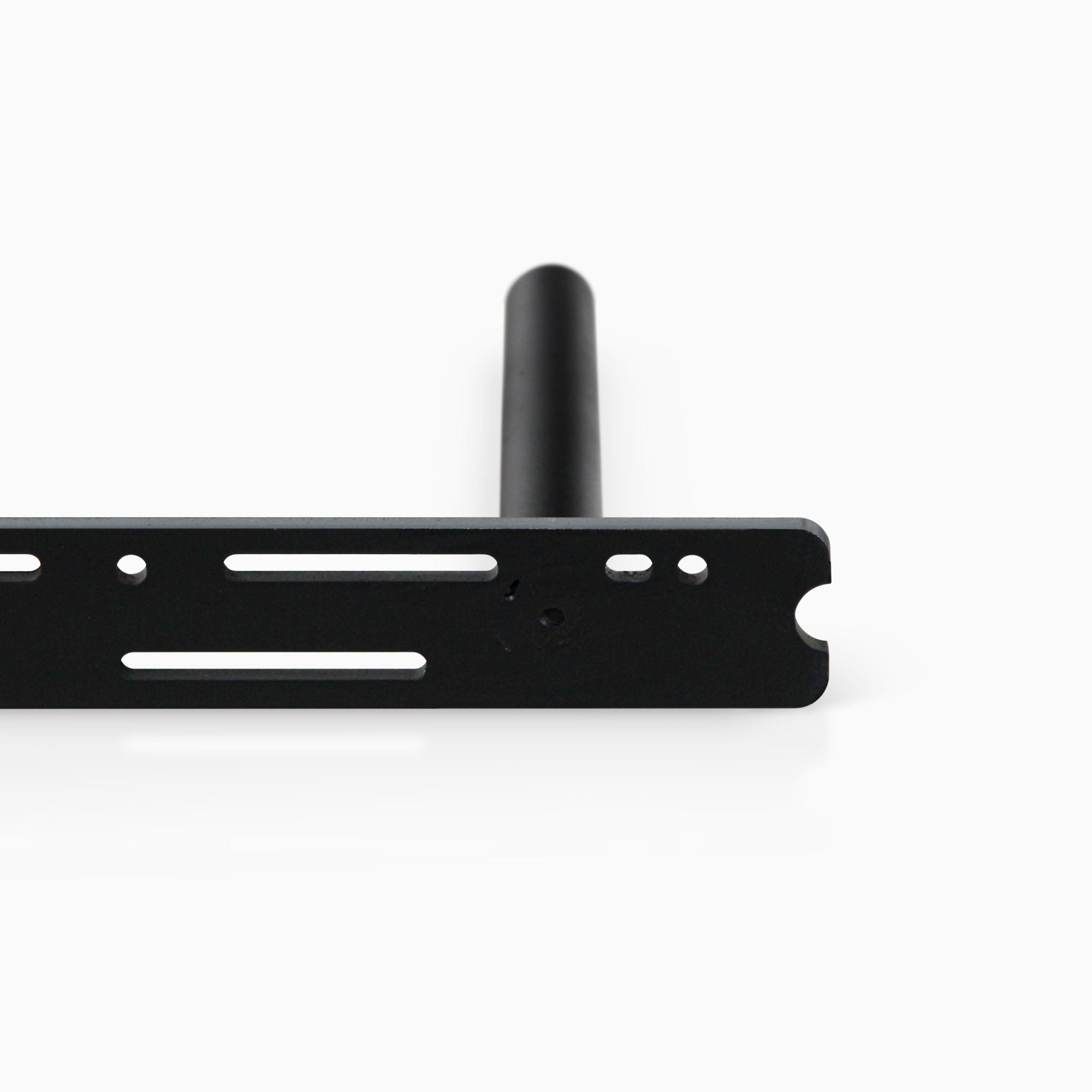
Aksel HD Floating Shelf Bracket
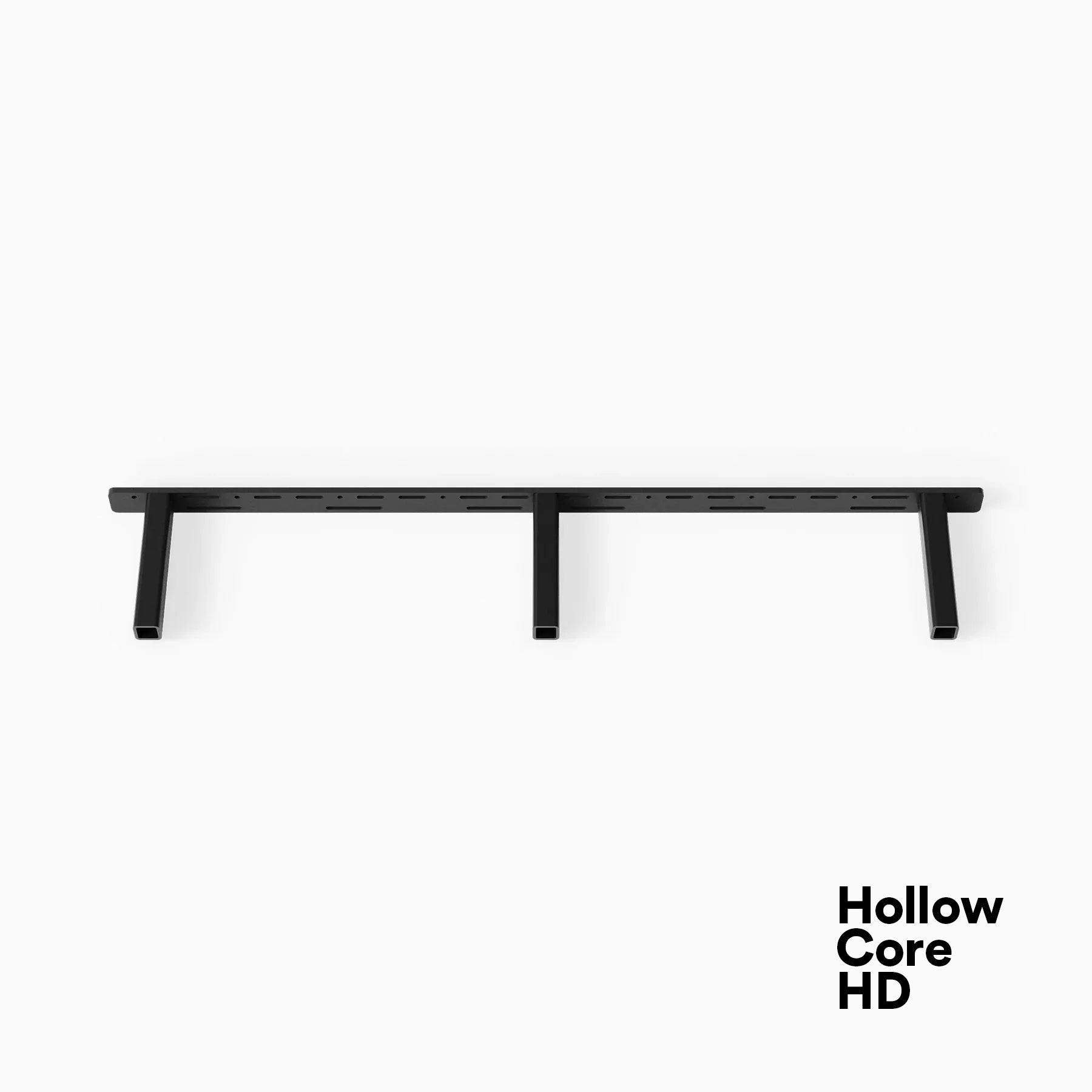
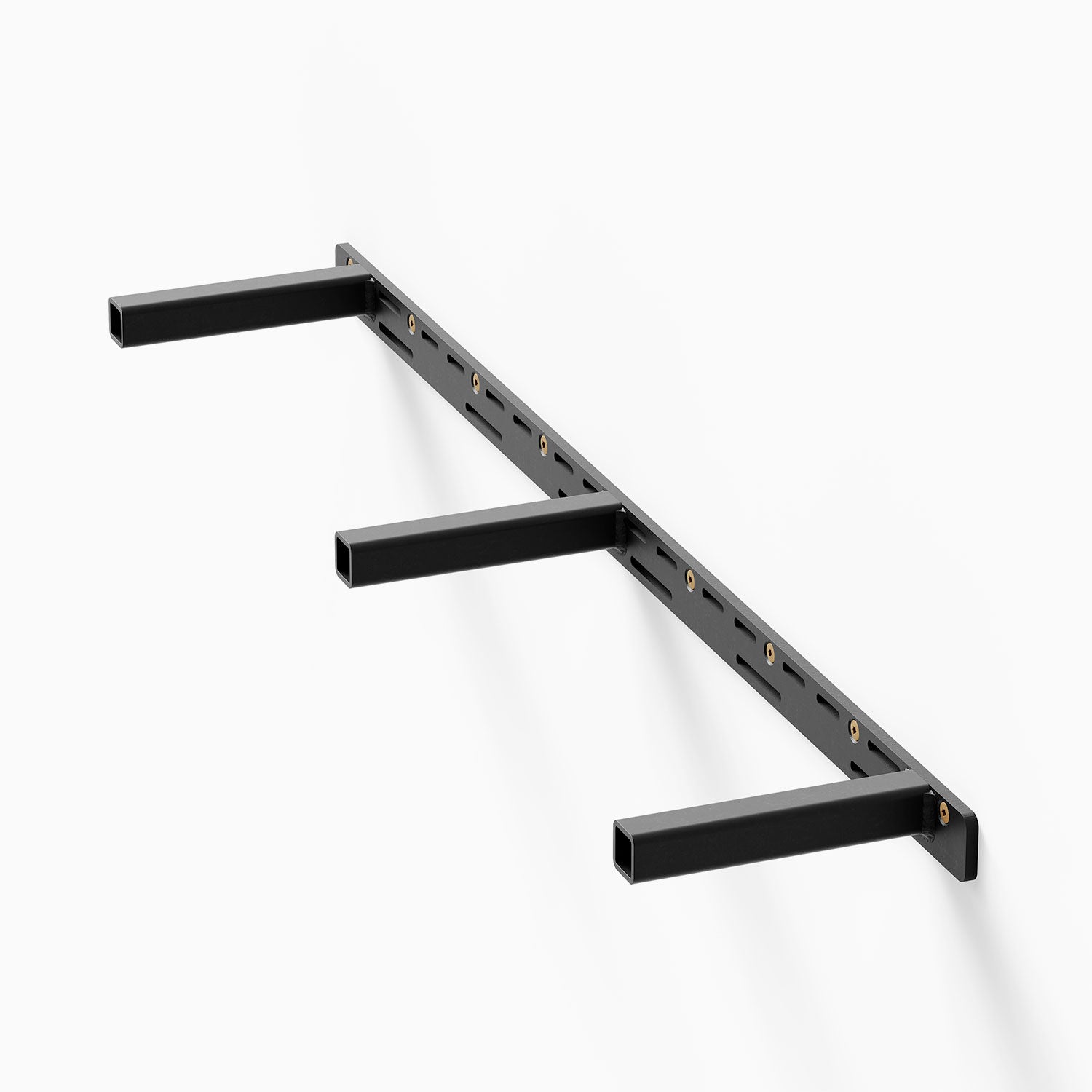
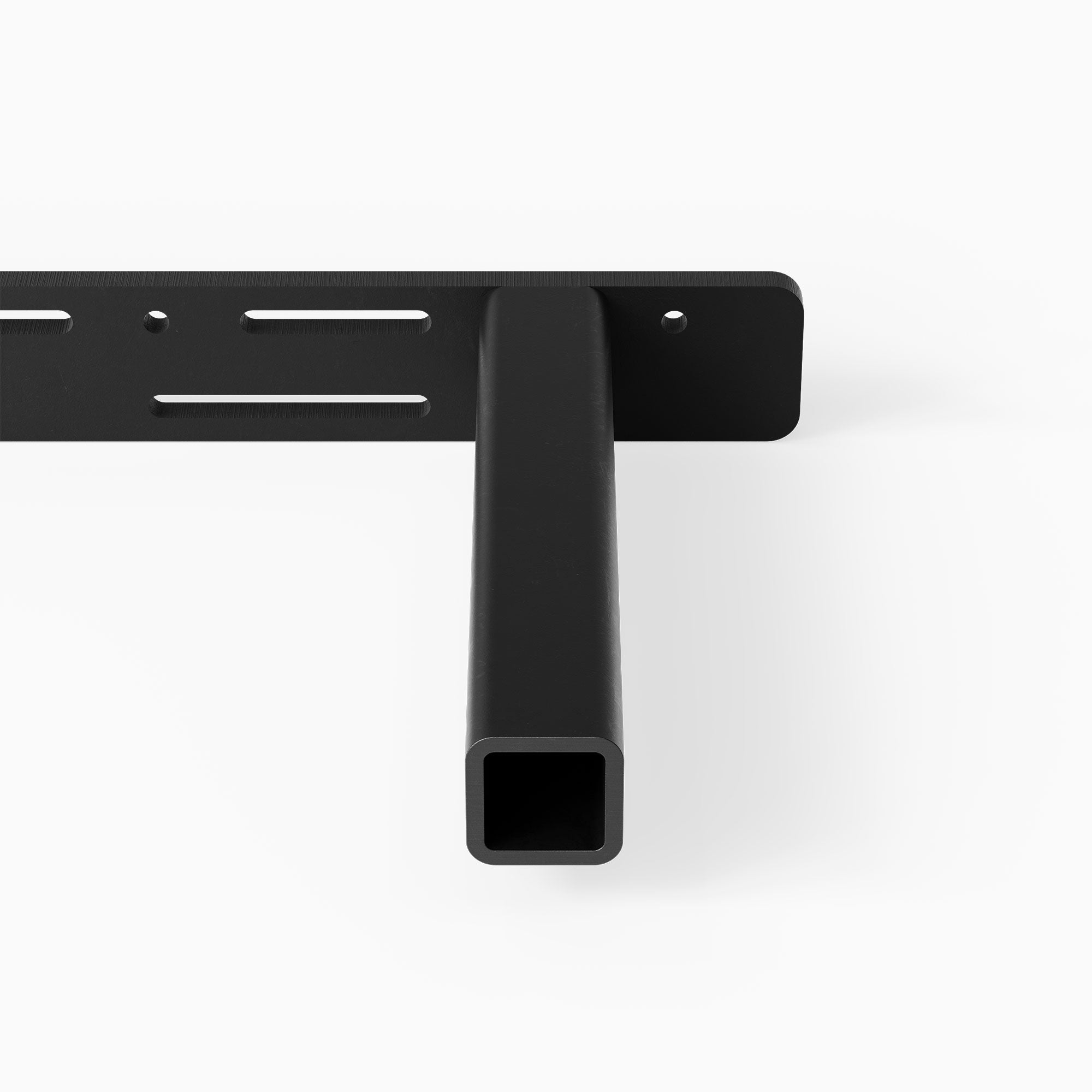
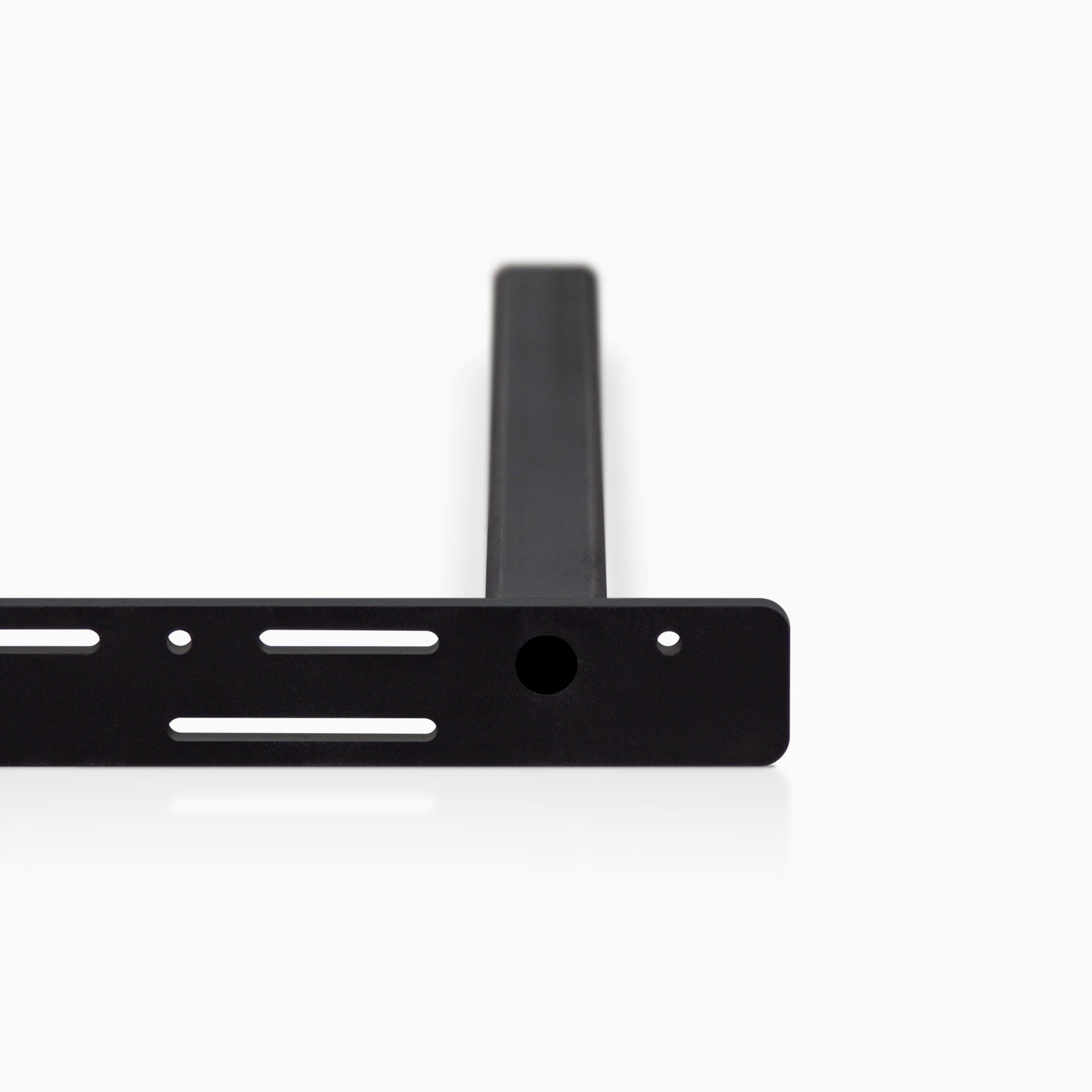
Aksel Hollow Core HD Floating Shelf Bracket
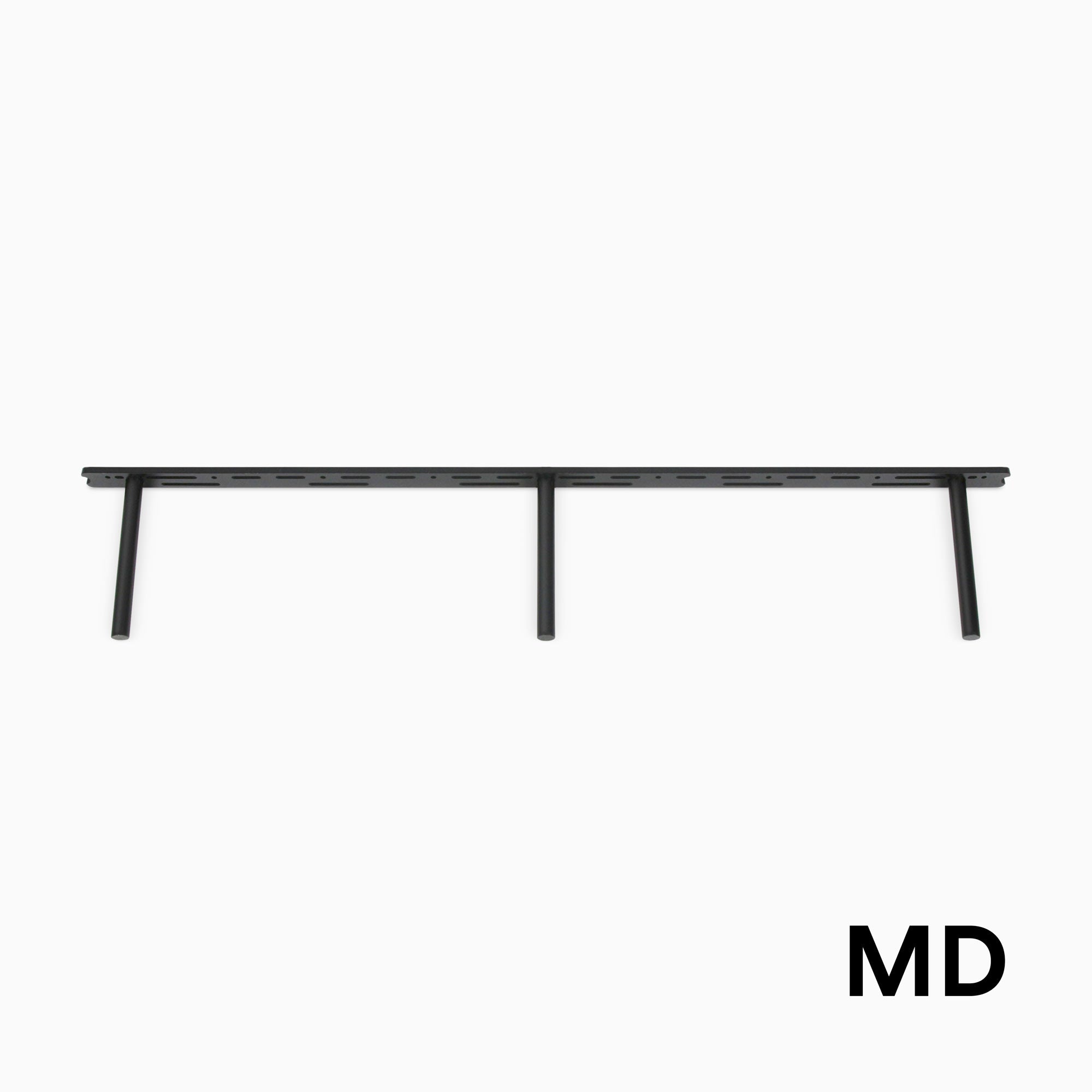
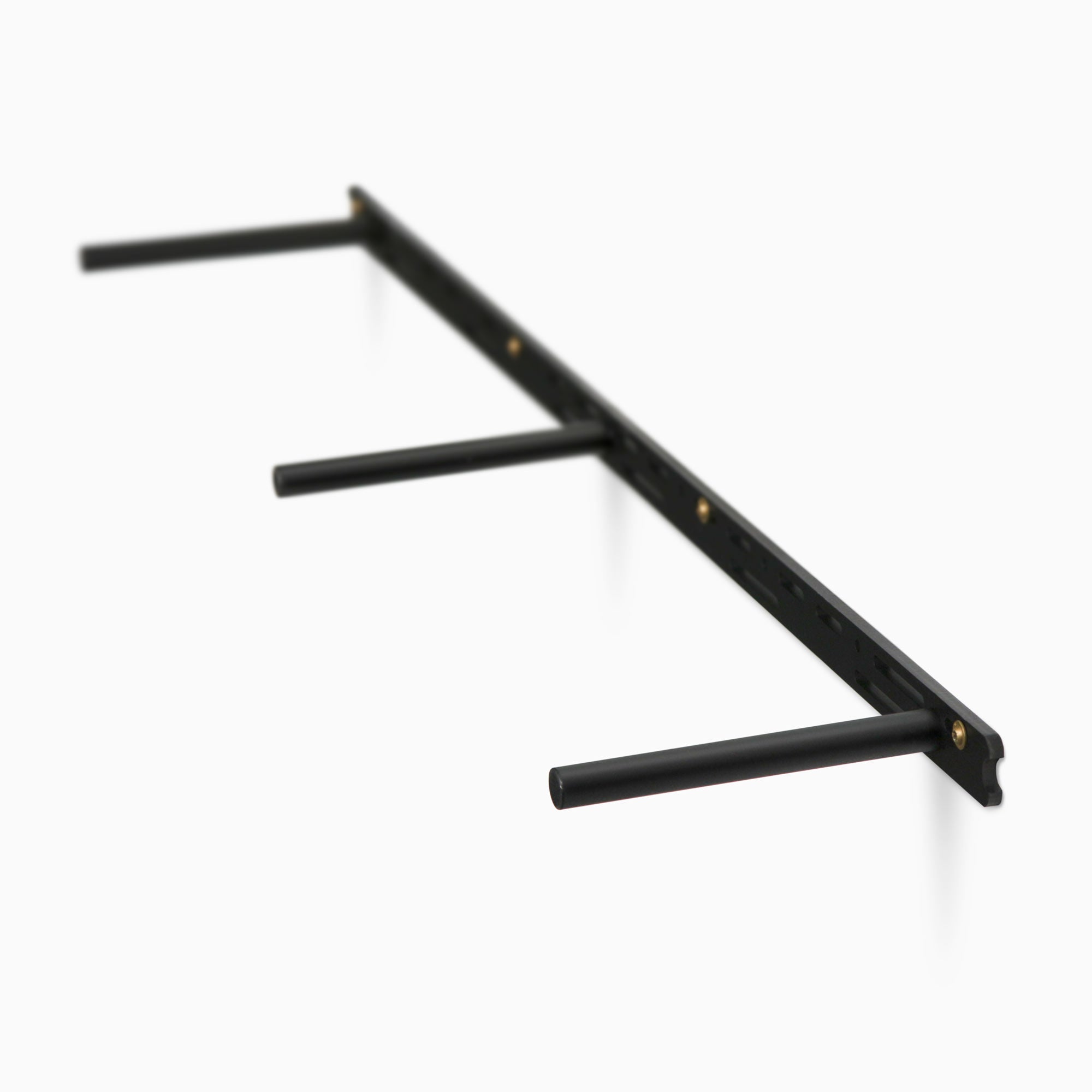
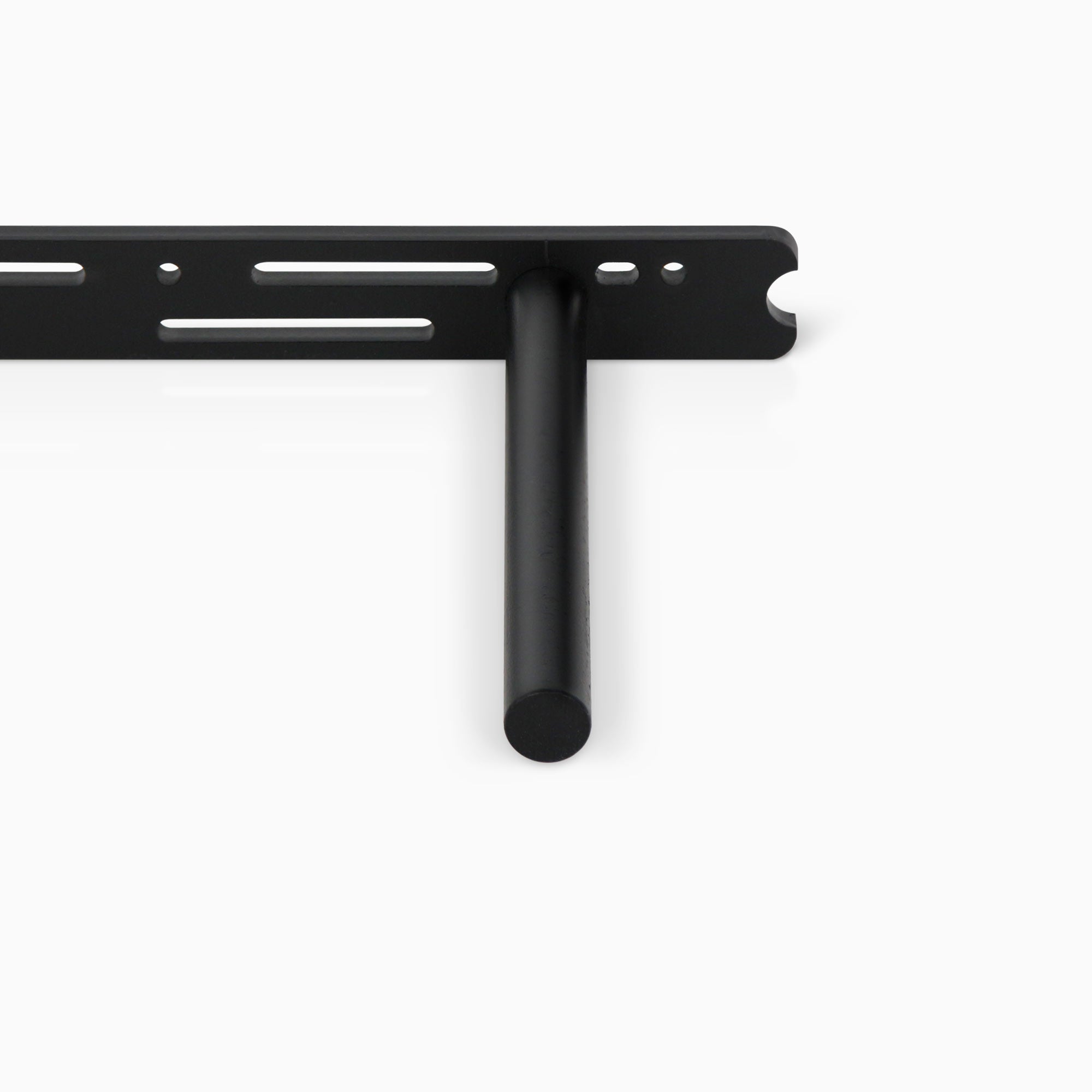
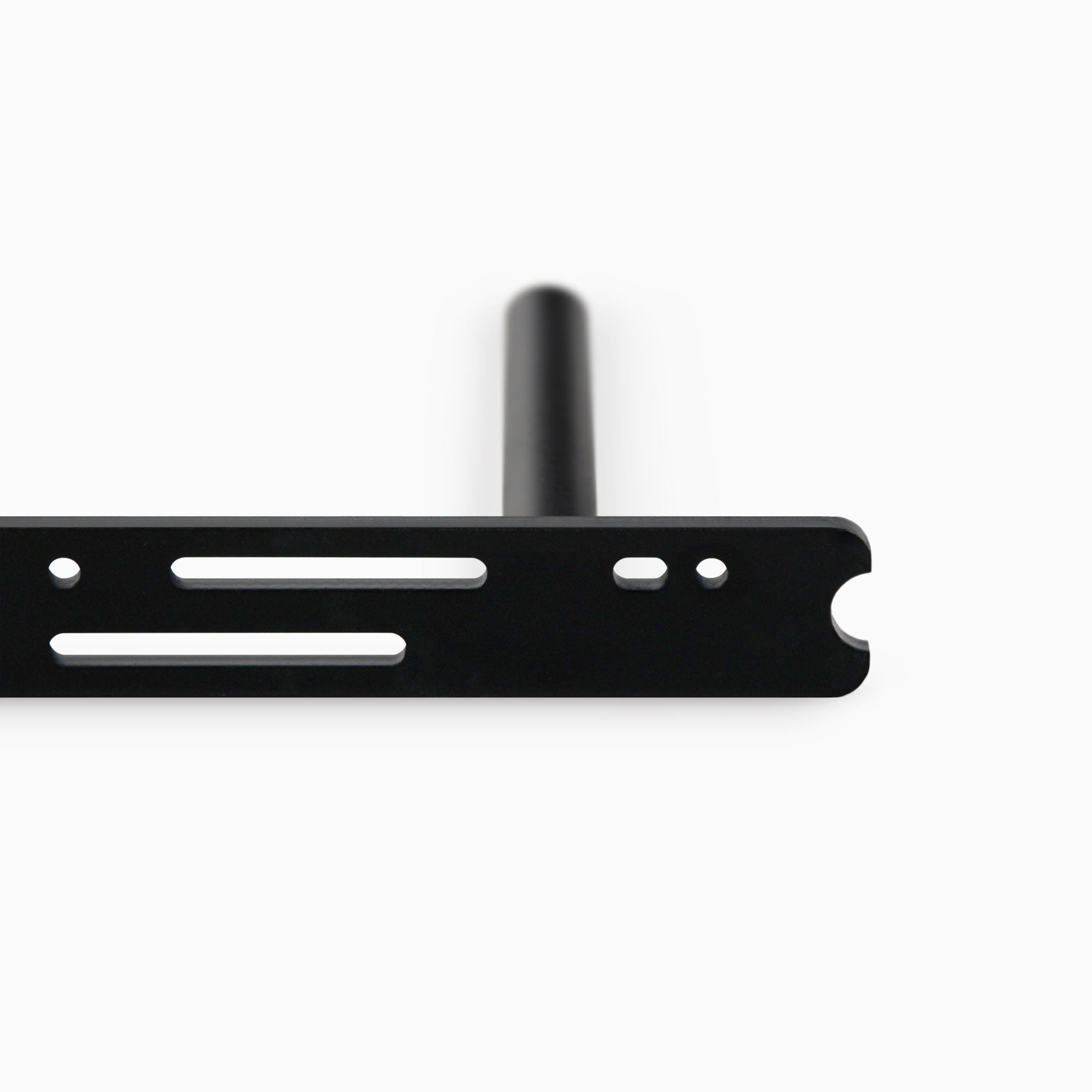
Aksel MD Floating Shelf Bracket
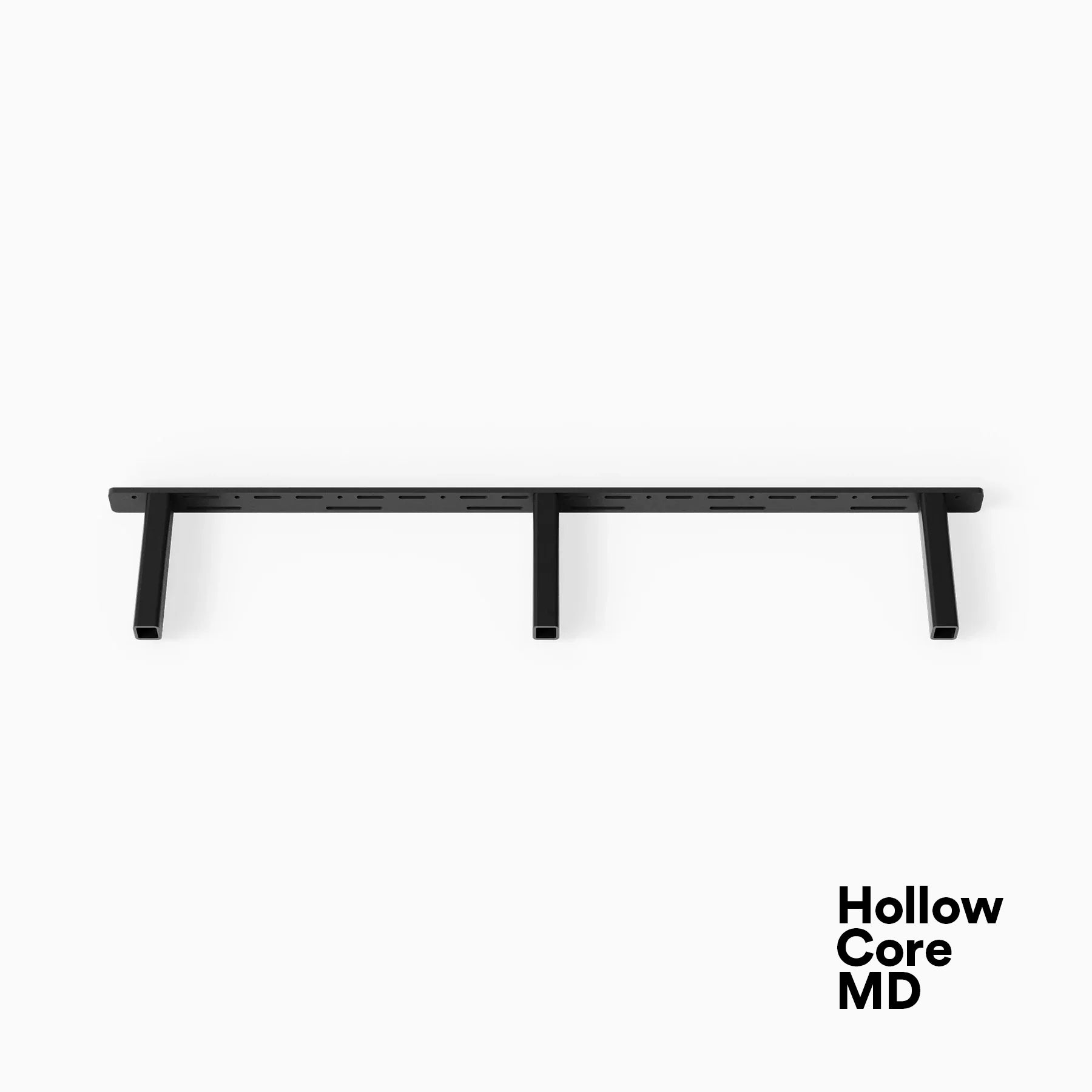
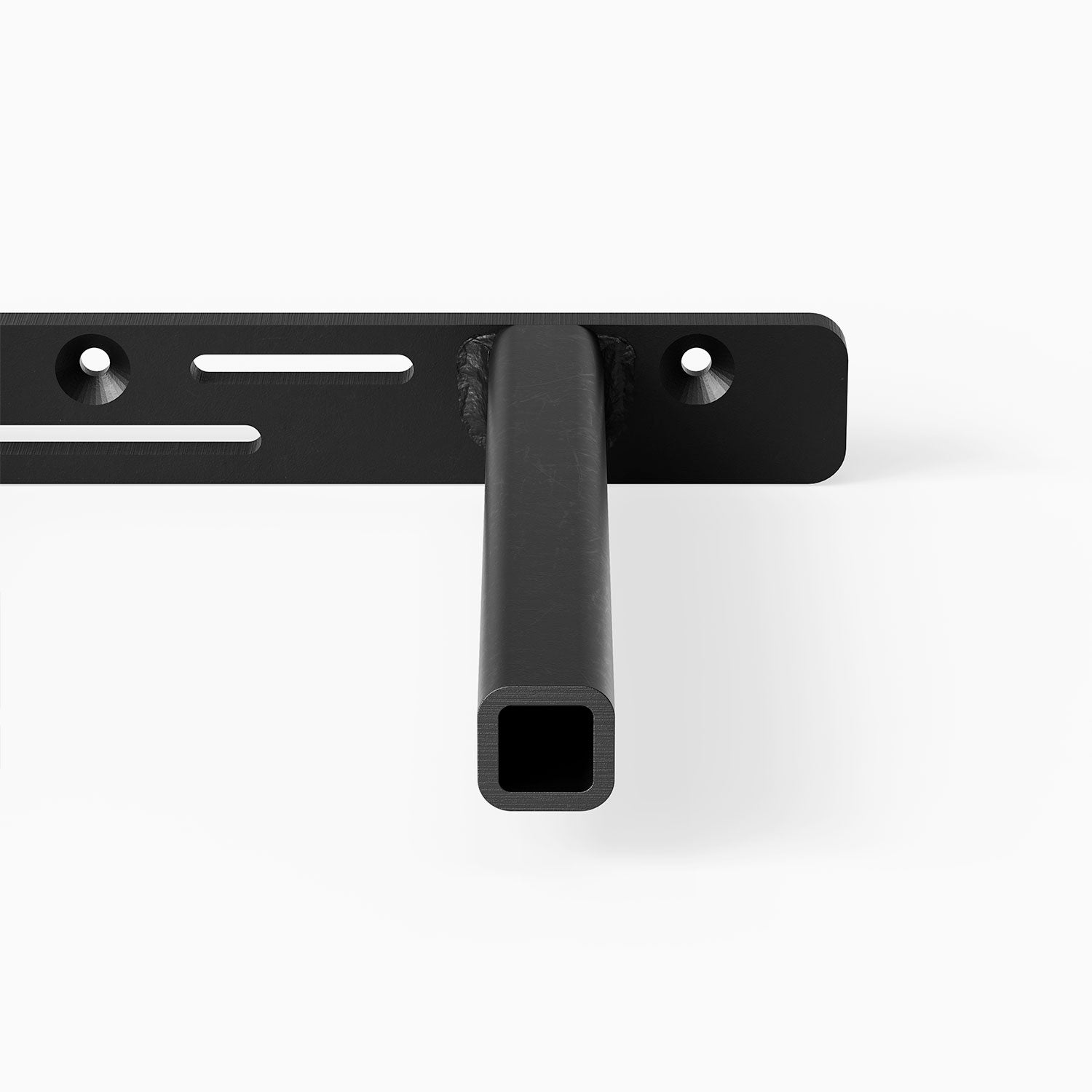
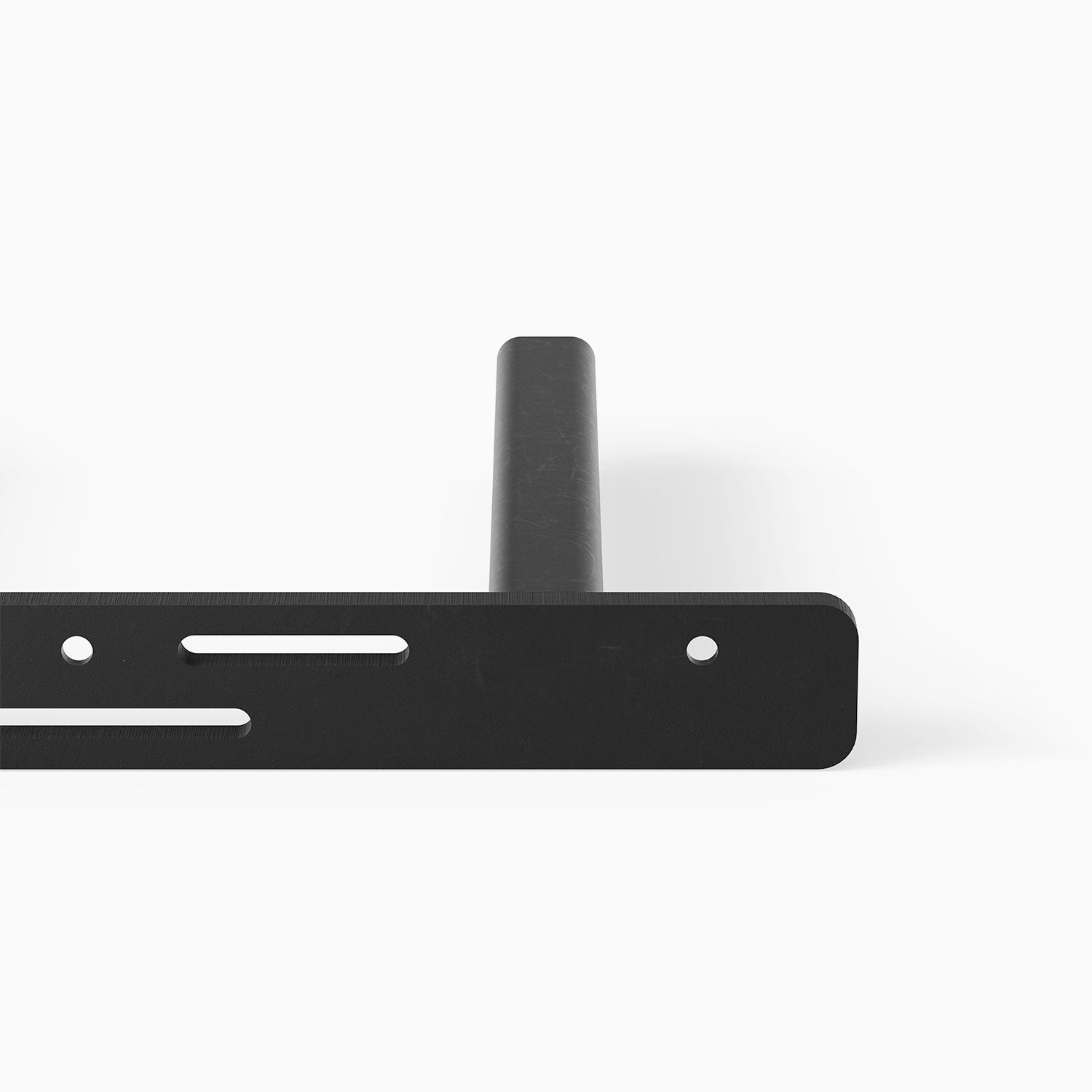
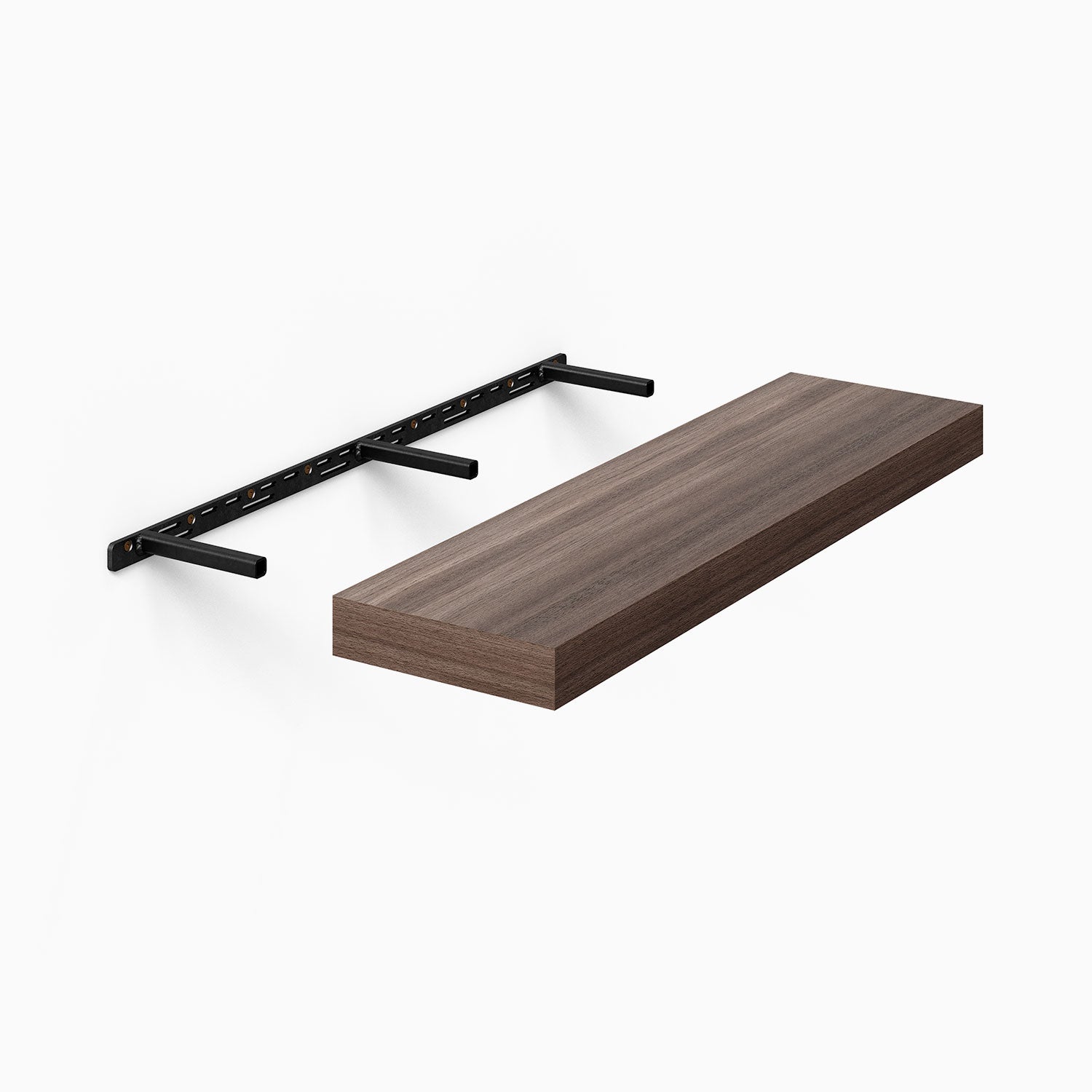
Aksel Hollow Core MD Floating Shelf Bracket
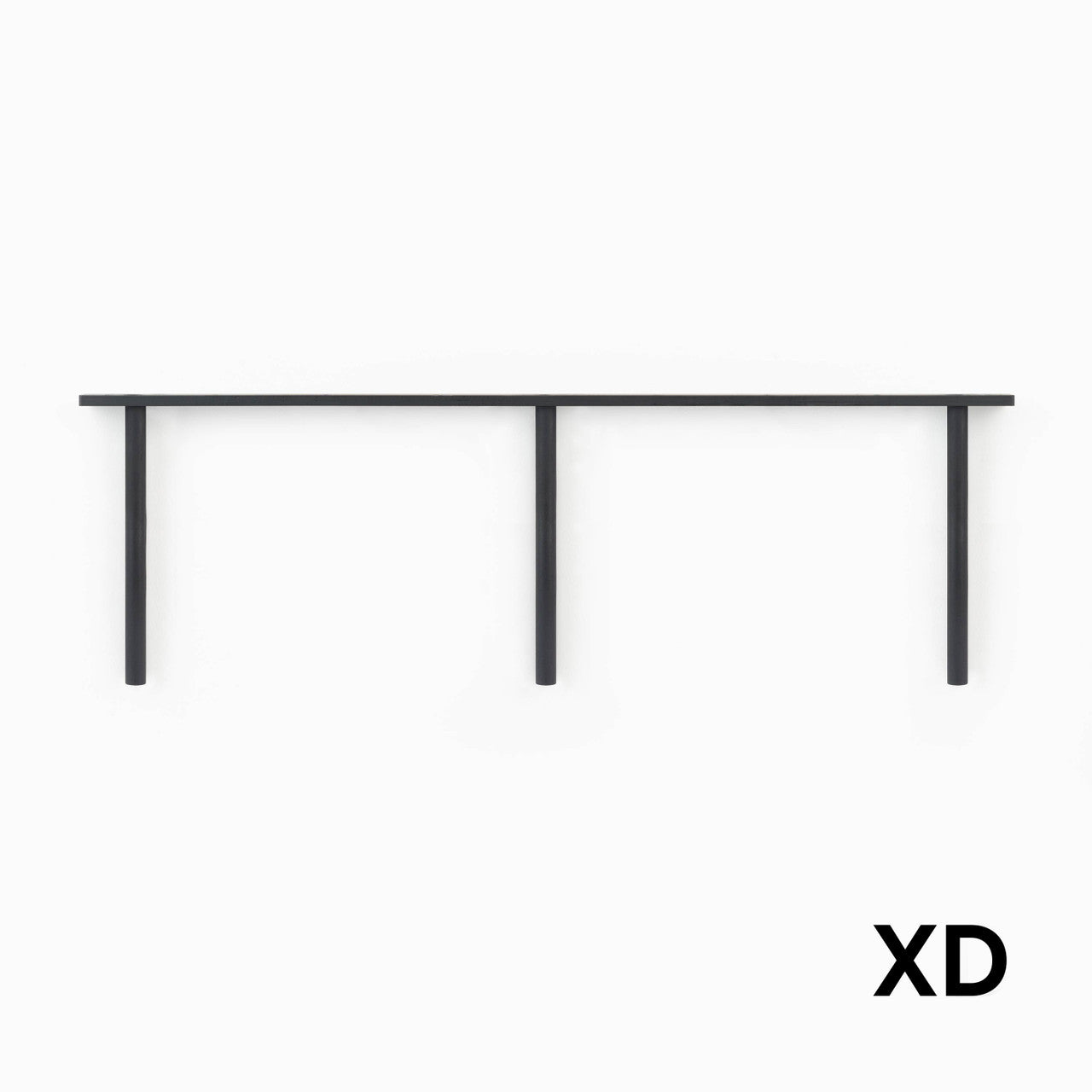
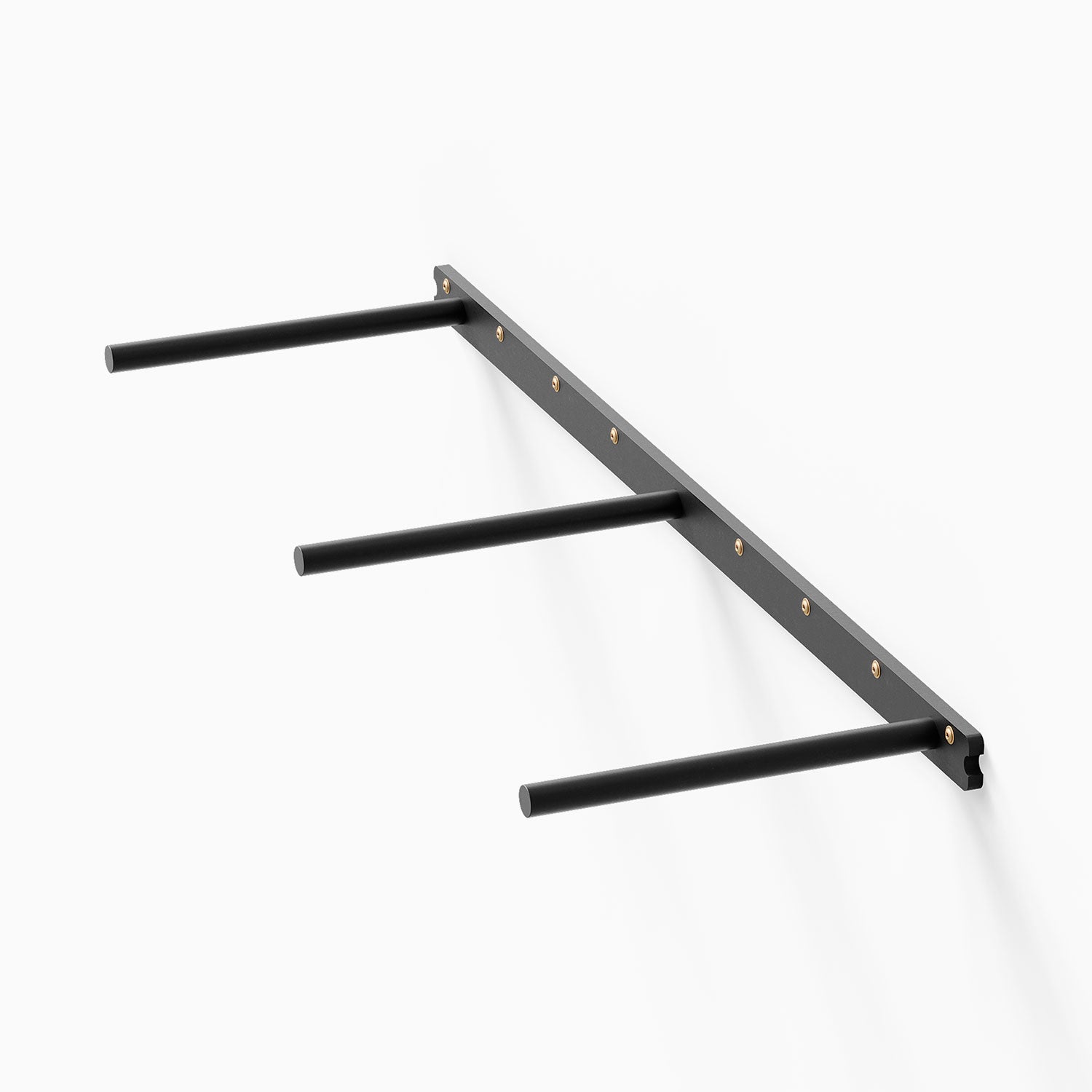
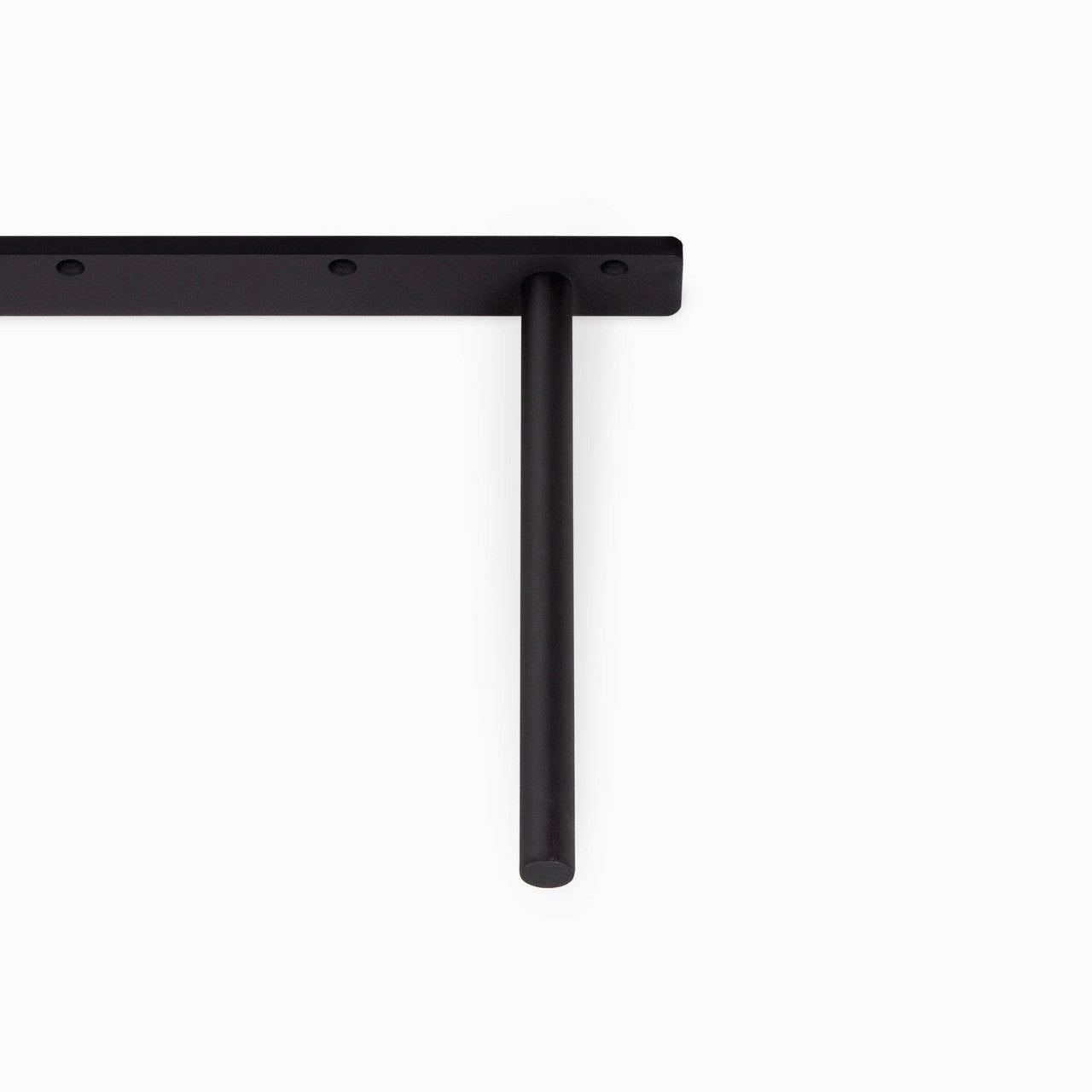
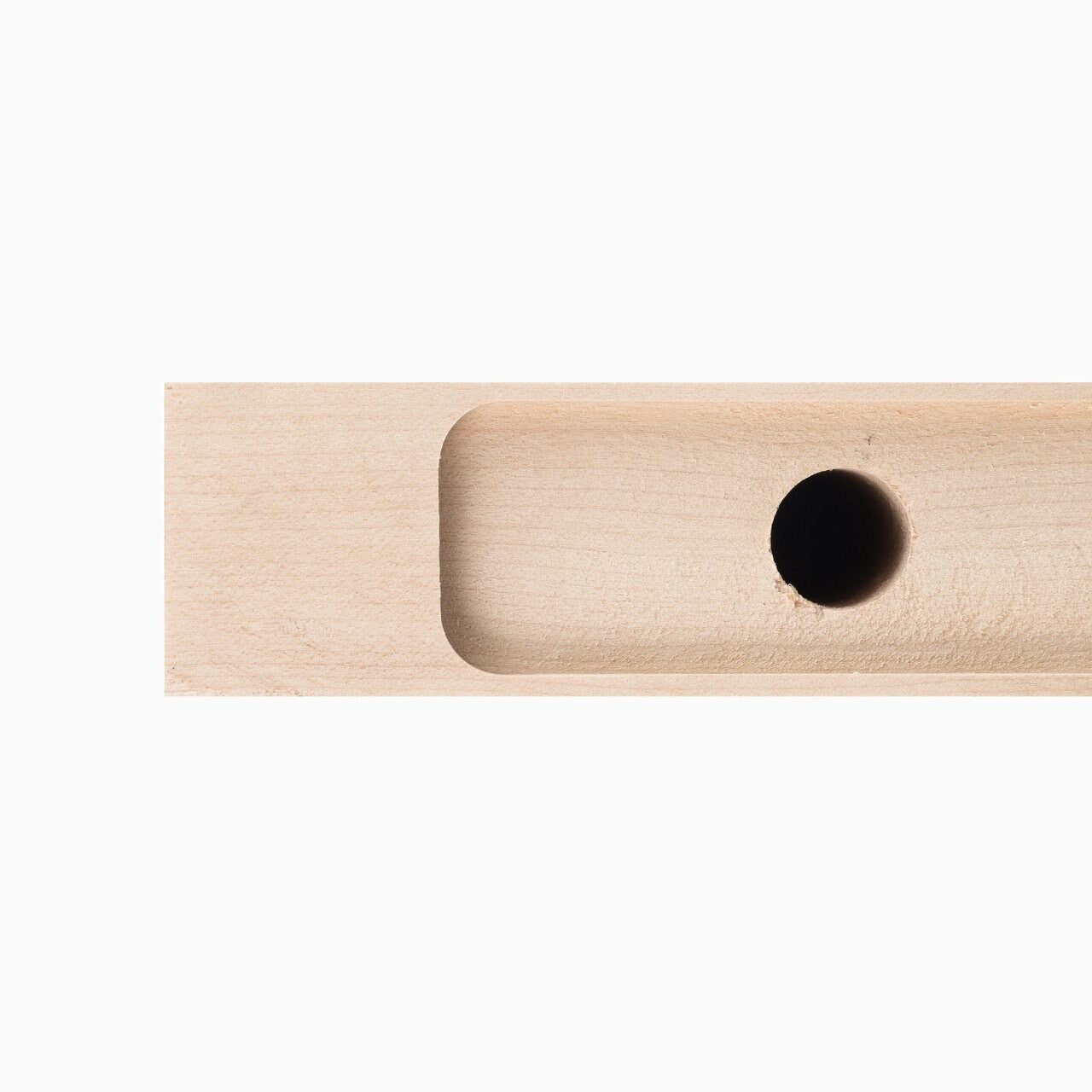
Aksel XD Floating Shelf Bracket
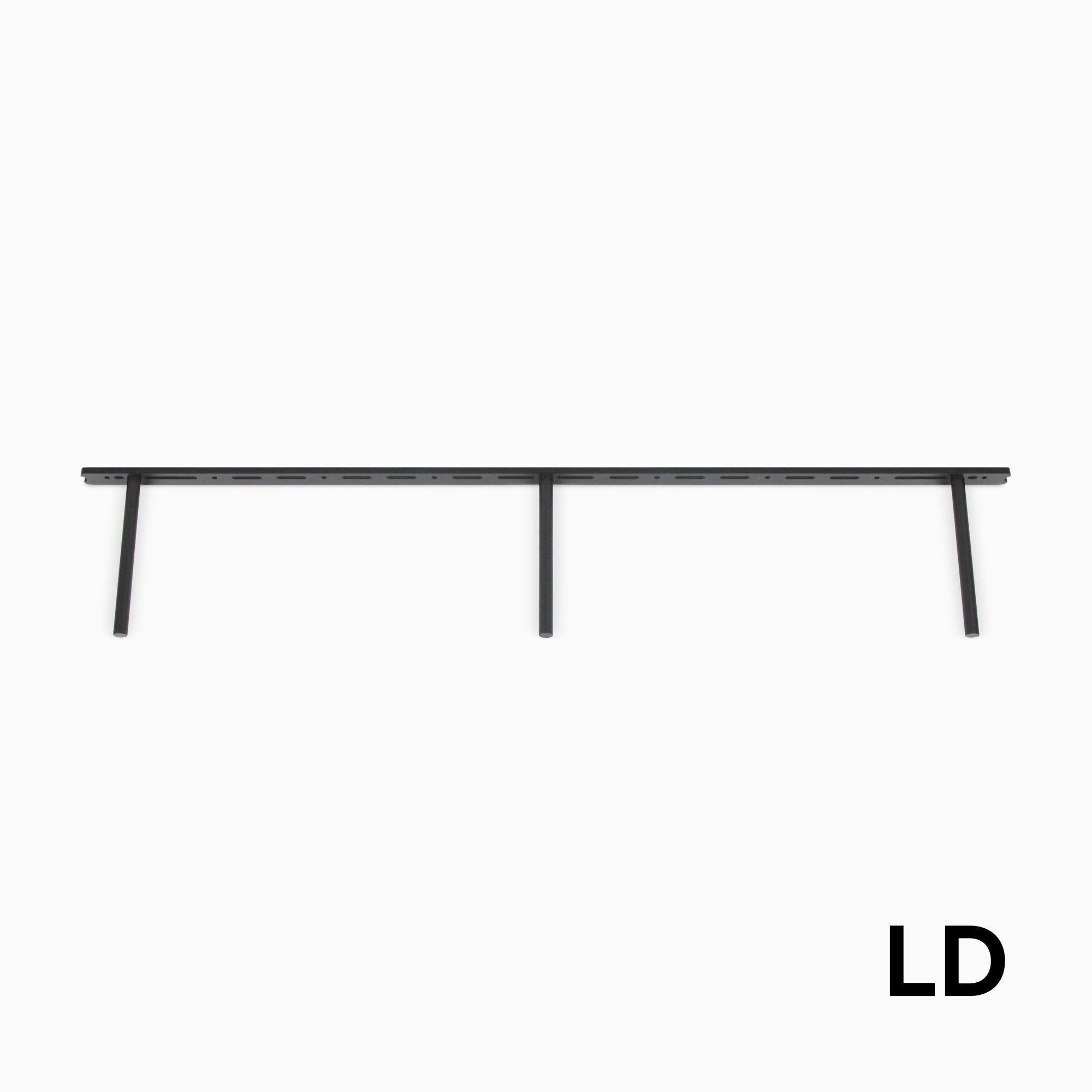
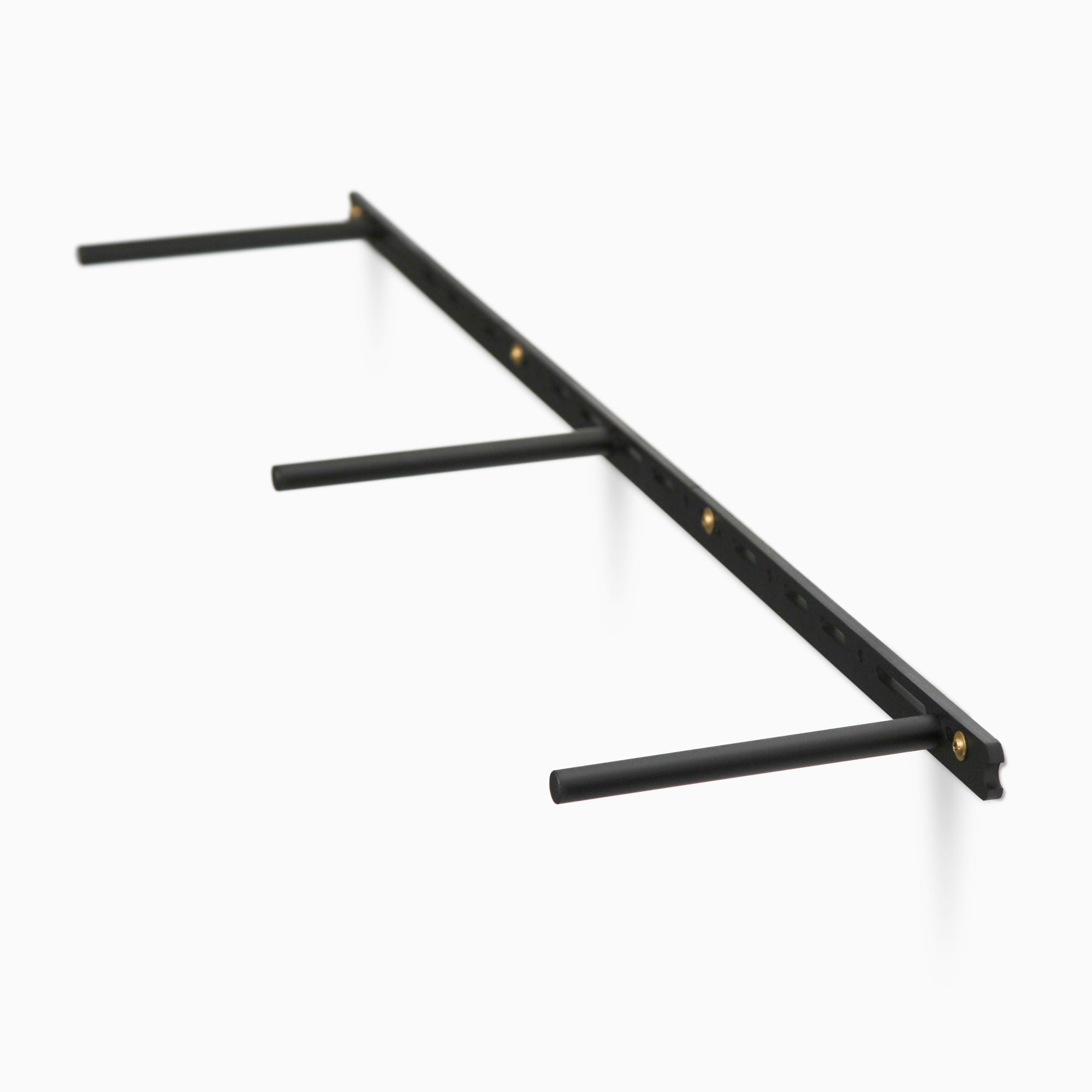
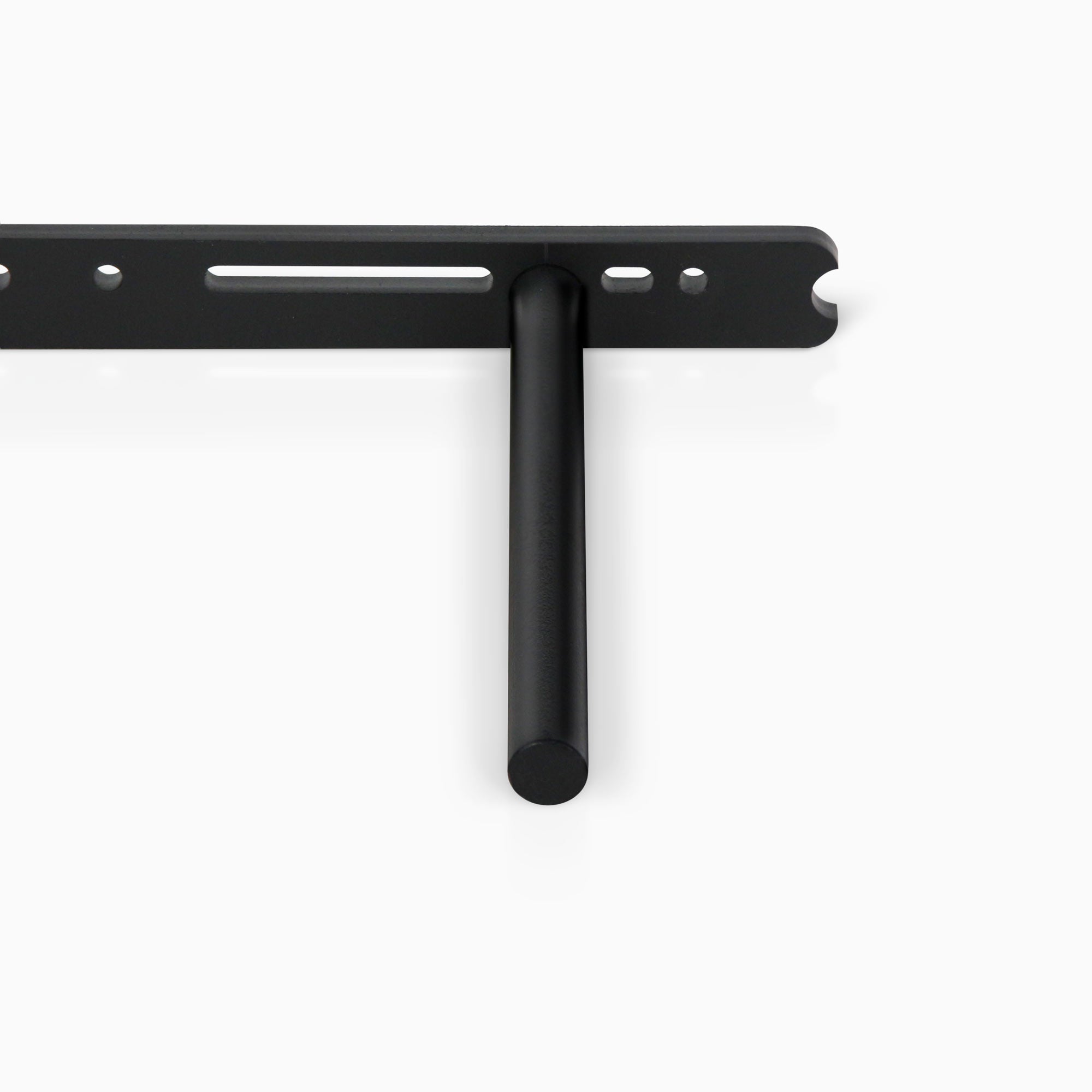
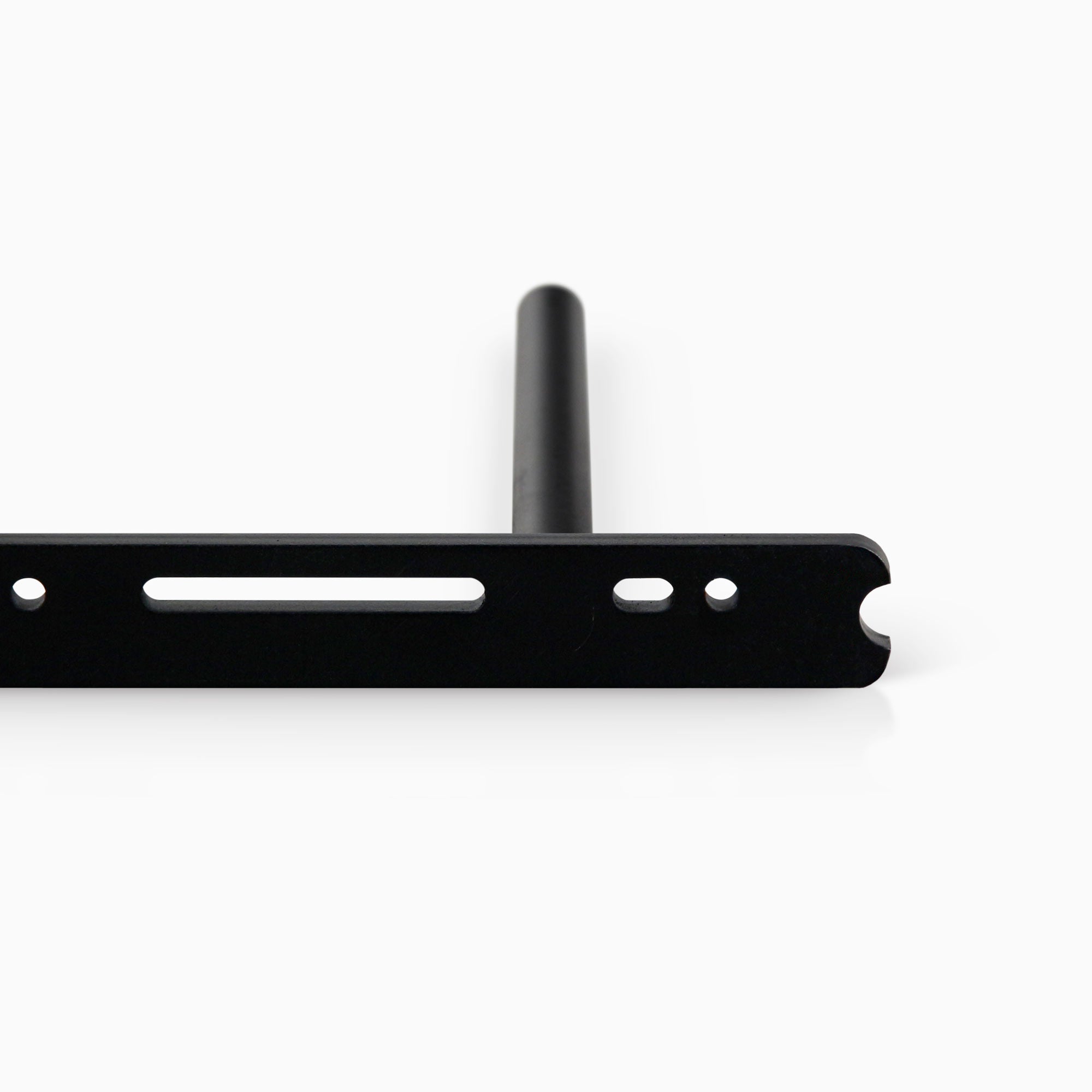
Aksel LD Floating Shelf Bracket
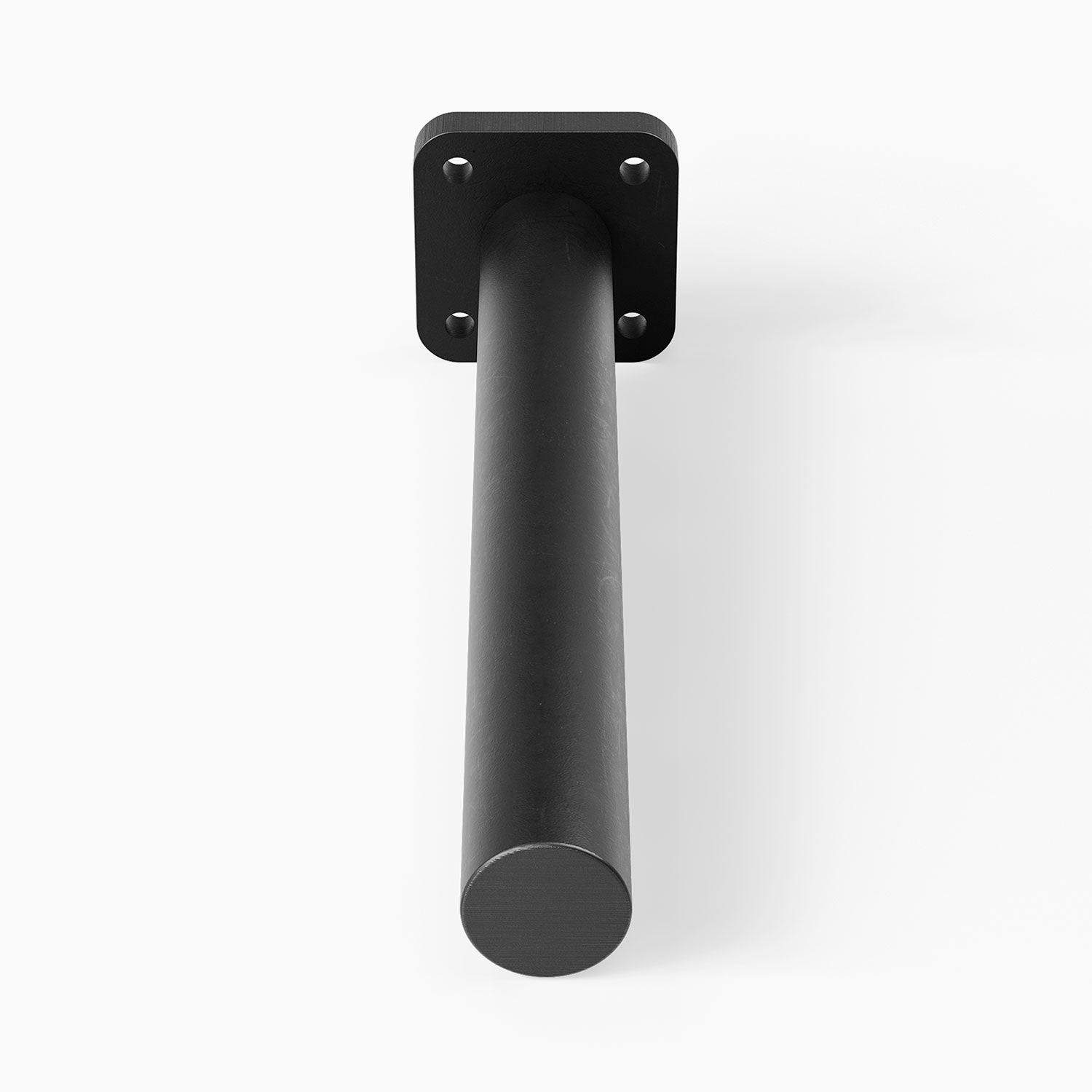
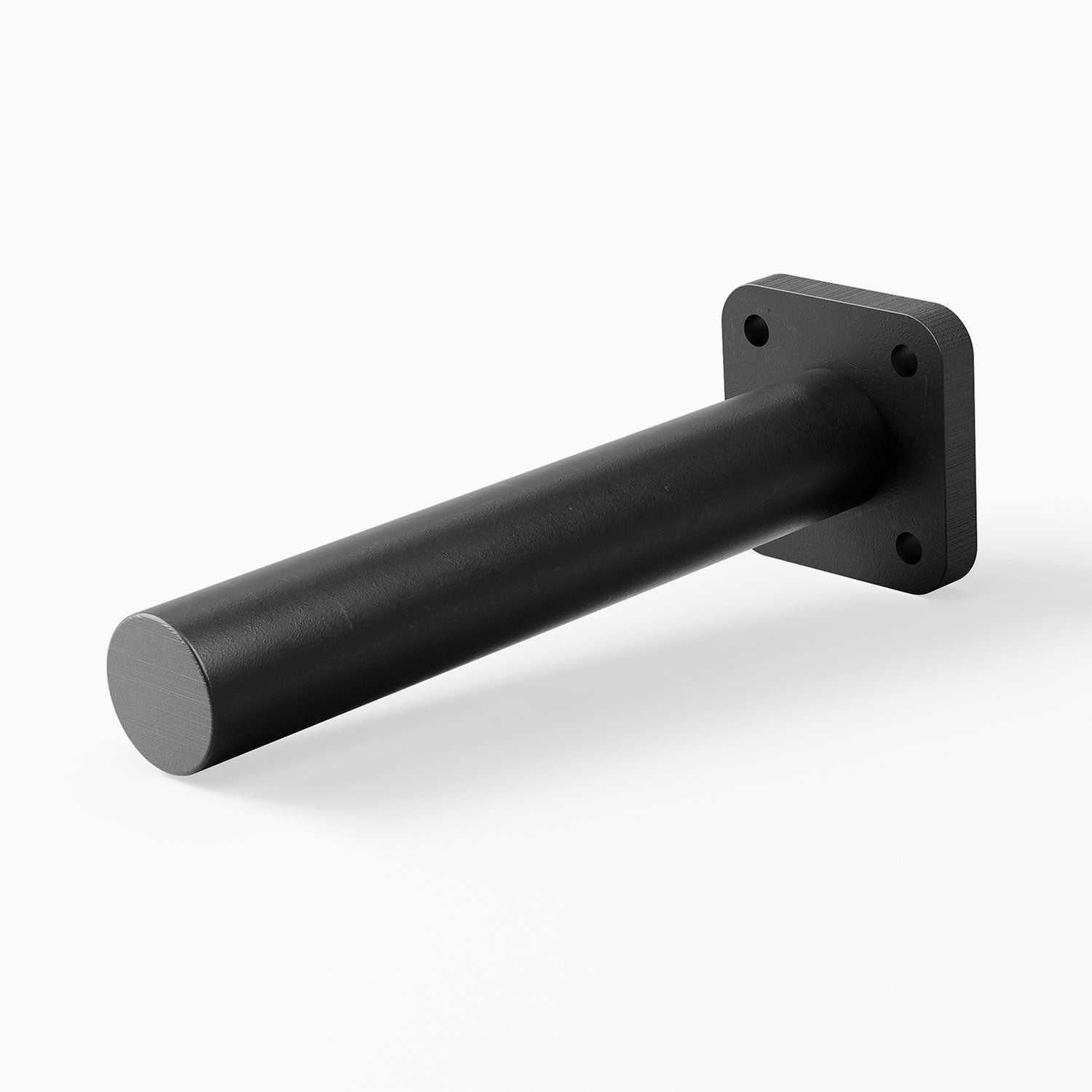
Floating Shelf Weight Capacity: The Real Numbers
Cheap floating shelves aren't built to hold real weight — the stamped hardware inside most big-box shelves gives out at 20 pounds or less. A floating shelf built on an engineered steel bracket (like our Aksel brackets) can easily support hundreds of pounds, and the strongest configurations that we manufacture could absolutely support upwards of 1,500 lbs.
Every rating below assumes installation into studs or blocking. Capacity scales with rod count — longer shelves get more rods — and climbs further with every stud you hit:
Floating Shelf Bracket Weight Capacities
| Floating Shelf Bracket | Duty Class | Weight Capacity (Per Rod) | Maximum Shelf Capacity | Best Applications |
|---|---|---|---|---|
| Aksel LD | Light duty | 50 lbs | 250 lbs | Shelves 5″–8″ deep |
| Aksel MD | Medium duty | 65 lbs | 325 lbs | Shelves 7″–10″ deep |
| Aksel HD | Heavy duty | 80 lbs | 400 lbs | Shelves 7″–14″ deep; kitchens |
| Aksel XD | Extra duty | 95 lbs | 475 lbs | Shelves up to 17″ deep |
| Aksel Hollow Core MD | Medium duty | 85 lbs (hollow rod) | 425 lbs | Hollow and engineered builds ¾″–3″ thick |
| Aksel Hollow Core HD | Heavy duty | 90 lbs (hollow rod) | 450 lbs | Hollow and engineered builds ¾″–3″ thick |
| Glenn MD | Heavy duty (mantel) | 200 lbs | 1,000 lbs | Floating mantels |
| Glenn HD | Extreme duty (mantel) | 300 lbs | 1,500 lbs | Floating mantels, extreme loads |
| Tromso | All-steel shelf | 90 lbs per linear foot (no rods — integrated steel shelf) | Scales with length: a 48″ shelf ≈ 360 lbs | Steel floating shelf system |
| Leif L bracket | Light duty (visible bracket) | 20 lbs per bracket | Scales with bracket count: 2 brackets ≈ 40 lbs | Light decor, visible-bracket look |
Longer shelves mean more rods anchored to studs and blocking — so longer shelves carry more:
| Shelf Length | Recommended Rod Count |
|---|---|
| Up to 36″ | 2 rods |
| 36″–52″ | 3 rods |
| 52″–72″ | 4 rods |
| Over 72″ | 5 rods |
Real-world loads are heavier than most people guess. Here's what common shelf loads actually weigh, matched to the bracket that carries them with room to spare:
What Your Stuff Actually Weighs
| Item or Shelf Load | Typical Loaded Weight | Recommended Minimum Bracket |
|---|---|---|
| Stack of dinner plates (12) | ~20 lbs | Aksel LD |
| Countertop microwave | 25–40 lbs | Aksel MD |
| 2-ft run of hardcover books | 40–70 lbs | Aksel MD |
| 4-ft run of hardcover books | 80–140 lbs | Aksel HD (3+ rods) |
| Full kitchen open-shelf load (dishes + glassware) | 100–200 lbs | Aksel HD |
| Mantel with decor or a mounted TV | 200+ lbs | Glenn MD/HD |

Not sure what your stuff weighs? Enter your shelf size and what you plan to store, and the calculator estimates the load and matches it to the right bracket.
Floating Shelf Brackets for Every Project
Aksel HD Floating Shelf Bracket
Aksel Hollow Core HD Floating Shelf Bracket
Aksel MD Floating Shelf Bracket
Aksel Hollow Core MD Floating Shelf Bracket
Aksel XD Floating Shelf Bracket
Aksel LD Floating Shelf Bracket
Why Most Floating Shelves Fail
When a floating shelf sags — or rips out of the wall entirely — one of three things caused it:
- Drywall-only mounting. Anchors resist a straight pull, but a loaded shelf levers instead — force concentrates at the top fasteners until the drywall crushes and the anchors tip out.
- Undersized hardware. Thin rods bend under load. The front edge tips down, and every added pound speeds up the sag.
- Missed studs. The fasteners landed in drywall instead of wood, and drywall can't carry the load.
None of these are flaws in the floating shelf concept. Rather, most failed floating shelf products come down to inferior products and/or improper installation. So to ensure that your floating shelves stand the test of time (and hold up whatever you place on them): don't skimp on the hardware. Look for engineered floating shelf brackets that feature rods sized for your specific load, a back bar stiff enough to distribute that load (ours is ¼″ steel by the way… good luck getting that to ever warp or bend!) and fasteners driven into studs or blocking. The shelf doesn't hold the weight; the steel and the studs do.
Floating Shelf Troubleshooting
Already have a shelf misbehaving? Here's how to diagnose it:
| Floating Shelf Problem | Likely Cause | Recommended Fix |
|---|---|---|
| Shelf leans or tips forward | Wavy wall or bracket not seated flat | Shim between bracket and wall to true it up |
| Shelf sags over time | Undersized rods bending under load and/or not enough wall attachment points | Upgrade to a heavier-duty bracket; lighten the load |
| Shelf pulls away from wall at top | Drywall-only mounting levering anchors out | Remount into studs or add blocking |
| Shelf wobbles on the rods | Missing or loose set screws | Tighten set screws, or silicone the rod holes for a semi-permanent hold |
| Front edge drops when loaded | Load exceeds rod rating at that depth | Check depth-adjusted capacity; keep heavy items toward the wall |

For more information check out our post on how to prevent and fix a saggy floating shelf.
Planning a heavy load? Shop heavy-duty floating shelf brackets →
Floating Shelf Dimensions: Depth, Thickness, Height, and Spacing
“Failed” floating shelf projects are almost always due to blowing past this step: take the time to carefully determine the right dimensions for your project. Below are a few recommendations–but feel free to reach out to us if you need help planning.
Choosing the Right Floating Shelf Depth
For most uses, 10 inches is the benchmark — it's the standard bookshelf depth, and items like books, dishes, and framed photos fit comfortably. By room and use:
| Room or Application | Recommended Shelf Depth | Why This Depth Works |
|---|---|---|
| Bathrooms, display ledges | 5″–8″ | Bottles and small decor; keeps leverage low |
| General use / books | 10″ | Standard bookshelf depth — books, dishes, frames fit comfortably |
| Kitchen open shelving | 10″–12″ | Dinner plates and appliances sit fully on the shelf, no overhang |
| Media shelves, office | 10″–14″ | Reference books and equipment |
| Floating desks, countertop-style surfaces | Up to 24″ | Requires a Yuri floating desk bracket |
Critical note: Every additional inch of depth costs capacity. Again, a floating shelf is a lever (physics!), so added depth moves the load farther from the wall and multiplies the force on the hardware. So carefully determine how much depth you actually need, and only float your shelves as deep as required.
Once you've determined how deep your shelves need to be, choose your bracket accordingly:
| Floating Shelf Bracket | Recommended Shelf Depth |
|---|---|
| Aksel LD | 5″–8″ |
| Aksel MD | 7″–10″ |
| Aksel HD | 7″–14″ |
| Aksel XD | Up to 17″ |
| Yuri desk bracket | Up to 24″ |
Need deeper? Our Yuri floating desk brackets float surfaces up to 24″. Custom rod lengths are available for shallower shelves. More on the physics: Floating Shelf Depth Guide: How Depth Impacts Stability.
Choosing the Right Floating Shelf Thickness
A solid wood floating shelf needs to be at least 1¼″ of thick — enough to bore rod channels while leaving plenty of strong wood around them. For our Aksel brackets, each subsequent rating/capacity level requires a slightly thicker cut of wood: 1¼″ for the Aksel LD, 1½″ for the MD, 1¾″ for the HD, and 2″–3″ for the XD. Hollow and engineered builds are different: the rods slide into a built cavity instead of a bored hole, so Aksel Hollow Core brackets handle shelves from ¾″ to 3″ thick. Floating mantels run thicker still — 2¼″ and up.
| Shelf Construction | Recommended Bracket | Minimum Shelf Thickness |
|---|---|---|
| Solid wood | Aksel LD | 1¼″ |
| Solid wood | Aksel MD | 1½″ |
| Solid wood | Aksel HD | 1¾″ |
| Solid wood | Aksel XD | 2″–3″ |
| Hollow / engineered build | Aksel Hollow Core | ¾″–3″ |
| Floating mantel | Glenn | 2¼″ and up |
Choosing the Right Floating Shelf Height
As a general rule of thumb, eye level — roughly 4 to 5 feet from the floor — is the universal starting point for a single shelf. Beyond that, your use case determines the ideal shelf height:
| Installation Location | Recommended Shelf Height |
|---|---|
| Standalone shelf (general rule) | Eye level; 4–5 ft from the floor |
| Above a kitchen countertop | 18″–24″ above the counter |
| Above a couch | 10″–12″ above the back cushion |
| Above a bed (no headboard) | ~16″ above the mattress |
| Above a toilet | At least 24″ above the tank |
Of course your personal preferences and factors like how tall you are also come into play when determining the best height for your shelves.
Optimal Floating Shelf Spacing
For a stacked run of shelves, 10–18 inches of vertical spacing covers most situations. Tighter guidance by contents:
| Shelf Contents | Recommended Vertical Spacing |
|---|---|
| Small decor | 8″–12″ |
| Books and dishware | 12″–15″ |
| Tall items (vases, small appliances) | 18″–24″ |
Measure your tallest item, add 2–3 inches of clearance, and treat that as your minimum. Keep spacing consistent across the run — even gaps read as designed, uneven gaps read as accidental.
Every Shelfology shelf and bracket is cut to order by the inch, so none of these numbers force a compromise. If your wall calls for a 53-inch shelf, order a 53-inch shelf — or go full custom.
Choosing Floating Shelf Materials and Styles
Choosing the right material for your shelves is mostly a question of the room's character; the structure underneath is the same steel either way.
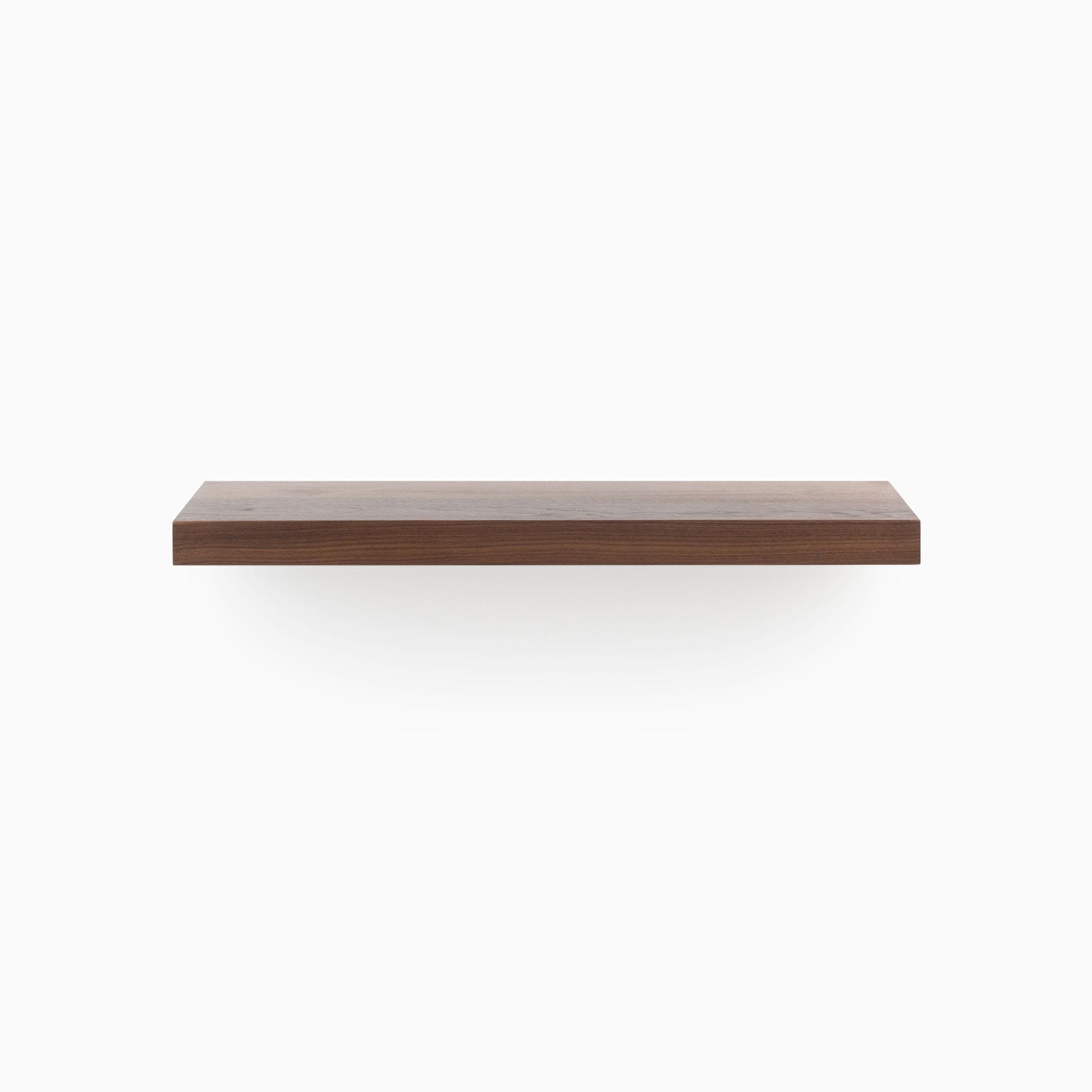
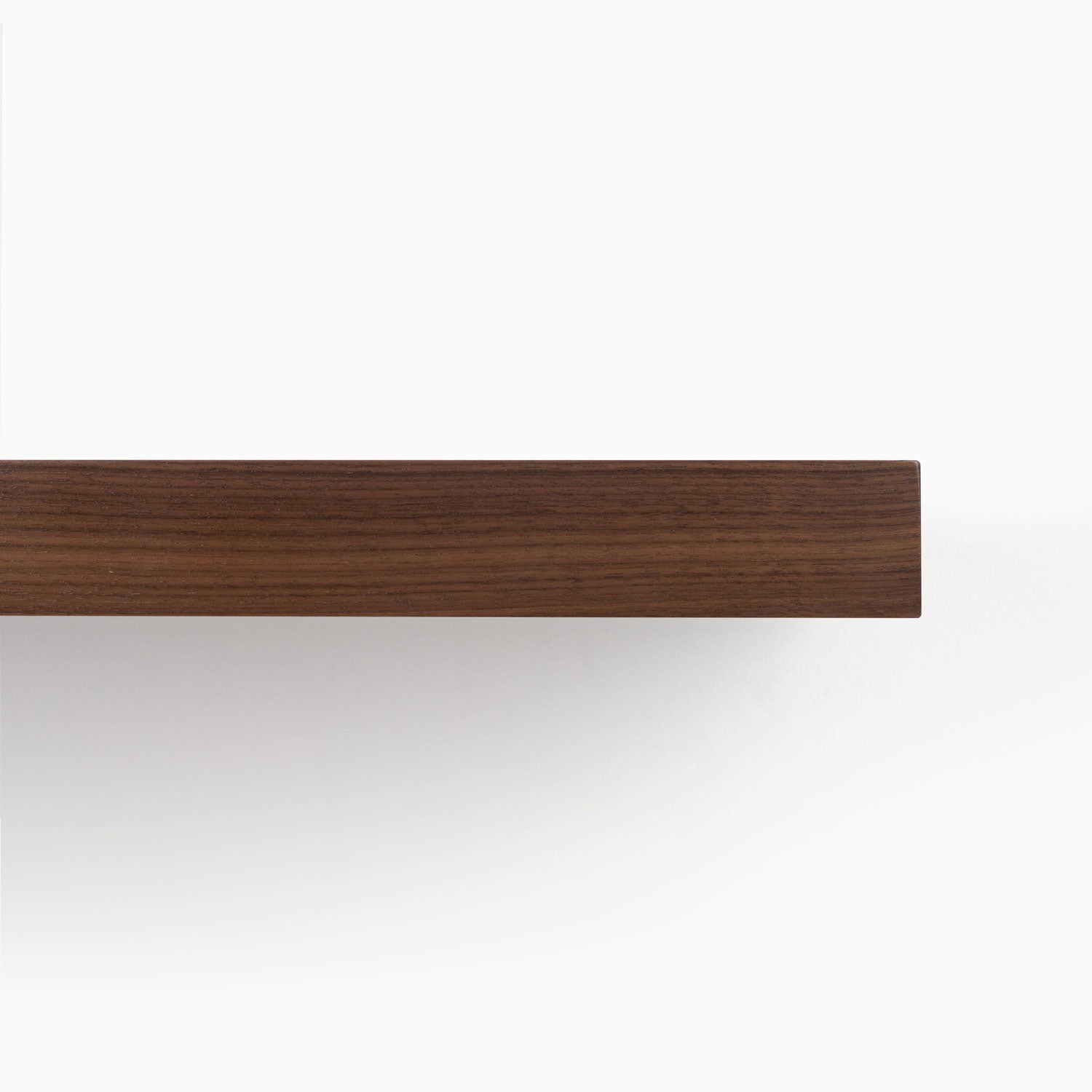
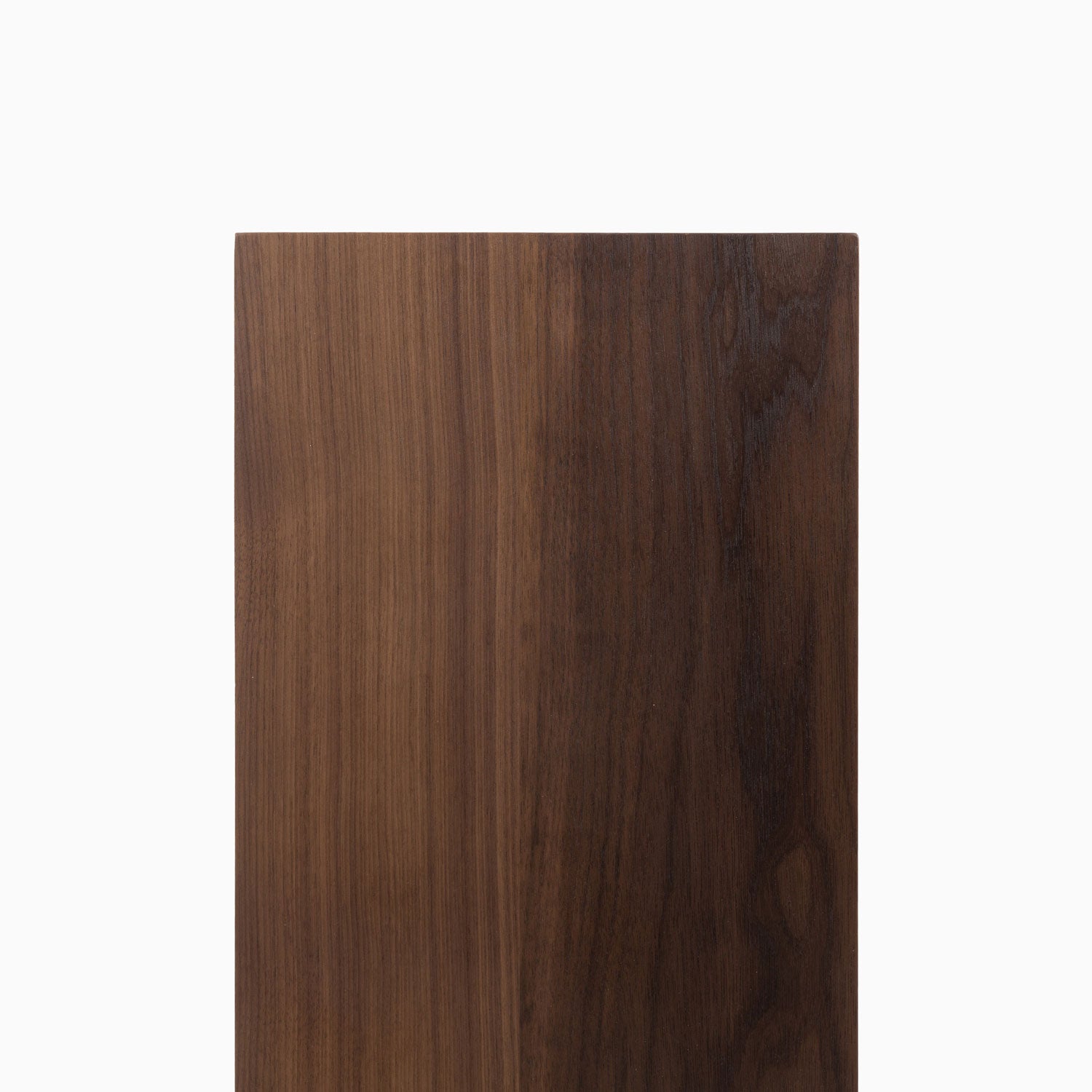
Solid hardwood reads warm and natural — walnut is our most popular species by a wide margin, with white oak close behind for lighter, contemporary rooms. Maple, alder, cherry, and mahogany round out the range. All of our woods are available unfinished or finished (clear satin, stained, painted).
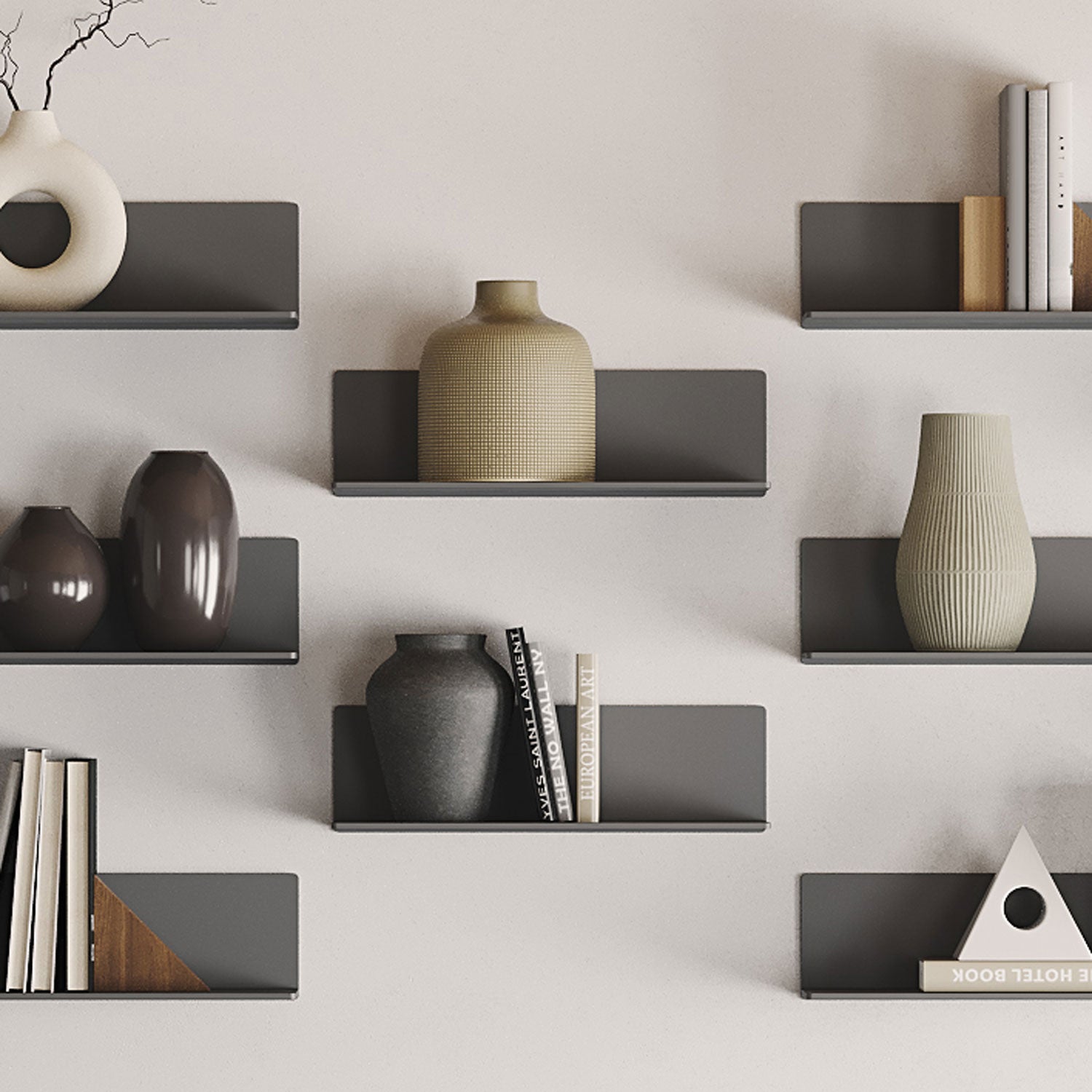
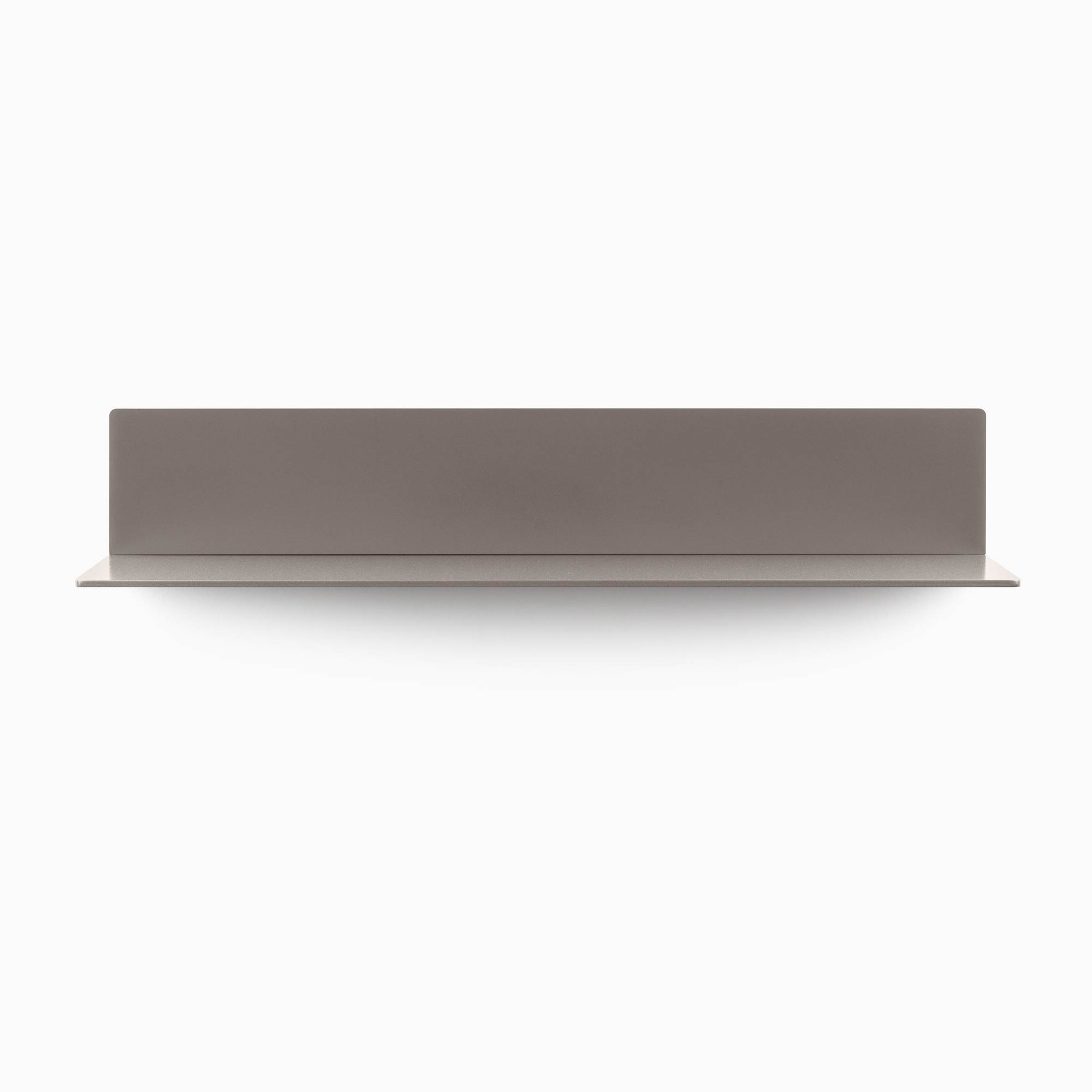
Steel feels architectural, modern, and precise. And since steel can be painted or otherwise have a color finish applied to them, they are typically available in colors that pop in ways that would never quite work for wood shelves. Our powder-coat finishes, for example, are baked on, meaning they are extremely durable — a practical advantage in hardworking rooms.

| Comparison | Solid Hardwood | Powder-Coated Steel |
|---|---|---|
| Appearance & design style | Warm, natural wood grain | Architectural, modern steel |
| Color options | 6 species; stain, paint, or clear satin | 30+ powder-coat colors |
| Durability | Sealed and refinishable | Powder-coat wears harder than paint |
| Best rooms | Kitchens, living rooms, bedrooms | Utility, bathrooms, color-forward modern rooms |
| Structure | Same steel bracket underneath | Same steel bracket underneath |
Every floating shelf type builds on that same concealed-bracket structure:
Types of Floating Shelves by Material and Usage
| Floating Shelf Type | Description | Recommended Applications |
|---|---|---|
| Solid hardwood (Aksel) | Walnut, white oak, maple, alder, cherry, or mahogany on Aksel brackets | Kitchens, living rooms; warm, natural look |
| All-steel (Tromso) | ¼″ steel, 30+ powder-coat colors, 90 lbs per linear ft | Color-forward rooms, utility spaces, bathrooms |
| DIY Hollow-core / box | Built cavity slides over hollow structural rods; ¾″–3″ thick | DIY builds; thick profiles; ideal for building floating shelves on a budget |
| LED (Aksel LED) | Integrated under-shelf lighting | Display walls, bars, media rooms, kitchens, home offices |
| Rounded-corner (RADius) | Softened front corners | Modern spaces, kid-height installs, softer profiles |
| Inlay | Band of color set into the wood | Statement shelves; ideal for modern spaces where the shelves are on display |
| Floating mantel (Glenn) | 2¼″+ thick, 200–300 lbs per rod | Fireplaces, extreme loads |
How to Install Floating Shelves
Installing floating shelves is a two-stage project: 1) mount the bracket level into the wall structure, and then 2) slide the shelf over the rods and secure it. It isn't a ten-minute job, but with studs located and the right tools in hand, it's well within reach of a first-timer.
Here's the sequence, straight from the install guide included with every bracket:
- Find your studs. Use a stud finder, or start from an outlet or light switch (they're mounted to studs) and measure in 16-inch increments. You can usually find studs using the “knock” test. But seriously… just go to Home Depot and get a stud finder. Mark every stud your shelf will cross.
- Position and level the bracket. Hold the back bar against the wall at your chosen height and set a level on it. Mark each fastener hole with a pencil.
- Fasten into every stud the bracket crosses. Drive the included fasteners through the bracket into each stud. The back bars of our Aksel brackets feature channels rather than individual holes, so you can hit even awkwardly placed studs, no problem. Connect to as many studs as you can — more stud connections always beat fewer.
- Anchor the remaining holes. Between studs, predrill and set the included drywall anchors, then fasten. These supplement the studs; they never replace them.
- Check level again — and shim if needed. Walls are rarely flat. A wood shim between bracket and wall trues up a shelf on a wavy wall and is the trade fix for a front edge that tips down.
- Slide the shelf on and secure it. The shelf slides over the rods until it seats against the wall. Lock it with the set screws (drilled through the underside into each rod), or run a bead of kitchen-and-bath silicone in the rod holes for a semi-permanent hold. Set screws are the better answer — they let you remove the shelf cleanly later.
One upgrade is worth knowing about: blocking. If you're mid-construction or remodeling and your studs are exposed, this is the perfect opportunity to install horizontal lumber (“blocking”) between the studs behind the shelf location. Every fastener hole in the bracket then lands in solid wood — this is THE strongest floating shelf installation possible, bar none. It's also the best move for mantels and other very heavy shelves, like Glenn mantel brackets.

Never, ever install floating shelves or floating mantels into drywall alone.
The tool list for a floating shelf install is short: stud finder, level (4-foot preferred), drill and bits, tape measure, pencil, and shims. Fasteners, anchors, and a step-by-step install guide are included with every Shelfology bracket.
For the deeper trade techniques — including what pros do on old plaster and out-of-square walls — read Trade Secrets: The Right Way to Install Floating Shelves and Floating Shelves 101: How to Hang Your Shelves Like a Boss.
Floating Shelves Without Visible Brackets, on Drywall, or Without Drilling
People frequently ask about no-drill floating shelf installs, especially in rentals, etc. In short: you probably could, technically. But we wouldn't recommend it. Allow us to explain.
Here's how every mounting method actually performs:
| Mounting Method | Typical Safe Capacity | Recommendation |
|---|---|---|
| Studs or blocking | Full bracket rating — 400+ lbs | Recommended. The only method for shelves that bear real weight. |
| Blocking installed mid-remodel | Full rating; strongest install possible | Best possible install — do this if your walls are open. |
| Drywall anchors only | Light display loads (~5–10 lbs) | Display-only shelves. Sacrifices most of the bracket's rated capacity. |
| Adhesive / no-drill | Effectively none | Not recommended at any load. Adhesive resists flat pulls, not cantilever leverage, and fails faster in humidity. |
Installing Floating Shelves Without Visible Brackets
Every floating shelf has a bracket: “bracketless” is a misnomer and actually refers to a bracket hidden inside the shelf, not that it doesn't exist. Concealed rod-and-bracket systems like the Aksel line are exactly this: the back bar and rods vanish into the shelf, and nothing is visible from any angle, above or below. If you've seen a shelf that seems to defy hardware entirely, this is how it was done.
Installing Floating Shelves on Drywall Without Studs
For light loads, it can be done — as long as you're honest about the limits. Quality drywall anchors in every available bracket hole can support a small, shallow display shelf. But anchors resist a straight pull, and a loaded floating shelf levers instead of pulling, so anchor-only installs surrender most of the bracket's rated capacity. Our rule: anchors are supplements between studs, not substitutes for them. If the perfect spot has no stud behind it, the honest options are a lighter shelf, a relocated shelf, or opening the wall to add blocking. So a floating shelf installed just into drywall should be used for displaying the daintiest, lightest of objects. If you hope to support ANY weight at all on the shelf, then you really need to, at a minimum, install into two studs. And if the load is anywhere above 5-10lbs, we would humbly suggest you consider one of our engineered all-steel floating shelf brackets rather than anything you'd find at the big box stores.
Installing Floating Shelves Without Drilling
There's no way to do this at any real capacity. Adhesive strips are engineered for flat pulls like framed pictures, not for the leverage of a cantilevered shelf — and God help you if you have a couple humid days. A shelf mounted with adhesive will come down, it's only a question of when. The good news for renters: a properly installed floating shelf is one of the most wall-friendly projects there is. It leaves only small screw holes, and five minutes with spackle at move-out erases the whole installation.
Want the fully hidden look with real capacity? Shop concealed floating shelf brackets →
INVISIBLE STRENGTH + EASY INSTALL
Shop Concealed Floating Shelf Brackets
Aksel HD Floating Shelf Bracket
Aksel Hollow Core HD Floating Shelf Bracket
Aksel Hollow Core MD Floating Shelf Bracket
How to Build Your Own Floating Shelves
In short: Buy the bracket and build the shelf yourself. Building your own floating shelf gets you exact dimensions, your choice of wood, and your finish. But a DIY shelf is only as strong as the steel inside it — so DIY the woodworking, but leave the steel to the people with the press brake and the welder.
There are two proven ways to build, and the right one depends on the shelf you want:
| Comparison | Solid-Slab Build | Hollow-Box Build |
|---|---|---|
| Look | Natural hardwood, thinner profile; great in any space | Thick, substantial; typically more of a “farmhouse” style build |
| Material cost | Higher (8/4 hardwood slab) | Lower (plywood + frame stock) |
| Thickness range | 1¼″–3″ | ¾″–3″ |
| Skill required | Accurate boring of rod holes | Basic box joinery |
| Bracket | Aksel LD / MD / HD / XD | Aksel Hollow Core |
| Best for | Showcase hardwood shelves | Big-looking shelves on a budget; painted finishes |
Build 1: The Solid-Slab Shelf
This is the classic build. Buy a hardwood slab — 8/4 (two-inch rough) walnut, white oak, maple, or alder are all excellent — and cut it to length and depth. Bore holes into the back edge to match your bracket's rod diameter and spacing, drilling straight and parallel so the shelf slides on cleanly. Sand to 180 grit or finer, then finish: clear satin to show the grain, stain for depth, or paint. Slide the finished shelf over the mounted bracket, secure the set screws, and you've built a shelf with the same structure as a made-to-measure system.
For this build, match the Aksel bracket series to your slab: LD for shelves to 8″ deep, MD to 10″, HD to 14″, XD to 17″. The slab needs enough thickness for the rod channels — 1¼″ minimum, more for the heavier series.
Build 2: The Hollow-Box Shelf
The internet's favorite floating shelf build is a hollow box — a frame wrapped in plywood or solid stock — because it produces a thick, substantial-looking shelf from affordable material. The traditional version slides over a site-built wood cleat frame, and its weakness has always been that frame: wood rails cantilevered from a wall flex far sooner than steel.
Our Aksel Hollow Core bracket replaces the site-built frame with engineered steel — hollow structural rods rated at up to 90 pounds each, sized for built cavities instead of bored holes. It accommodates shelves anywhere from ¾″ to 3″ thick, which means the same bracket can handle anything from a slim modern box to a chunky farmhouse-style build. Construct your box, slide it over the rods, and lock it down. Cabinet shops build entire kitchens of open shelving this way; the method is identical whether you are building one shelf or twenty.

What You Need to Build a Floating Shelf
The materials list is short: your wood (hardwood slab, or plywood and frame stock for a box build), glue and finish, and the bracket with its included fasteners. Tools: saw, drill and bits, sander, level, stud finder, and tape measure. No specialty equipment — the precision lives in the bracket, which arrives welded, drilled, and ready.
Building this weekend? Get the Aksel Hollow Core bracket for your build →
Ready to Install Floating Shelf Systems
DIY is great. Really, we are fans. But if you want to skip the drama and just purchase a complete ready-to-install system — every piece cut to your ordered size, pre-bored to match its bracket, finished, and ready to hang: we got you.
- The Aksel floating shelf system is our flagship floating shelf system: featuring a solid hardwood shelf in walnut, white oak, maple, alder, cherry, or mahogany, made to measure by the inch and paired with the right bracket for its depth and load.
- The Tromso all-steel floating shelf takes the same idea into ¼″ steel, powder-coated in more than 30 colors, rated at 90 pounds per linear foot. For fireplaces, the Glenn floating mantel system floats mantels at ratings up to 1,500 pounds.
- And for garages, shops, and utility spaces where the job is storage rather than display, the Studly Wall Storage System mounts a heavy-duty steel rail to your studs and lets shelves, pegboard panels, and workbench configurations clip on and reposition without new holes — function-first wall storage from the same stud-anchored engineering.

Floating Shelves + Complementary Accessories for Every Room
Every room has its own depth, height, and load rules — here's the whole framework in one place, with the details below:
Floating Shelves Room by Room
| Room or Installation Location | Recommended Shelf Depth | Recommended Installation Height | Typical Load Level | Recommended Floating Shelf System |
|---|---|---|---|---|
| Kitchen | 10″–12″ | 18″–24″ above counter | Heavy | Aksel HD |
| Living room | 8″–12″ | 10″–12″ above couch | Medium | Aksel MD/HD; Glenn for mantels |
| Bedroom | 6″–10″ | ~16″ above mattress | Light–medium | Aksel LD/MD |
| Home office | 10″–14″ (desks to 24″) | Varies | Medium–heavy | Aksel HD; Yuri for floating desks |
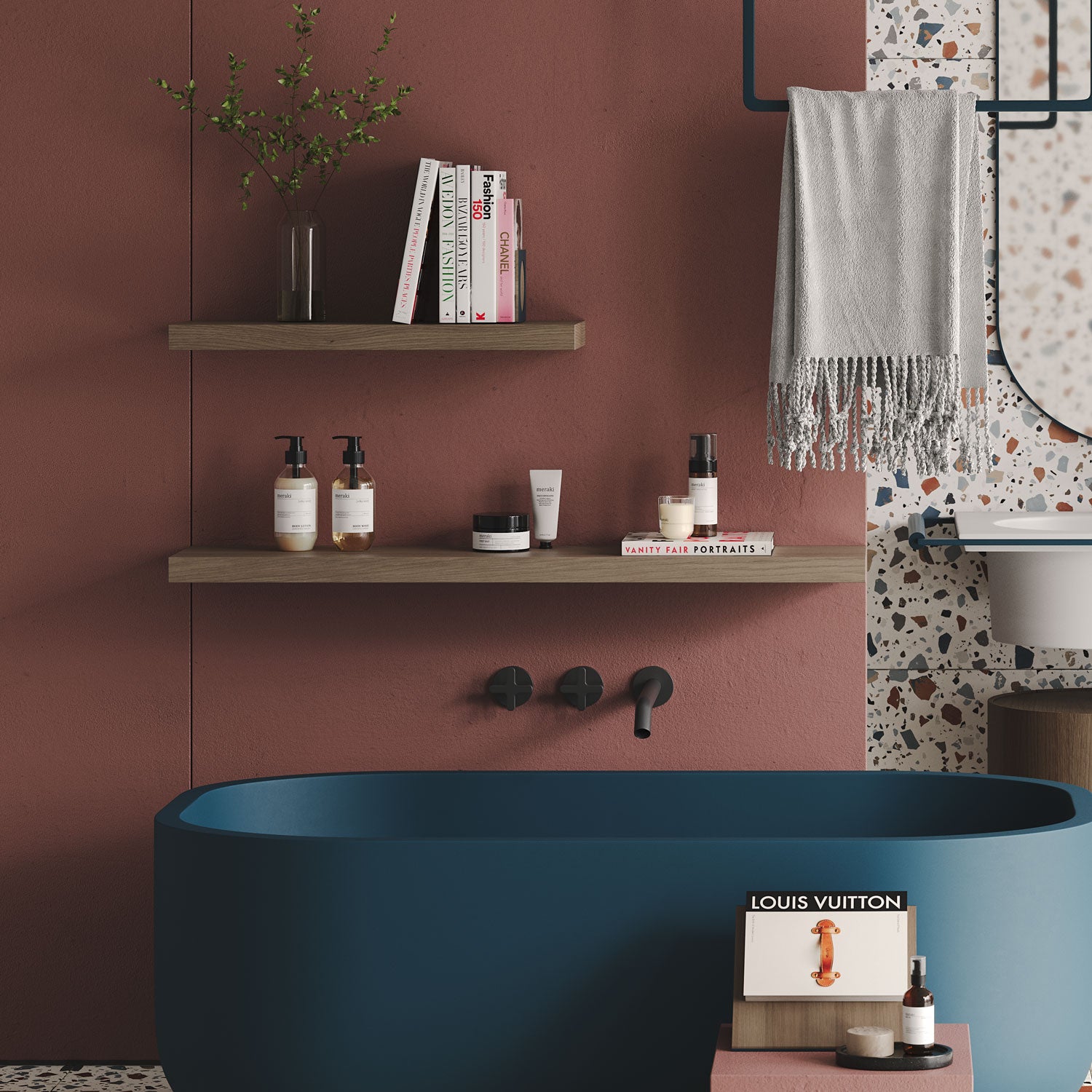
| Bathroom | 5″–8″ | 24″+ above toilet tank | Light | Aksel LD; stainless in the shower |
| Entryway | 6″–10″ | Eye level | Light–medium | Tromso FM5 (built-in coat hooks) |
| Garage / utility | 12″+ | Varies | Maximum | Studly Wall Storage System |
Floating Shelves for the Kitchen
Open shelving is an excellent replacement for dated upper cabinets. For kitchens, we'd suggest 10″–12″ deep shelves set 18–24 inches above the counter — everyday plates, glasses, and mugs stay in reach, and the room opens up visually. This is heavy-duty territory: stacked dishware adds up fast, so kitchens are where the Aksel HD earns its reputation. And the open, floating look doesn't have to stop at the shelving — the Moxie Peninsula Table mounts to the wall on a hidden cleat with a single steel leg, bringing the same design language to the dining side of the room. Planning a kitchen? See real installs and layout guidance on our kitchen open shelving ideas and planning page.

Floating Shelves for the Living Room
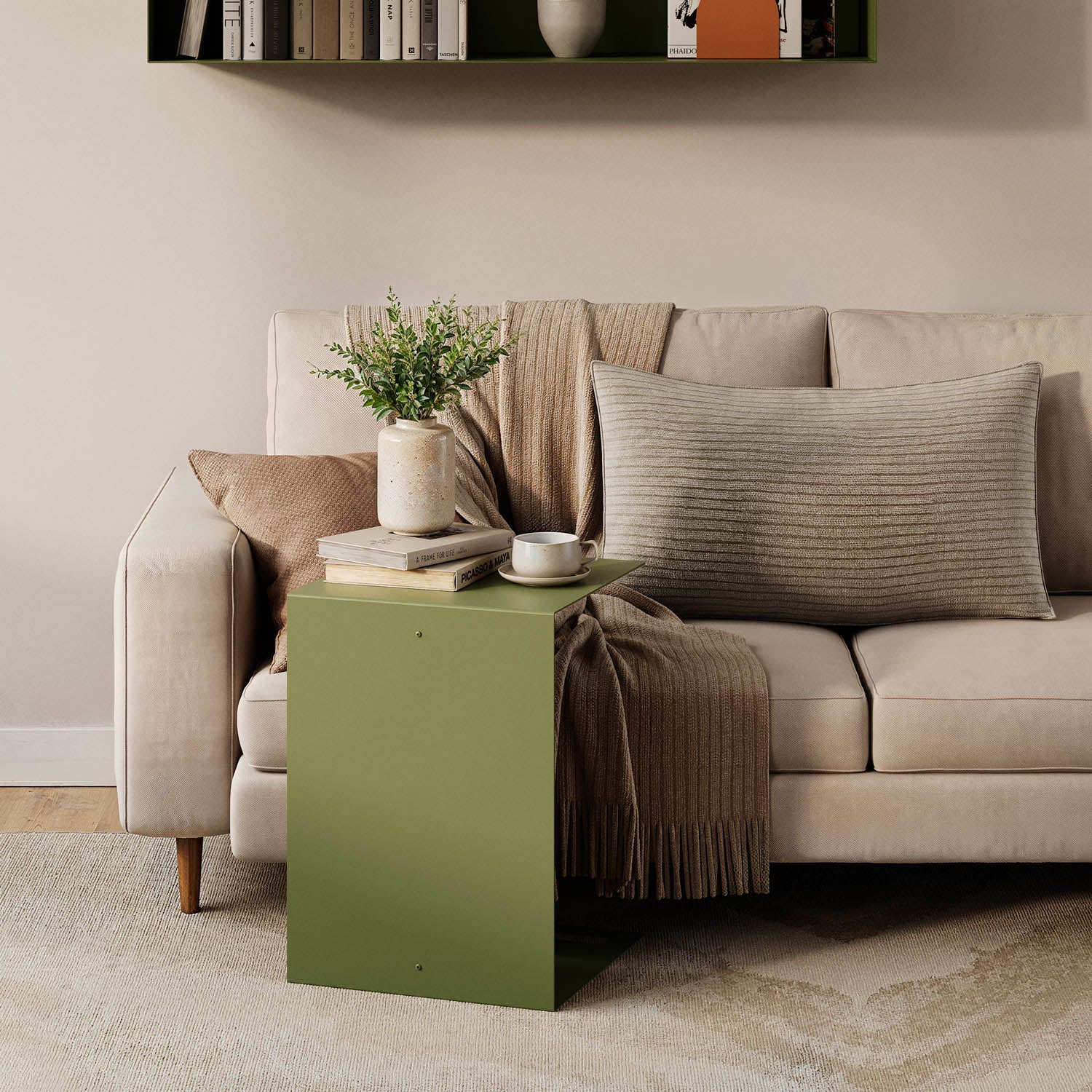
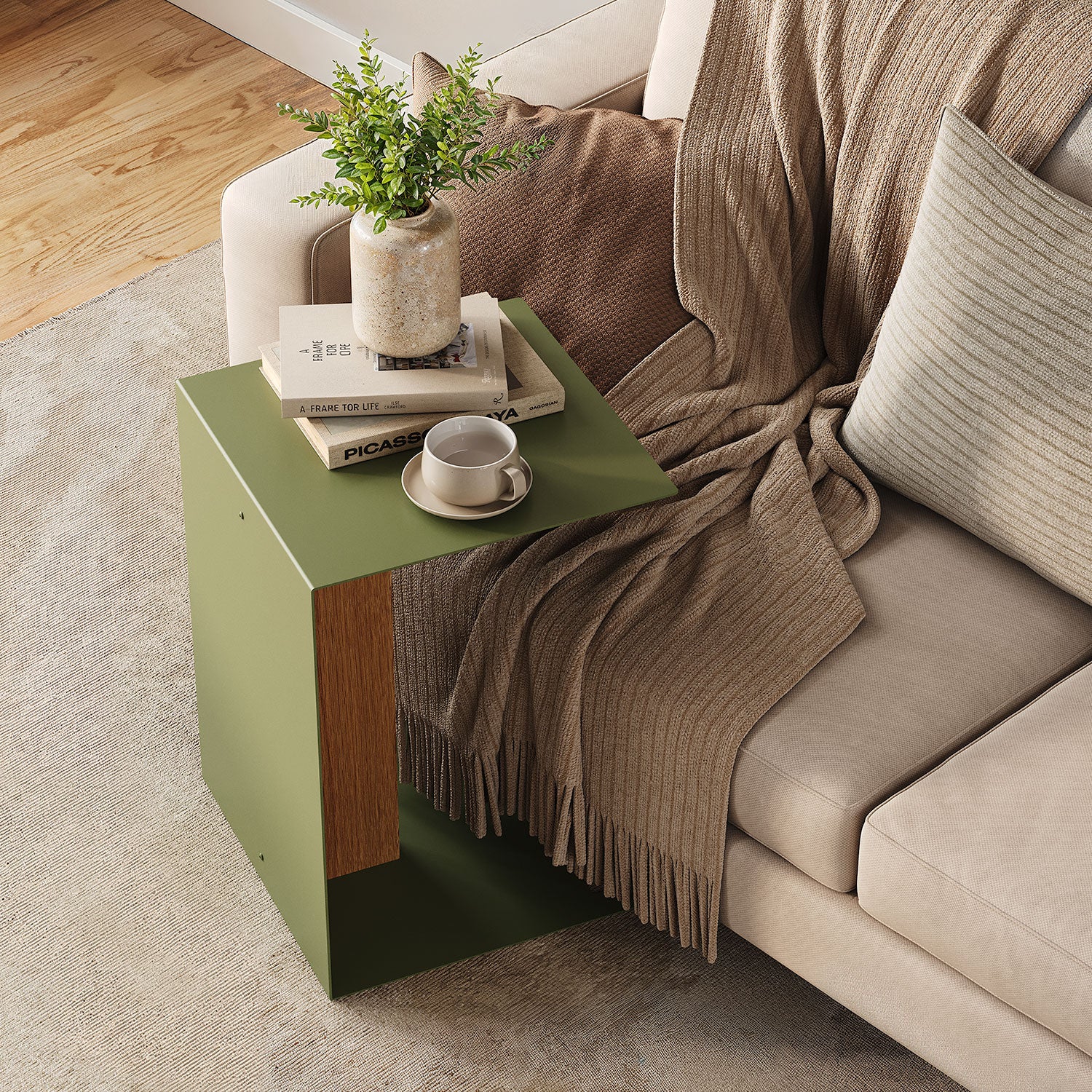
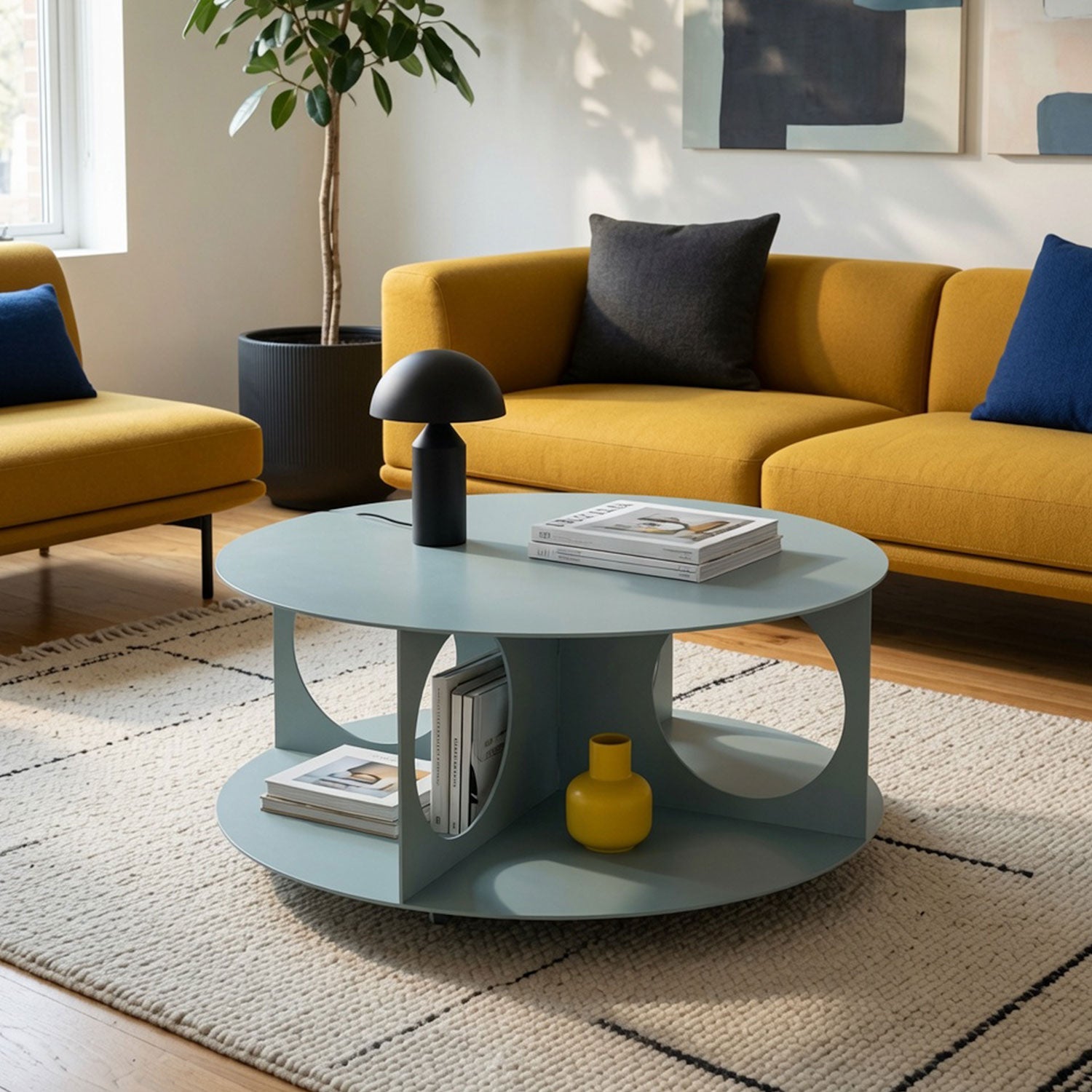
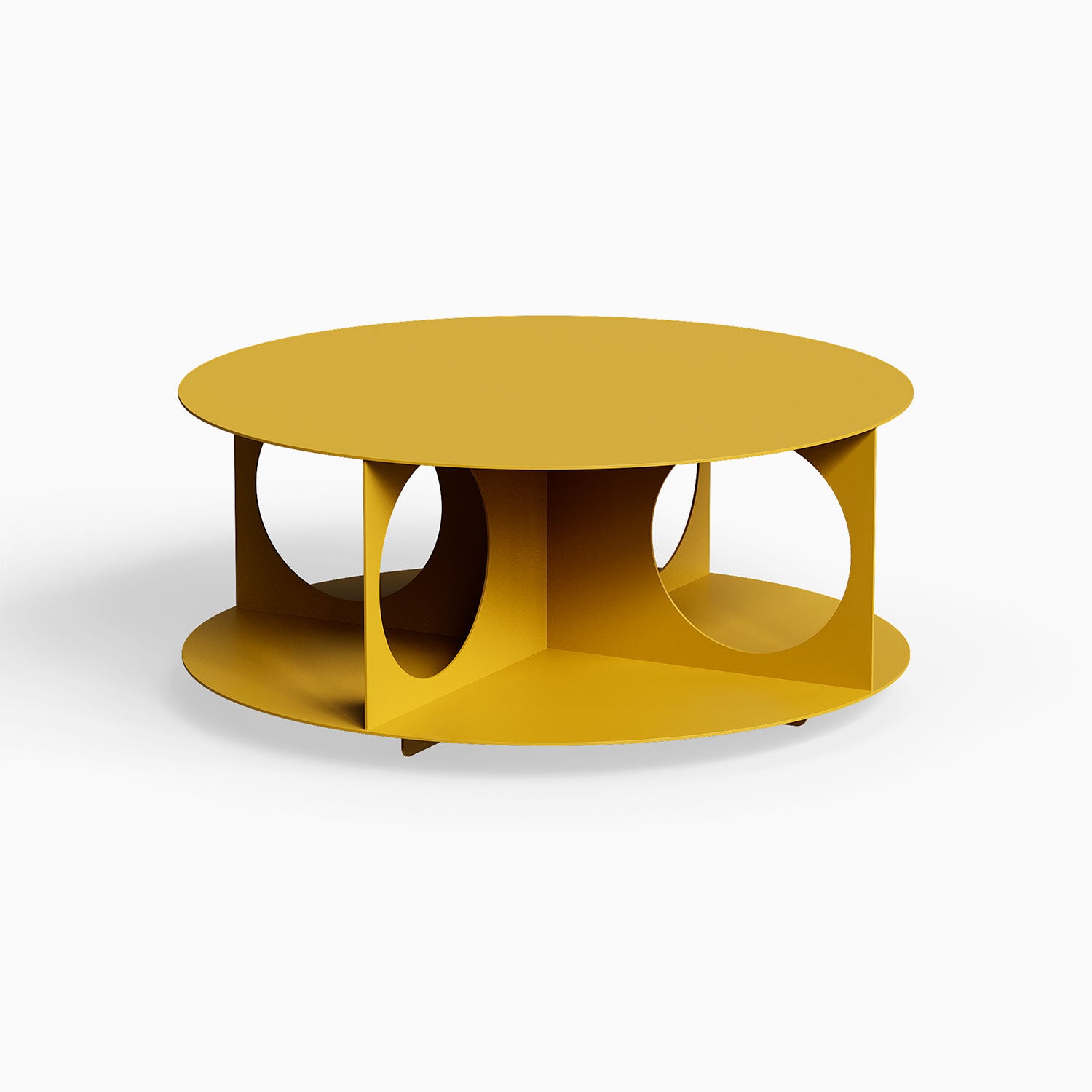
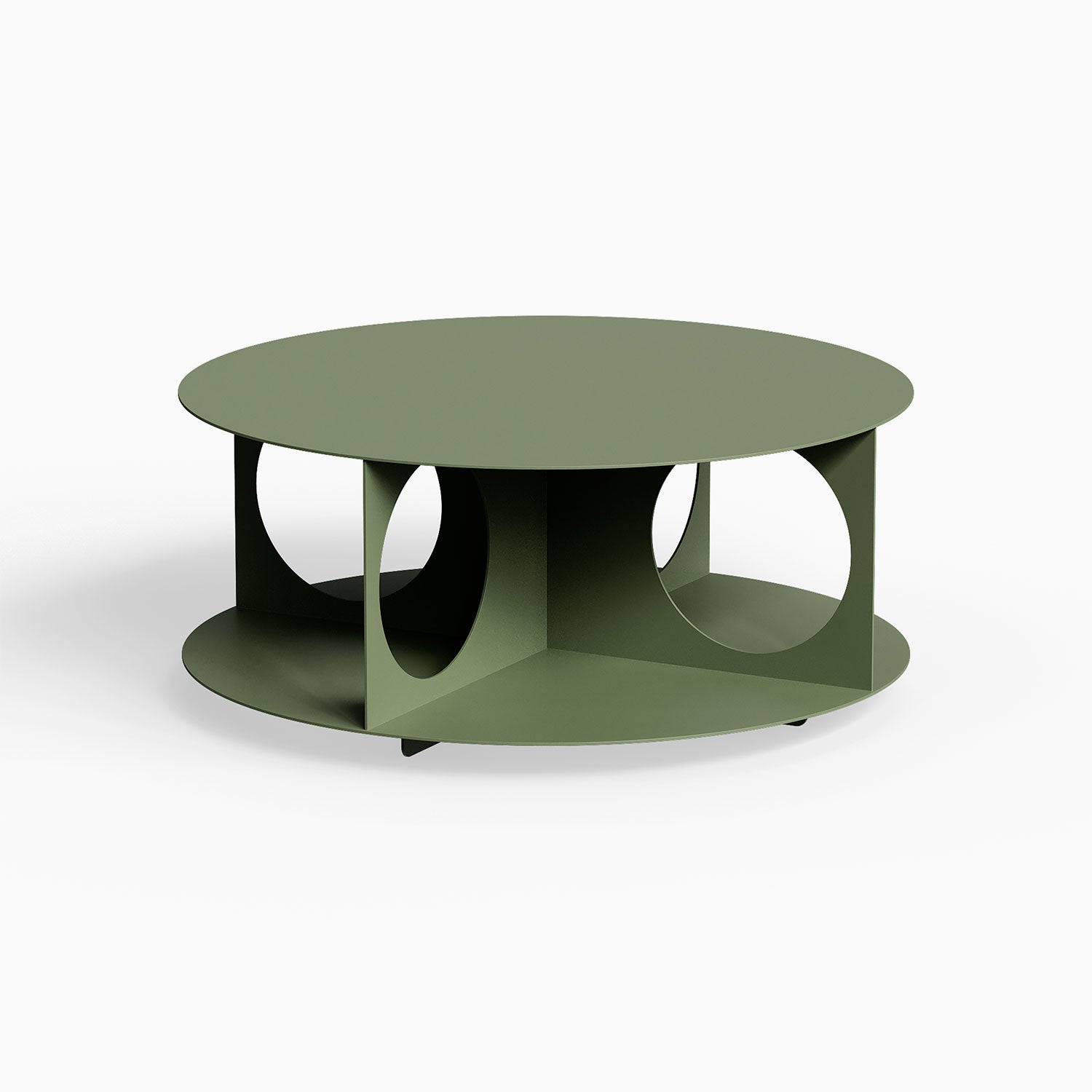
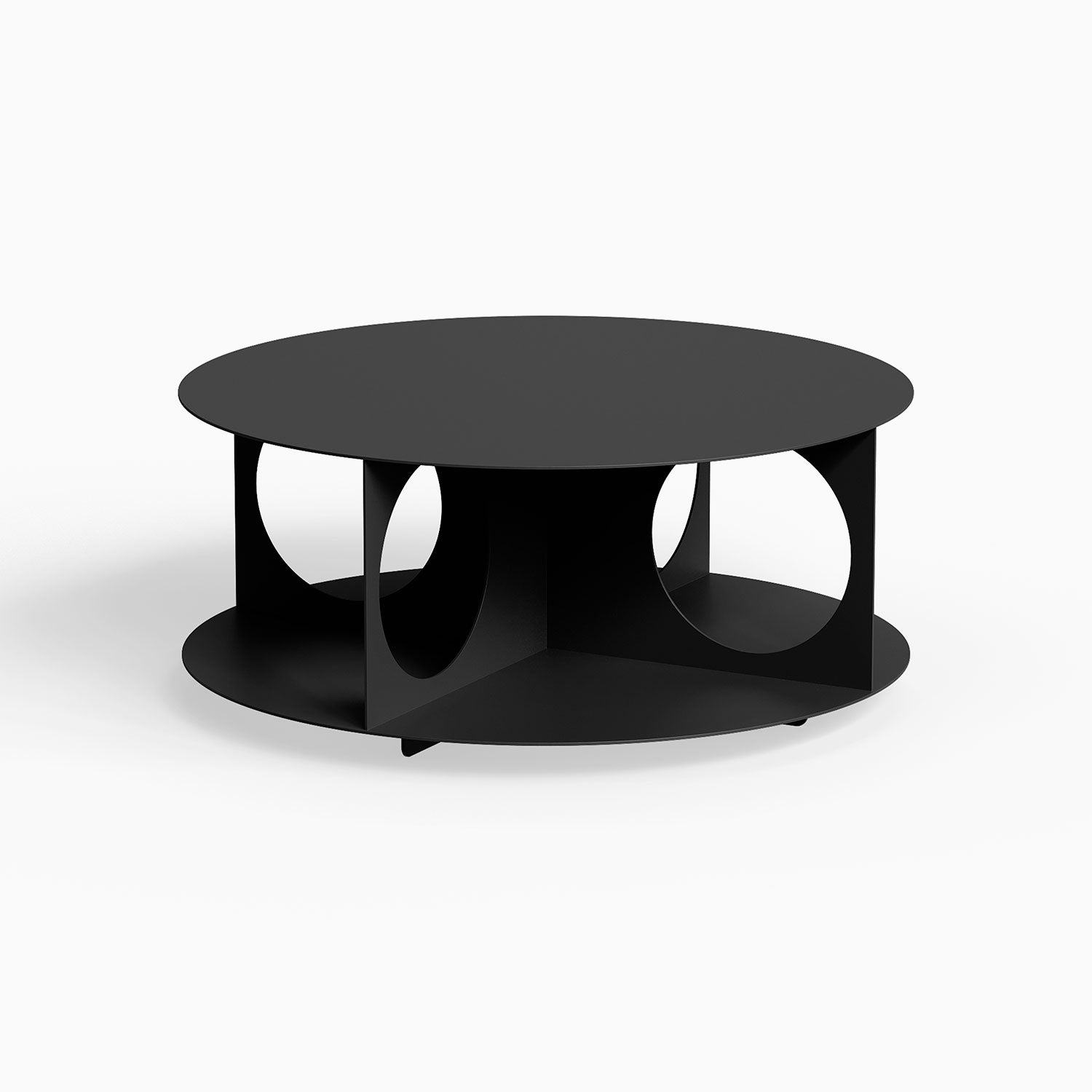
Living room shelves serve both display and storage, showcasing books, art, and décor while often framing a fireplace or TV. A shelf above a couch typically sits 10–12 inches over the back cushion; a floating mantel anchors the whole wall. To finish the space below the shelves, our Otis round and Hugo square coffee tables share the same steel-and-hardwood construction as all of our shelves and are perfectly complementary. For more living room shelving inspiration, browse our living room shelving and mantel ideas page.

Floating Shelves for the Bedroom
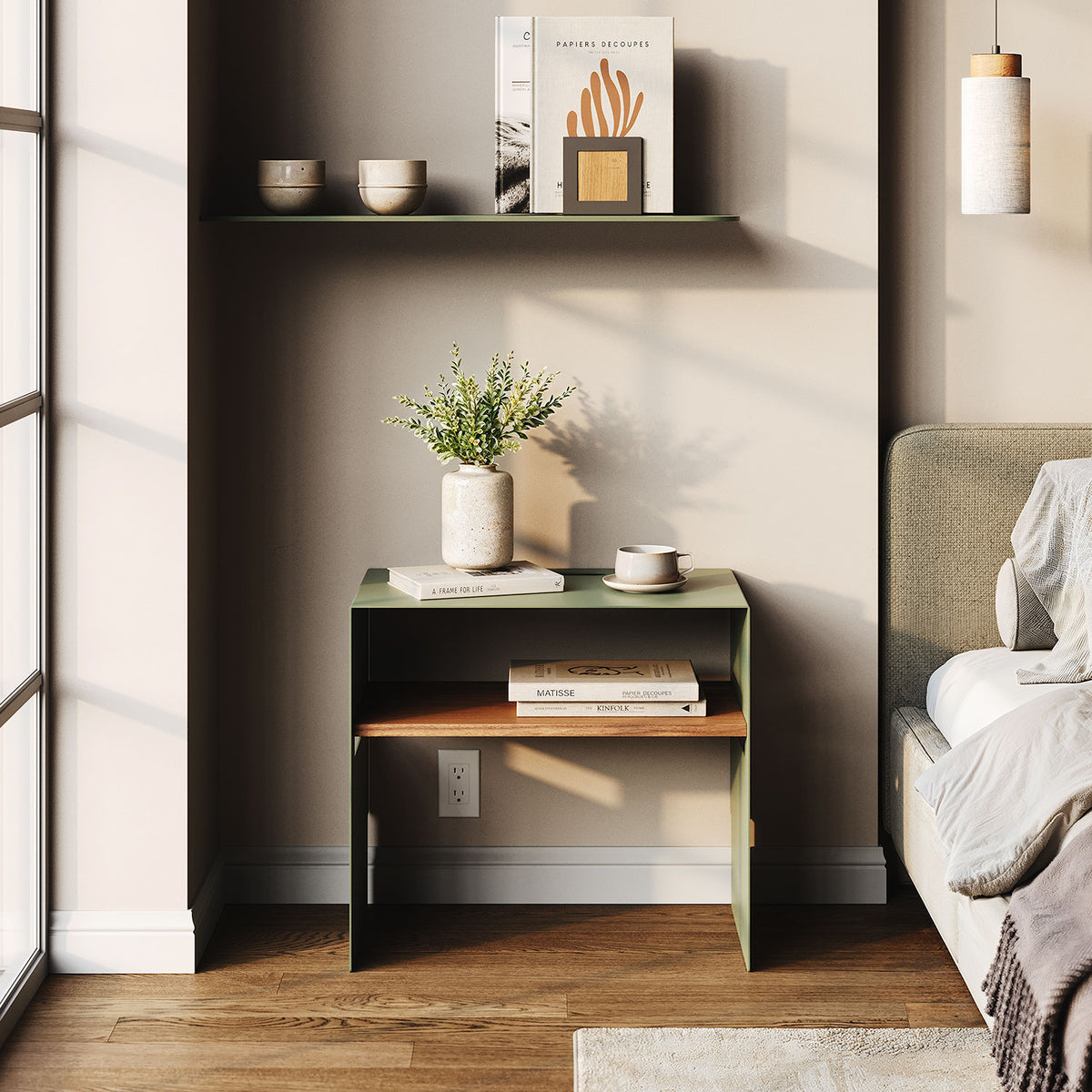
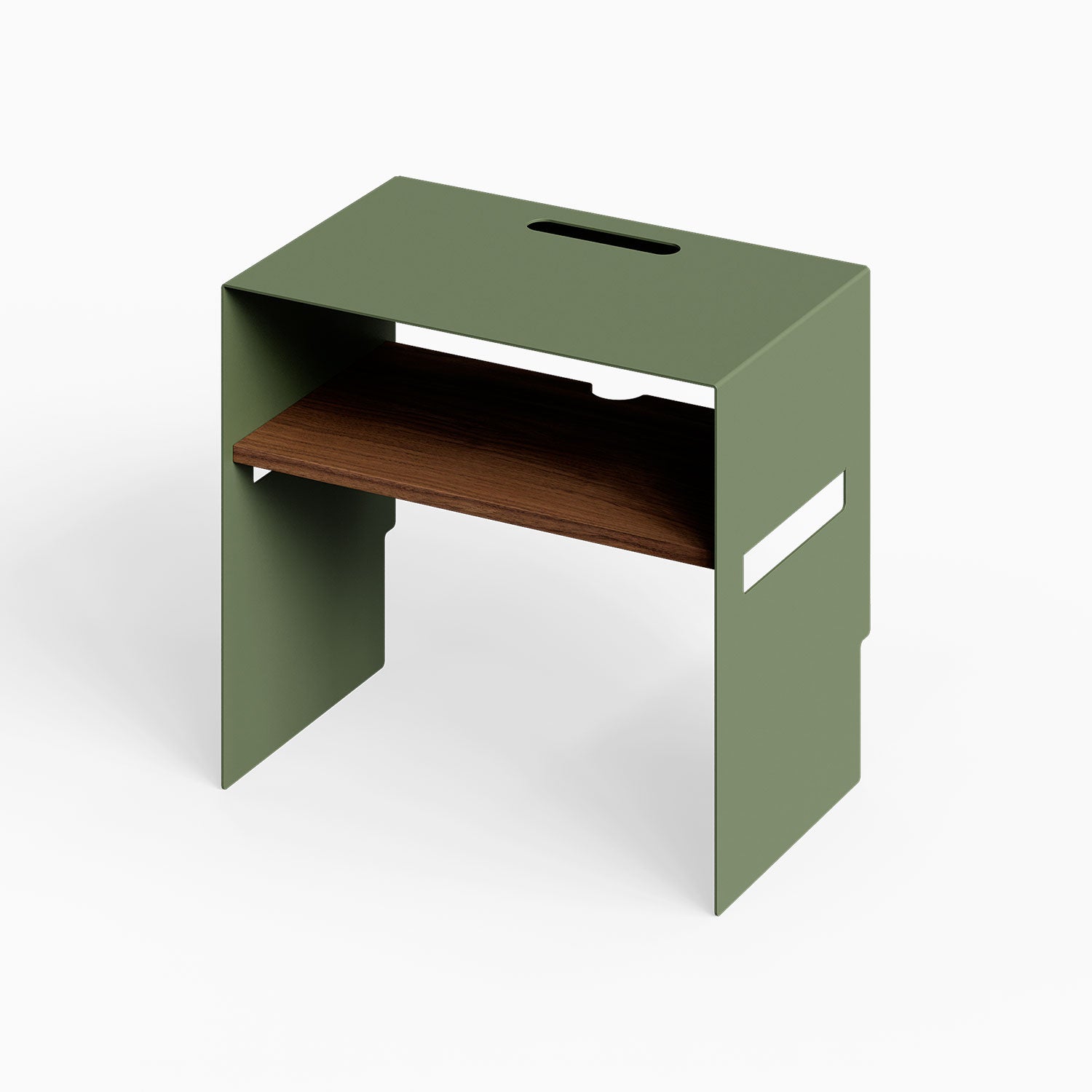
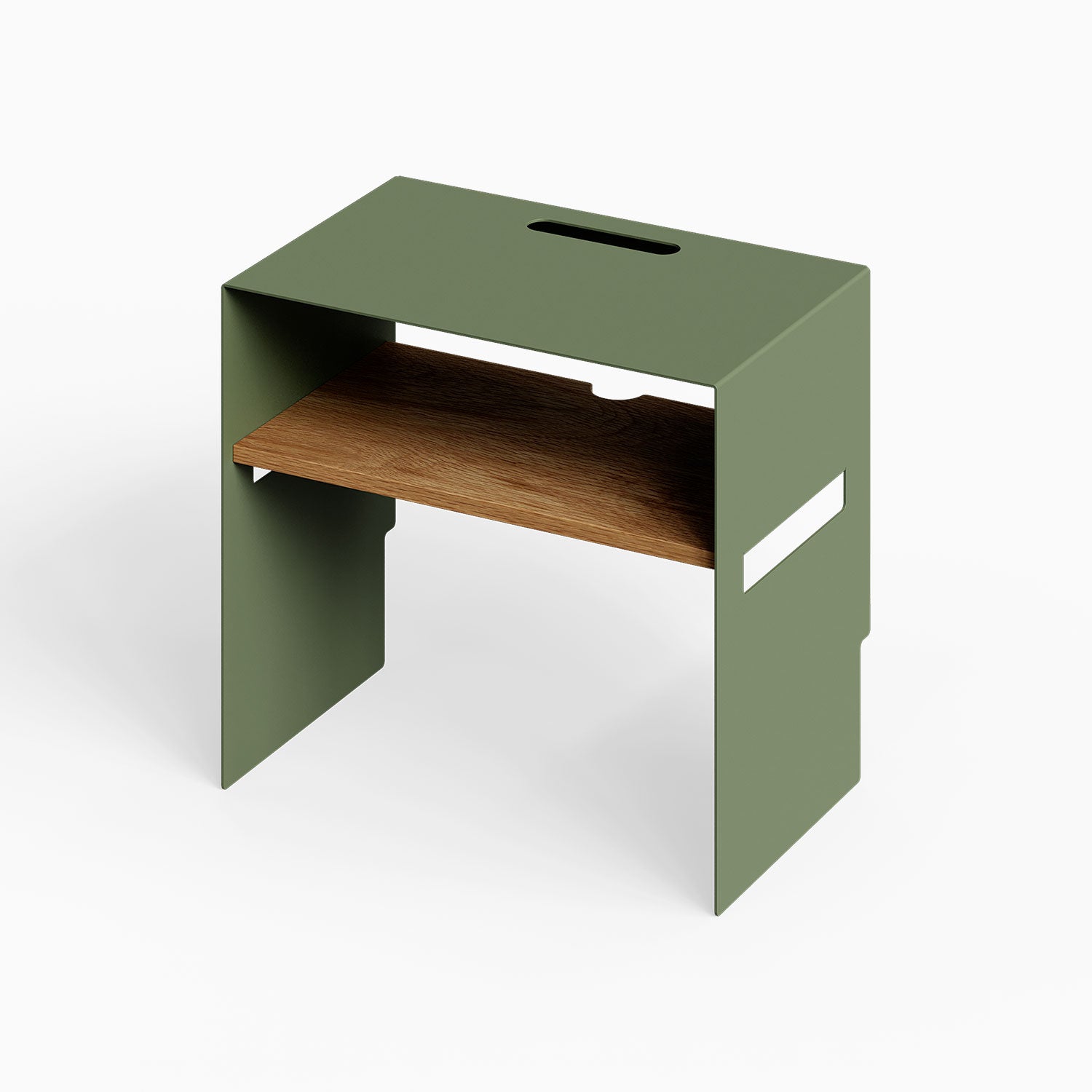
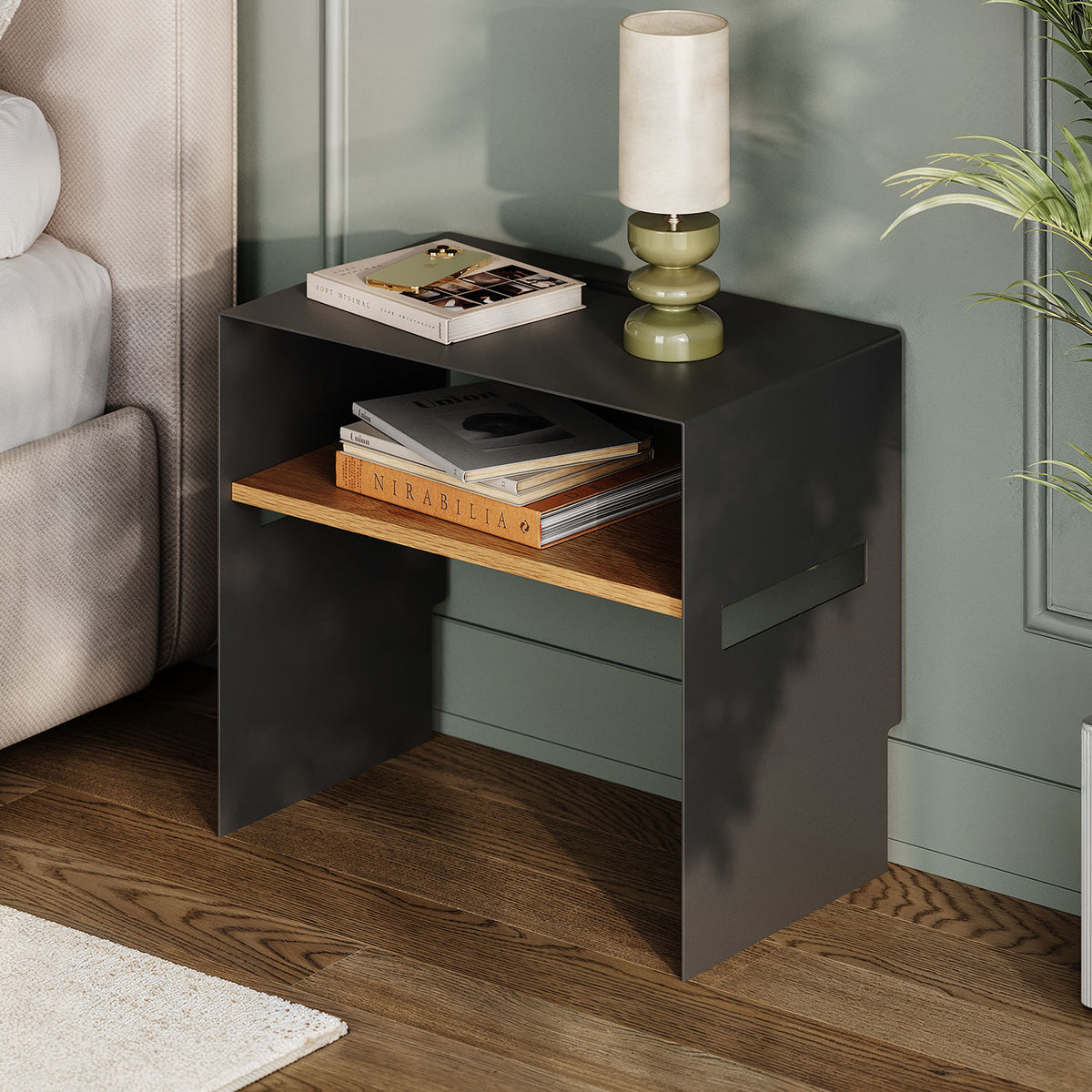
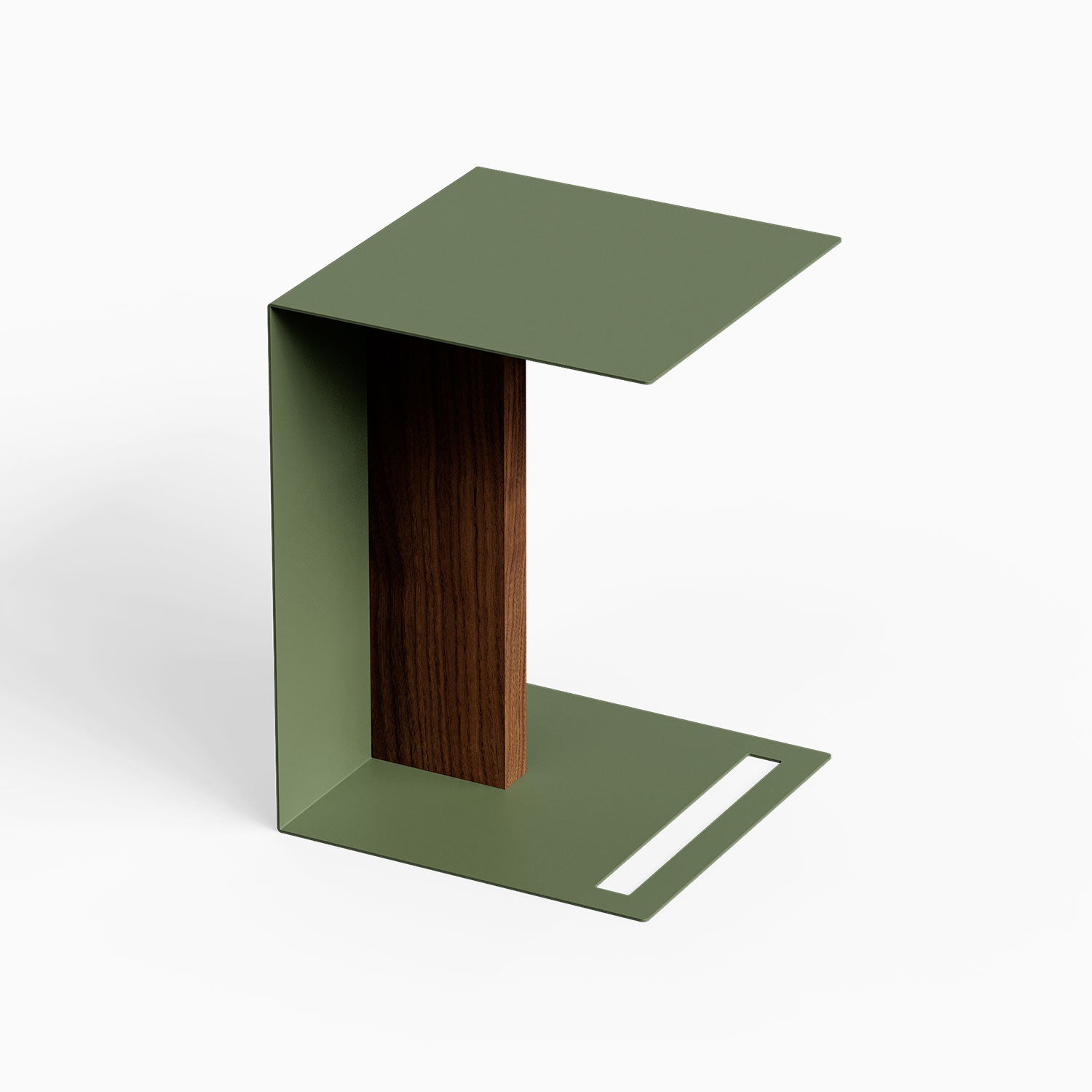
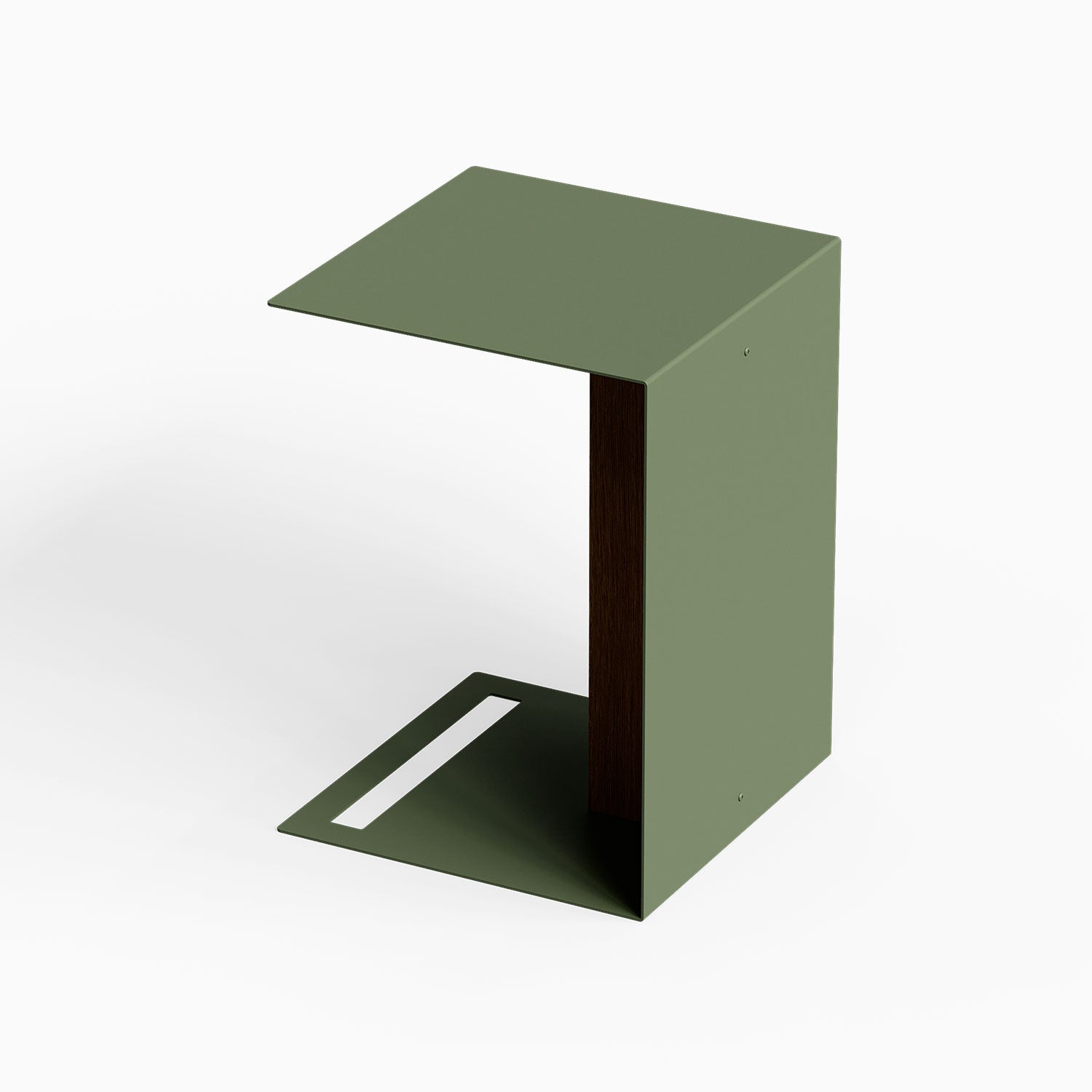
A floating shelf beside the bed does nightstand work without the furniture footprint — set it just above mattress height with room for a book, glasses, and a phone. Above the bed, keep shelves shallow and modest in load, about 16 inches over the mattress. If you'd rather have the full nightstand, our Tuck In nightstand is one piece of bent steel with a hardwood shelf and a cord cutout — floating shelf thinking, freestanding format. Designing the whole room? Visit our bedroom shelving and nightstand ideas page.

Floating Shelves for the Home Office
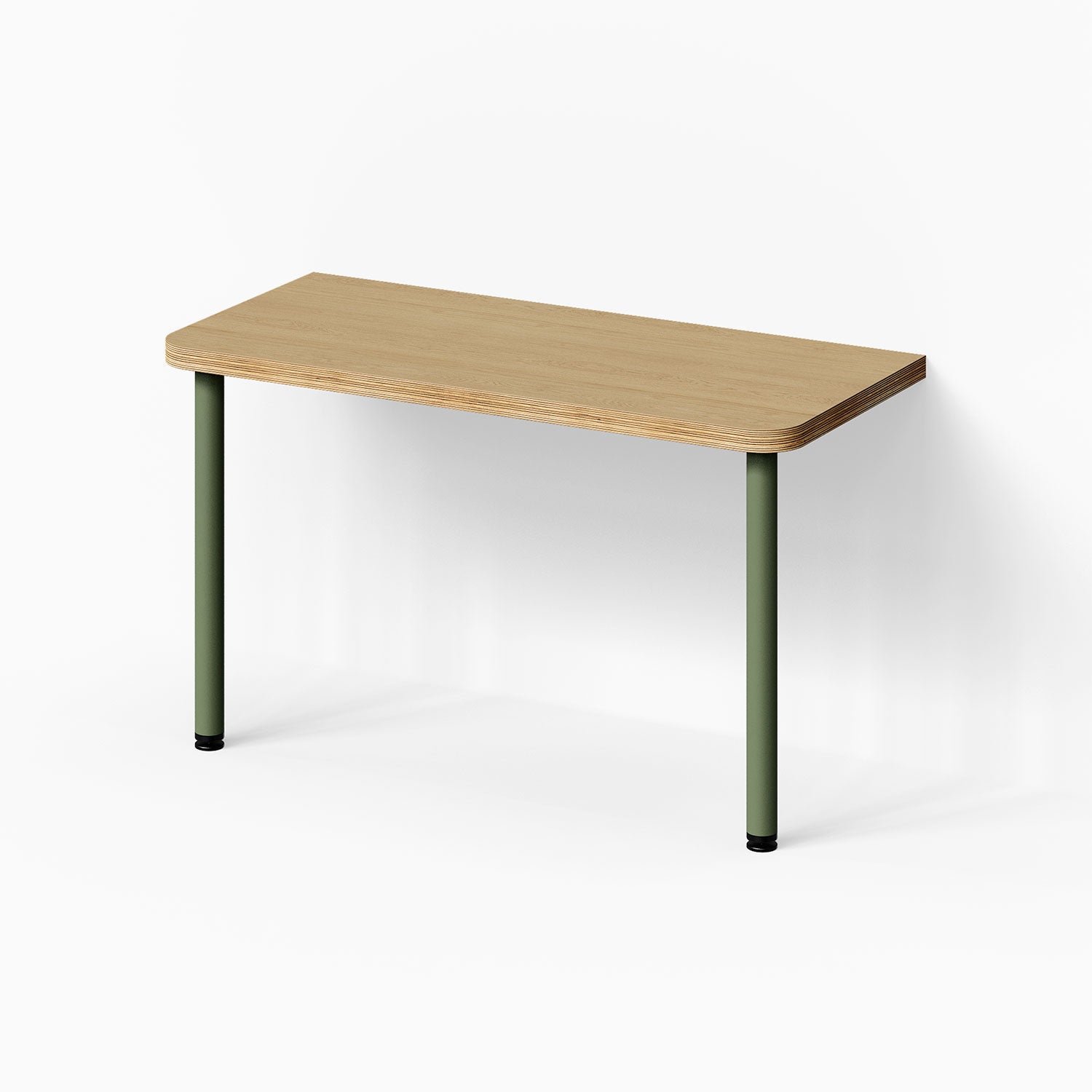
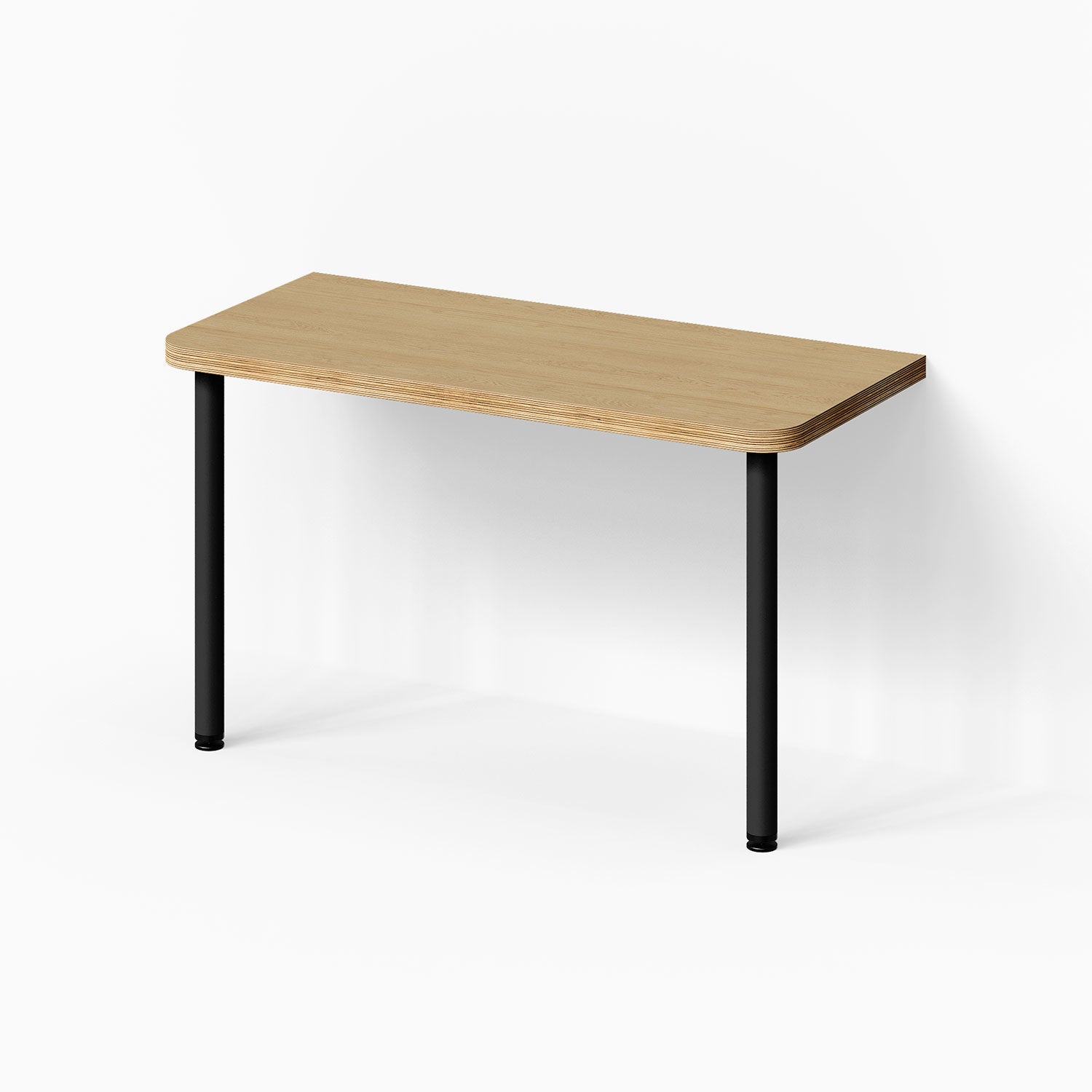
The home office is often where depth matters most: reference books and equipment call for 10″–14″ shelves, and for the ultimate in stealth space-saving technology: consider a floating desk. Yuri floating desk brackets support work surfaces up to 24 inches deep from the studs — no legs, no cabinet, just desk. Prefer it ready-made? The Arlo desk is the same wall-mounted idea, combined with floor-standing legs for complete peace of mind. For more home office inspiration, check out our home office shelving, desk, and storage ideas page.

Floating Shelves for the Bathroom
Bathrooms are shallow-shelf territory: 5″–8″ deep shelves are perfect for bottles, folded towels, and plants; a shelf above the toilet needs 24 inches of clearance over the tank and is a great place to tuck away bathroom supplies or display decor items. But be mindful of moisture — powder-coated steel and sealed hardwood handle bathroom humidity no problem, but neither belongs in the direct spray of a shower. Inside the shower itself, use our stainless steel shelves; that's the job they're built for. See how it comes together on our bathroom shelving and storage ideas page.

Floating Shelves for Entryways & Mudrooms
An entry shelf has three jobs: catch keys and mail, hold decor, and give coats and bags somewhere to hang. The Tromso FM5 covers all three — coat hooks are built directly into its steel backplate, so it's shelf and coat rack in one unit. Outfitting a whole drop zone? Start with our entryway and mudroom storage ideas page.

Floating Shelves for the Garage and Utility Room
Here the job flips from display to storage & utility. Heavy bins, tools, and gear call for stud-anchored steel with maximum capacity — shelving you can load hard without a second thought. This is Studly Wall Storage System territory: one rail, then shelves, pegboard, and workbench setups you can reconfigure as your needs change. Utility brackets live at utility brackets. Ready to reclaim the walls? Explore our garage and utility storage ideas page.

Skip the DIY. Kit Out Any Room in Minutes. Courtesy of Shelfology.
Outfit Your Entire Space This Weekend
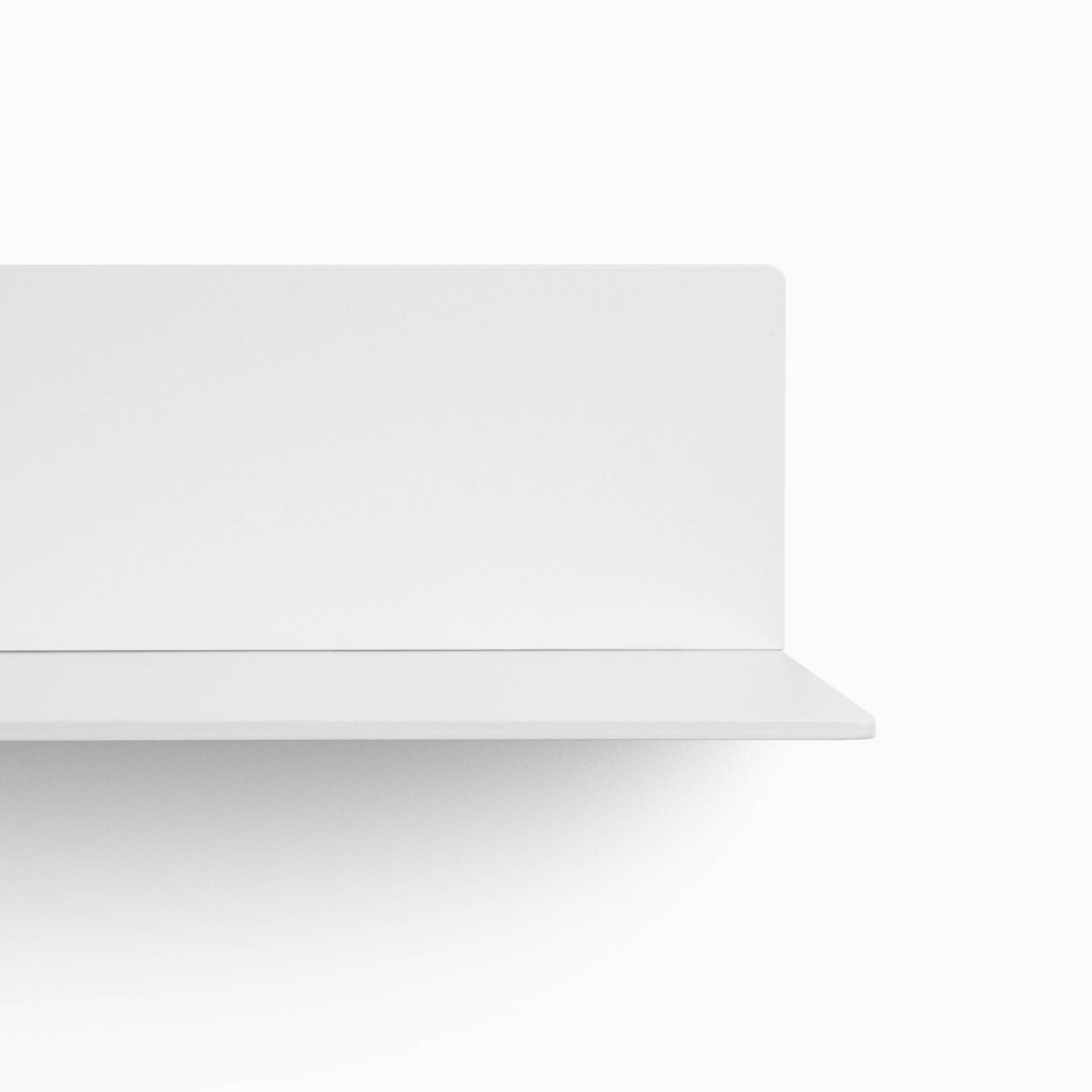
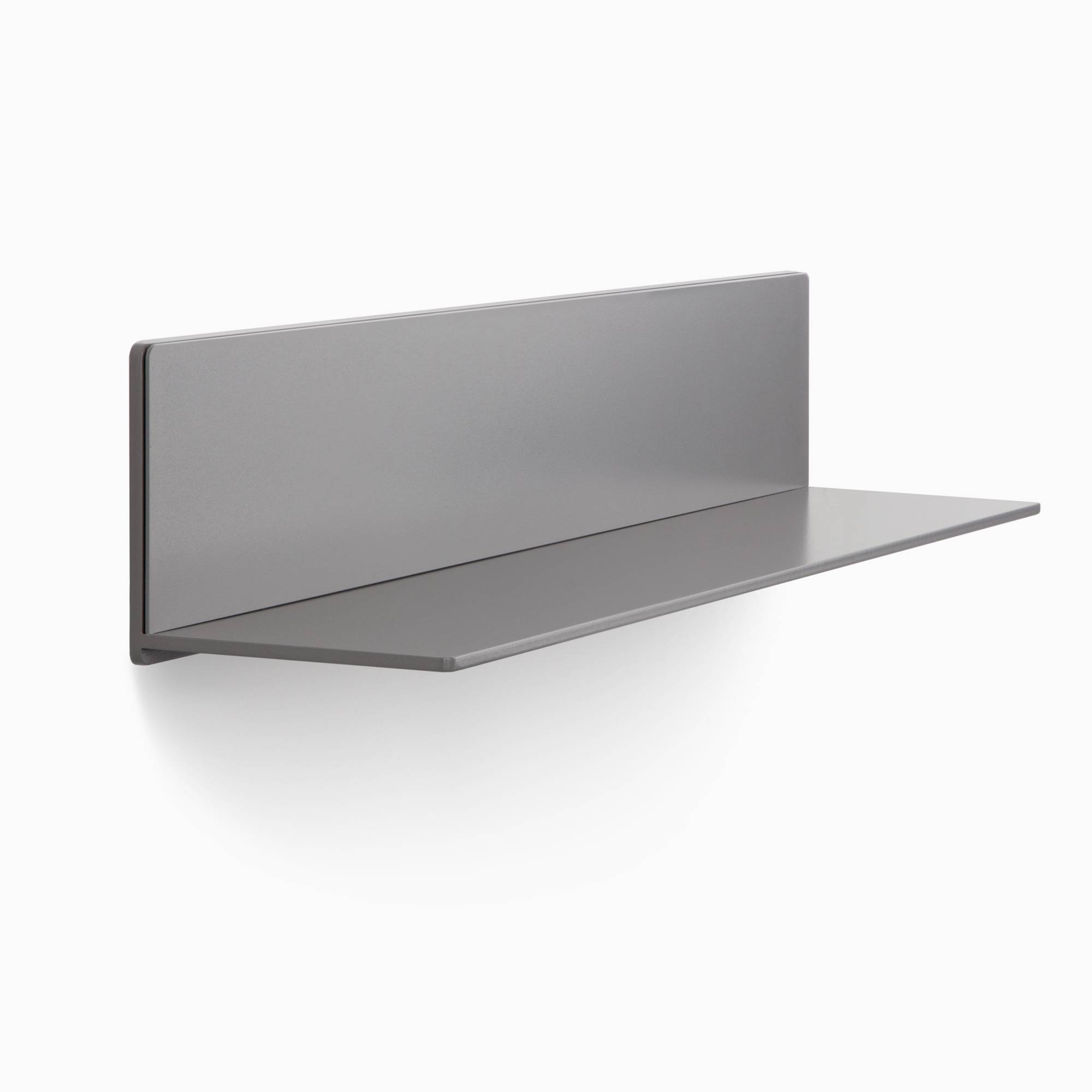
Tromso FM5 Steel Floating Shelf
Floating Shelf FAQ
The Basics
What is a floating shelf?
A floating shelf is a shelf attached to the wall with concealed mounting hardware, leaving no visible means of support. A hidden steel bracket anchors to the wall studs, and the shelf slides over the bracket's rods, covering them completely.
How do floating shelves work?
A steel back bar fastens to the wall studs, and horizontal support rods project from it. The shelf slides over those rods through holes or cavities in its back edge. The support rods carry the load, while the shelf conceals the hardware.
Are floating shelves sturdy?
Yes — when the bracket and installation match the load. A floating shelf on an engineered rod-and-bracket system anchored into studs holds hundreds of pounds; the notion that floating shelves are flimsy comes from stamped-hardware shelves and drywall-anchor installs, not from the concept.
Are floating shelves a good idea?
For most rooms, yes: floating shelves add storage without taking up valuable floor space. They also typically cost less than cabinetry, and move with minimal wall repair. The honest tradeoffs are that they need studs or blocking for real loads, they collect dust, and everything on them is on display. Tend to be a bit of a clutter bug? Cabinets, or a combination of floating shelves and cabinets might be a better fit for you.
What's the difference between a floating shelf and a bracket shelf?
Visible shelf hardware. Both are bracket-supported. A bracket shelf shows its hardware — an L-bracket or corbel beneath the board, on full display. A floating shelf hides its hardware inside the board.
Do floating shelves need studs?
For anything beyond light decor, yes. Studs (and/or blocking behind the drywall) are what give the fasteners something solid to grip against the shelf's leverage. Drywall anchors alone are for extremely light shelves only and this kind of install would undermine even the beefiest of bracket's rated capacity.
Do floating shelves need brackets?
Always — every floating shelf is held up by some form of concealed bracket. “No brackets” in product listings means no visible brackets. The question worth asking is never whether there's a bracket, but whether it's strong enough.
How much do floating shelves cost?
Anywhere from $20 for a big-box shelf with ~20 lb capacity to $1,100+ for a made-to-measure hardwood system rated in the hundreds of pounds. The price difference is the steel & materials: engineered brackets cost more because they're built to actually carry weight. And shelves made of solid hardwood cost more, but can last a lifetime.
| Floating Shelf Option | Typical Cost (USD) | Typical Features Included |
|---|---|---|
| Big-box floating shelf | $20–60 | Stamped hardware, ~20 lb capacity |
| DIY build + engineered bracket | $50–250+ | Bracket ($22 single-rod to $174 for a 78″ run) plus your wood; full rated capacity |
| Made-to-measure hardwood system | $167–$1,100+ | Cut to the inch, matched bracket, finished — priced by length, depth, and species |
| All-steel system (Tromso) | From $142 | ¼″ steel, 30+ powder-coat colors, 90 lbs per linear ft |
| Floating mantel system (Glenn) | From $1,140 | Mantel-scale capacity up to 1,500 lbs |
Weight and Strength
How much weight can a floating shelf hold?
Anywhere from under 20 lbs (big-box shelves with stamped hardware) to 1,500 lbs (the Glenn HD mantel system), depending on the bracket and installation. Our Aksel HD holds 80 lbs per rod — up to 400 lbs per shelf — when installed into studs or blocking. Full ratings in the capacity table above.
What's the weight capacity of a floating shelf bracket?
By series, per rod: Aksel LD 50 lbs, MD 65 lbs, HD 80 lbs, XD 95 lbs, Hollow Core MD 85 lbs, Hollow Core HD 90 lbs. Total capacity scales with rod count — a 3-rod HD bracket is rated to 240 lbs. Glenn mantel brackets run 200–300 lbs per rod.
Can floating shelves hold books, a TV, or a microwave?
Yes, with the right bracket. A four-foot run of hardcovers weighs 80–140 lbs — well inside a multi-rod Aksel HD's rating. TVs and microwaves are also within range; for deep media surfaces, step up to a Yuri desk bracket, which floats surfaces up to 24″ deep.
Why do floating shelves fall down?
Three causes account for nearly every floating shelf failure: drywall-only mounting (the shelf levers the anchors out), undersized hardware (thin, under-engineered rods bend), and missed studs. Prevent floating shelves from falling down by matching the bracket to the load and fastening into studs or blocking.
Why do my floating shelves lean forward?
Usually one of two things: the wall isn't flat, so the bracket isn't seated flush (fix: shim between the bracket and wall), or the rods are undersized for the load and flexing (fix: a heavier-duty bracket). The troubleshooting table above covers every common symptom.
What are the strongest floating shelf brackets?
For standard shelves, our Aksel XD at 95 lbs per rod; for the most total capacity, the Aksel Hollow Core HD at up to 450 lbs per shelf. For mantels and extreme loads, the Glenn HD reaches 1,500 lbs in its largest configuration.
Installation
How do you install a floating shelf?
Mount the bracket level, and fasten it into every stud it crosses (with anchors in the remaining holes), then slide the shelf over the rods and secure it with set screws or silicone. Full sequence in the installation section above.
How high should floating shelves be hung?
Eye level — typically about 4–5 feet from the floor — for a standalone shelf. Kitchen shelves go 18–24 inches above the counter, shelves above a couch 10–12 inches above the back cushion, and bathroom shelves at least 24 inches above the toilet tank.
How far apart should floating shelves be spaced?
10–18 inches of vertical space covers most stacked runs of shelves: 8–12 inches for small decor, 12–15 for books and dishes, 18–24 for tall items. Measure your tallest object and add 2–3 inches of clearance for the minimum.
How do you install floating shelves without visible brackets?
Use a concealed rod-and-bracket system: the bracket mounts to the wall, and the shelf slides over its rods, hiding all hardware. This is the entire Aksel design — nothing visible from any angle once the shelf is on.
How do you hang floating shelves on drywall with no studs?
With quality anchors correctly installed in every bracket hole — but only for light display loads, since anchor-only installs sacrifice most of the rated capacity. For real weight, relocate to hit studs or add blocking behind the drywall.
Can you install floating shelves without drilling?
No — not at any meaningful capacity. Adhesive products are rated for flat pulls like picture frames, not the leverage of a loaded shelf. But most concerns over a drilled installation are exaggerated: drilled installs leave only small screw holes that spackle erases in minutes.
How do you remove a floating shelf?
Back out the set screws on the underside, slide the shelf straight off the rods, then unscrew the bracket from the wall. What's left is a handful of small screw holes — five minutes with spackle erases the whole installation, which is why floating shelves are one of the most rental-friendly projects there is.
How many brackets do I need for a floating shelf?
One per shelf — the bracket is a single back bar sized to your shelf, and rod count scales with length: 2 rods up to 36″, 3 rods to 52″, 4 rods to 72″, and 5 rods beyond that. Alternatively, you could install individual Aksel single rod brackets for awkwardly placed studs or if you don't want to rout out space for the bracket across the length of the wood slab.
Dimensions and Specs
How deep can a floating shelf be?
Up to 17″ with the Aksel XD bracket, and up to 24″ with a Yuri floating desk bracket. Remember that depth costs capacity — the deeper the shelf, the harder every pound works against the wall — so float only as deep as you need.
How thick should a floating shelf be?
Solid shelves need 1¼″ minimum (up to 2″–3″ for the heaviest brackets). Hollow-core builds run anywhere from ¾″ to 3″ thick on Hollow Core brackets, since the rods enter a built cavity rather than a bored hole.
What sizes do floating shelves come in?
Ours are cut to order by the inch: lengths from 12″ to nearly 10 feet on Aksel systems, depths from 5″ to 17″ (24″ for desks), in every bracket series. Standard retail shelves cluster at 24″, 36″, and 48″ — made-to-measure sizing means the shelf fits the wall exactly.
What is the ideal floating shelf depth for a kitchen or bathroom?
Kitchens: 10″–12″, so dinner plates sit fully on the shelf. Bathrooms: 5″–8″ for bottles and toiletries — and at least 24″ of clearance above the toilet tank.
DIY and Building
Can you build your own floating shelves?
Yes — it's a rewarding build, and the strength doesn't depend on your woodworking. Build the shelf from a solid slab or as a hollow box, then mount it on an engineered bracket. The DIY section above walks through both methods.
What do I need to build a floating shelf?
Wood (a hardwood slab, or plywood and frame stock for a box build), glue and finish, a saw, drill, sander, level, and stud finder — plus the bracket, which ships with fasteners, anchors, and an install guide.
Are DIY floating shelves strong enough?
They're exactly as strong as their bracket and installation. A beautiful shelf on flexing hardware fails like any other; the same shelf on a rated steel bracket anchored into studs holds its full rating. Buy the strength, build the beauty.
Where can I get floating shelf plans and brackets for a DIY build?
Brackets, spec sheets, and included install guides are at floating shelf brackets. The DIY section above covers both proven build methods — solid-slab and hollow-box — including materials, tools, and bracket matching.
Materials and Style
What's the best wood for floating shelves?
Any solid hardwood: walnut, white oak, maple, alder, cherry, or mahogany. Walnut is the most popular by a wide margin — rich, dark, and open-grained. Avoid MDF and particleboard for anything load-bearing; they crush around hardware over time.
Wood vs. metal floating shelves — which is better?
Neither is stronger as a system; both ride on steel. Choose by character: hardwood reads warm and natural, steel reads architectural and carries 30+ powder-coat colors. Kitchens and living rooms lean wood; utility spaces and color-forward modern rooms lean steel. Side-by-side comparison in the materials section above.
What should I put on floating shelves, and how do I style them?
Group objects in odd numbers, vary heights, mix textures, and give each shelf one anchor piece. Fill shelves to about 70 percent — full reads cluttered, and open ends read intentional. For arrangement ideas: Staggered Floating Shelves That Turn Walls Into Eye Candy.
Brackets and Hardware
What are hidden, concealed, or invisible shelf brackets?
Three names for the same hardware: a steel back bar with projecting rods that mounts to the wall and disappears inside the shelf. Browse the full range at floating shelf brackets.
Are Shelfology brackets compatible with my existing shelf?
If the shelf's thickness and depth fall in a series' range, yes: solid shelves 1¼″–3″ thick and 5″–17″ deep are covered across Aksel LD through XD, and hollow builds ¾″–3″ thick fit the Hollow Core line. You'll bore or build the rod cavities to match — spec sheets on each product page give exact rod dimensions.
What's the difference between Aksel HD, MD, and Hollow Core brackets?
HD and MD are for solid-wood shelves — HD carries more per rod (80 vs. 65 lbs) and reaches deeper (14″ vs. 10″). Hollow Core brackets use hollow structural rods sized for built cavities in hollow or engineered shelves, ¾″–3″ thick, at up to 90 lbs per rod.
About Shelfology
Are Shelfology brackets made in the USA?
Every bracket is designed and engineered in the U.S.
Do floating shelf brackets come with a warranty and install guide?
Every Shelfology bracket ships with fasteners, wall anchors, and a step-by-step install guide. Warranty details live at warranty information.
Can I get a complete floating shelf system instead of building one?
Yes — made-to-measure systems pair a finished hardwood or steel shelf with its matched bracket, pre-bored and ready to hang: wood floating shelf systems, steel systems, and Studly wall storage for utility spaces.
DIY Your Floating Shelves with Confidence
Two decisions carry every floating shelf project: hit your studs, and match the bracket to the load and depth. Get those right and the rest — species, finish, styling — is the fun part. Whether you build your own shelf around one of our brackets or order a system cut to the inch, the engineering underneath is the same steel we've been refining since 2013. Hit a snag, or just want to talk through a project? Our Shelf Geeks answer the phone at 949.244.1083 — we do this every day.